The First Mate's Emergency Playbook: What to Do if the Captain Can't
When the captain can't run the boat, everything rides on the person beside them. Here's the protocol — before you need it.

Captain Tom Ketelhut

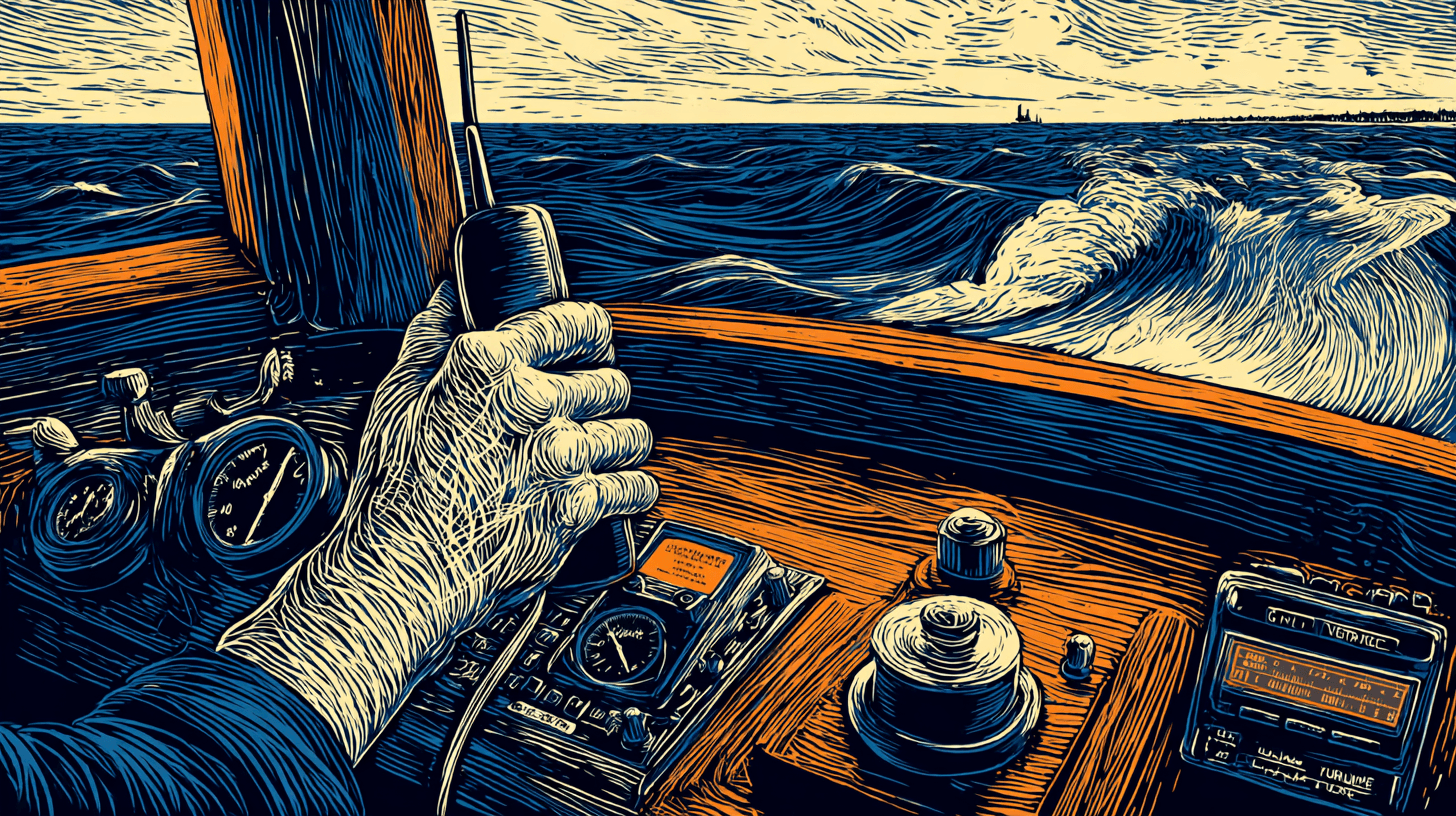
A call comes in over the VHF from a boat on the lower Detroit River. The captain has collapsed at the helm. A second voice comes back — calm, unhurried, giving the vessel name, the approximate position, the number of people on board, and the nature of the emergency.
That second voice is the first mate. Most of the outcome of the next thirty minutes rides on how that voice handles itself.
Every boating class, every coaching program, every safety seminar I've ever seen focuses on the captain. That makes sense — the captain is running the boat. But the captain is also the person most likely to be the one who needs help. And if that happens, the person beside them is the one who has to take over. Usually someone with less experience, less training, and none of the muscle memory the captain built over years of practice.
This article is about how to build that muscle memory before you need it.
Why this matters more than most owners realize
Talk to enough Coast Guard search-and-rescue crews and a pattern shows up. A lot of the mayday calls they respond to aren't from the captain. They're from whoever was on board when the captain went down — a heart attack, a serious fall, a stroke, a fish hook through a hand that wouldn't stop bleeding. The captain isn't always dead or dying. Sometimes they're just unable to run the boat. Either way, the call has to come from someone else.
The question isn't whether your first mate will ever have to make that call. It's whether, if they do, they'll know how.
Most don't. Not because they're incapable — but because nobody has ever walked them through it. A first mate who has never touched a VHF radio in calm conditions is not going to touch one for the first time in a crisis.
The protocol
Here's the sequence, in the order I teach it. Every step assumes the captain is incapacitated — unconscious, in serious medical distress, or otherwise unable to operate the vessel. The goal is to stabilize the boat, call for help, and keep everyone safe until that help arrives.
Step 1: Reduce speed and establish control
First thing, always: get the boat to a speed where it's not going to hit anything. That usually means pulling the throttles back to idle. If the boat is underway and you have room to maneuver, steer toward open water — away from other boats, shorelines, and shipping channels.
This is where most untrained first mates freeze, because the boat is still moving and they don't know where the kill switch is or how the throttles work. Every first mate should know — before anything goes wrong — how to bring the boat to idle, how to shift to neutral, and how to cut the engines if necessary. That's a five-minute conversation with the captain. Have it.
Step 2: Check the captain
Once the boat is under control, assess the captain. Are they responsive? Are they breathing? If there's a phone signal and you can spare a hand, dial 911 — they'll coordinate with the Coast Guard. Don't rely on 911 alone, though. On the water, the VHF is faster and more reliable.
If someone else is on board and can attend to the captain, that frees you to handle the boat. Assign jobs fast. In a crisis, clear verbal commands work better than thinking out loud.
Step 3: Get on the radio
VHF Channel 16. This is the channel the U.S. Coast Guard monitors 24 hours a day. You will get a response.
The words are: "Mayday, mayday, mayday. This is [your vessel name], [vessel name], [vessel name]." Three times, because crowded channels and weak signals mean the dispatcher may only catch part of it.
Then:
Your position. GPS coordinates if you have them, or clear landmarks — "approximately one mile south of the Grosse Ile Free Bridge" works.
The nature of the emergency. "Captain is unresponsive. Possible heart attack." Short and specific.
Number of people on board, including the captain.
A description of the vessel — length, color, make if you know it.
Then stop talking and wait. The Coast Guard will come back on the channel with instructions. Listen. Do exactly what they say.
Step 4: Make the stabilize-or-move decision
This is the hardest call, and it depends entirely on where you are when it happens.
If you're in a shipping channel, drifting toward a commercial lane, or being pushed by wind or current toward the rocks — drop the anchor. An anchor down is better than drifting into something you can't avoid. Your first mate coaching should include knowing where the anchor is, how the rode is set up, and how to deploy it without crushing a hand.
If you're in safe open water with no immediate hazards, it may be better to hold station — keep the boat stationary using gentle engine input — and wait for the Coast Guard or Tow Boat US to reach you. This is usually the right choice when help is close and the water is calm.
If you're close to a dock you know, and the captain's condition allows it, the Coast Guard may instruct you to return to shore. This is a judgment call — their judgment more than yours — and you follow their lead.
Step 5: Stay on the radio. Stay visible.
Once help is coming, your job is to be easy to find and easy to communicate with. Keep the radio on Channel 16 or whichever channel the Coast Guard has directed you to. Turn on every light you have. If it's daylight, wave anything bright when you see another vessel. If there are flares aboard and you're in distress, know how to use them — but only if you're in genuine distress, because flares have a way of making the situation look more serious than it may be, and that affects how everyone responds.
Do not leave the radio unattended. Do not try to handle things yourself once help has been dispatched. Your job from that point forward is to be where the help can reach you.
The worst first mate in a crisis isn't the one who doesn't know what to do. It's the one who doesn't know what they don't know, and starts making decisions on adrenaline. Prepared first mates don't improvise. They execute.
What to practice now, before you ever need it
Reading this article will not make you ready. Let me say that plainly, because it's the most important line in the piece.
Being ready means doing these things in calm water, on a normal day, with nothing going wrong:
Pick up the VHF. Key the mic. Say your vessel name out loud three times. Most first mates have never done this. The first time should not be during an emergency.
Find and identify every piece of safety equipment on the boat. PFDs. Throwable PFD. Flares. Fire extinguishers. First aid kit. EPIRB if you have one. Know where each one lives.
Deploy and retrieve the anchor in calm conditions. Feel the weight of it. Understand how the rode runs out and how to stop it cleanly.
Practice idling the boat. Shifting to neutral. Cutting the engines. Bringing the boat to a full stop.
Learn to read the GPS. Practice reading your coordinates out loud — in the format the Coast Guard will expect.
Talk with the captain about their medical history. Any conditions, any medications, any allergies. If something happens, that information matters.
None of this is complicated. Most of it can be practiced in an hour at the dock. What it requires is someone who has committed to actually doing it, before the day when it's no longer optional.
A word about coaching
I'll be direct about this part. I run a First Mate Coaching program at Offshore Captain Services, and it exists specifically because this kind of preparation almost never happens without someone actively teaching it. Couples go years — sometimes decades — together on boats without the first mate ever touching the radio or dropping the anchor. Then the day comes when they need to.
Reading an article is a start. Practicing a few things on your own is better. A structured program run by somebody who has done this professionally is the most efficient way to get there. Whether you do it with me or with someone else, do it with someone. That's the point.
Keep this handy
Below is a seven-step quick reference designed to be printed and kept somewhere visible on the boat. Laminate it. Tape it inside a cabinet by the helm. Pin it to the bulkhead. The goal isn't to read it in an emergency — by then it's too late to learn anything. The goal is to have walked through it enough times before the emergency that when something happens, your hand knows where to go.
IF THE CAPTAIN IS DOWN — QUICK REFERENCE 1. Reduce throttle to idle. Steer to clear water. 2. Check the captain — responsive? Breathing? Call 911 if possible. 3. VHF Channel 16. "Mayday, mayday, mayday. This is [vessel name], [vessel name], [vessel name]." 4. State position. Use GPS coordinates if available, or describe clearly. 5. State nature of emergency. Number of people aboard. 6. If drifting with a loss of power towards danger — know how to drop the anchor. 7. Hold station. Wait for help. Do not leave the radio. VHF Channel 16 monitored 24/7 by USCG. You will get a response. |
ABOUT THE AUTHOR
Captain Tom Ketelhut is the owner of Offshore Captain Services LLC, based in Grosse Ile, Michigan. He holds a USCG Master 100 GRT for the Great Lakes and Inland Waters, a Master 50 GRT for Near Coastal, and a Commercial Towing Assistance endorsement. Mariner Reference #2913289. Thirty-six years in the marine industry, a lot of water under the keel.
Offshore Captain Services provides vessel deliveries, captain's coaching, and first mate coaching from Lake Erie to Lake Huron. The First Mate Coaching program is the only structured program of its kind in the region. To discuss coaching for your crew, visit captainoffshore.com or call 248.497.5791.
WRITTEN BY
Captain Tom Ketelhut
USCG Master since 2009: 100 GT Great Lakes, 50 GT Near Coastal. Home port Grosse Ile, Michigan; deliveries and coaching from Lake Erie to Lake Huron, and in Florida.
WHERE TO NEXT
Keep going

THE SERVICE THAT HELPS
Hands-on training on your own boat for the person beside the captain.