How to Dock a Boat Like You've Done It a Thousand Times
The captains who make docking look easy aren't more talented. They just do the hard part before anyone's watching.

Captain Tom Ketelhut
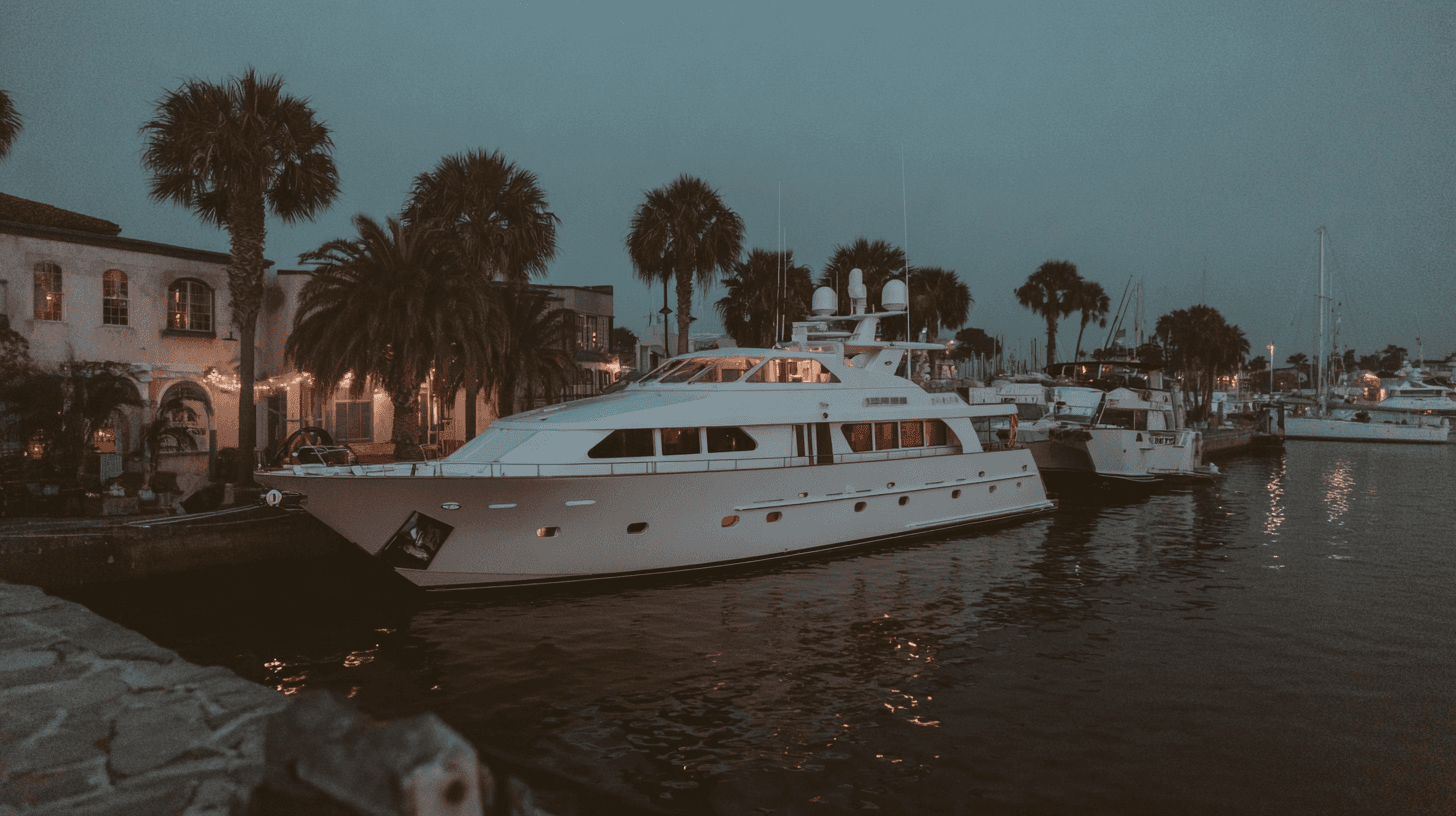
Stand at any marina on a busy Saturday and you'll see it. A boat coming in hot. The captain hunched at the wheel, working the throttles in sharp bursts. The first mate on the bow with a line in hand, looking back for instructions that aren't coming. Raised voices. A fender in the wrong place. Somebody on the dock trying to help and making it worse.
Every time, the captain's face tells the same story — frustration, embarrassment, a look around to see who was watching. And then, almost without fail, the captain finds somebody to blame. Usually the first mate. Sometimes the wind.
Here's the thing: what you just watched wasn't a skill failure. It was a preparation failure. The docking itself was the last five minutes of something that started twenty minutes earlier, when the captain should have been thinking about wind direction and line placement and didn't.
The captains who make docking look easy aren't more talented. They did the hard part before you were watching.
The mental shift that changes everything
If I had to name the single most important change in how someone approaches docking, it would be this: stop thinking of docking as a maneuver. Start thinking of it as a plan that has a maneuver at the end.
The moment the dock comes into view, the work should already be largely done. Lines prepped. Fenders hung at the right height. Crew briefed. Wind and current read. An approach selected based on those conditions, not based on which side of the boat is most convenient.
Docking goes wrong when captains skip the plan and improvise from the wheel. It goes well when captains do the plan so consistently that the maneuver itself becomes the simple part.
The pre-approach checklist
Here's what should happen in the five minutes before you're anywhere near the dock. None of this is complicated. It just has to happen every time.
Read the wind
Direction first — is it blowing you onto the dock or off of it? Both are workable, but they call for different approaches. Wind pushing you onto the dock means you can come in slow and let the wind finish the job. Wind pushing you off the dock means you need enough speed and angle to fight it, and you need your spring line ready, because the wind is going to try to take you right back out the second the bow touches.
Speed matters too. A five-knot breeze is a nudge. A fifteen-knot wind will move a 40-foot boat sideways fast enough to surprise you if you haven't planned for it.
Read the current
Every Great Lakes boater knows the wind. Fewer pay attention to the current, even though the Detroit River, the St. Clair River, and any tidal water you might find yourself in can all move your boat just as much as wind does — sometimes more.
The trick is to always dock *into* the stronger force. If the wind is mild and the current is strong, dock against the current. If they're competing, pick the one you can control for with the cleanest approach angle. What you don't want is to dock with a following current — you'll come in faster than you think, and the boat won't stop when you tell it to.
Pick your approach side
Here's where most boaters default to habit. "I always come in starboard side to." That's fine on calm days. On windy days, it's the decision that causes half the docking disasters at every marina.
Approach the dock with the wind and current on the side that helps you stop — not the side that pushes you into the dock. If there's a choice, approach so the stronger force is pushing you gently onto the dock, not away from it. If no good choice exists, you need the spring line ready to do the work your thrust alone can't.
Prep the lines
Lines should be coiled, uncleated on the boat side, and positioned where the first mate can grab each one without thinking. At minimum: bow line, stern line, and a spring line. The spring line especially — more captains skip the spring line than any other, and more bad dockings get saved by the spring line than any other piece of rope on the boat.
Prep the fenders
Fenders go at the right height for the dock you're approaching, not the dock you just left. A floating dock is about six inches above the waterline. A fixed dock with a fender board might be three feet up. The fenders have to match, or they're not going to protect anything. Have the first mate adjust before you're in close.
Brief the first mate
This is the step that's almost always rushed, and it's the step that determines whether the docking is a conversation or a confrontation. Before you're in close, tell the first mate:
Which side you're docking on.
Which line gets handed to the dock hand (or secured to the cleat) first — almost always the stern line or spring, not the bow.
Which cleat on the dock, if you can see them clearly.
What hand signals you're using. Palm-out for stop. Thumbs-up for set. Index finger pointing for direction.
If you've never done this formally with your first mate, start. One conversation at the dock before you leave saves three at the dock when you return.
THE FIVE-MINUTE PRE-APPROACH CHECKLIST 1. Check the wind. Direction, speed, whether it's pushing you onto or off the dock. 2. Check the current. River and tidal water both matter. 3. Choose your approach side based on 1 and 2 — not habit. 4. Prep lines. Bow line, stern line, spring line. Coiled, uncleated, ready to throw. 5. Prep fenders. Floating dock vs. fixed dock changes height. 6. Brief the first mate. Which line goes off first, which cleat, who does what. 7. Agree on hand signals. Radio works. Hand signals work better in noise. Done before you're within 500 feet of the dock. Not after. |
Understanding how the boat actually behaves
Now the mechanical part. If you've never thought about this, spend a few minutes thinking about it now, because it will change how you handle the boat forever.
The stern drives the boat
Most new boaters focus on the bow. They steer toward where the bow is pointing, they judge the approach by where the bow will end up. But the bow isn't where the work happens. The stern is.
On a single-engine boat, the prop is at the stern and the rudder is at the stern. On a twin-screw boat, you have two props at the stern, and the differential between them is how you pivot. Either way, the stern is where thrust is applied and where the boat actually moves. The bow just follows.
What that means practically: to move the boat sideways toward the dock, you're not steering the bow toward the dock. You're positioning the stern to push the boat where you want it. This is why experienced captains sometimes look like they're aiming wrong right up until the last second — they're setting the stern up for the actual move, and the bow will come around.
Momentum is the enemy of close-quarters control
A boat at three knots has real momentum. A boat at one knot has almost none. The difference between a clean docking and a dented gelcoat is usually the difference between those two speeds.
The phrase old captains use is "idle speed is the fastest you should ever approach a dock." I'd go further. In close quarters, neutral is the fastest you should ever be. You apply thrust in short bursts when you need movement, then shift back to neutral. Thrust is a tool you use sparingly, not a setting you leave engaged.
Pivoting in place
Every boater should know how to pivot their boat in place, and most have never tried it. On a twin-screw boat, it's one engine forward and the other reverse — the boat rotates around its center with virtually no forward movement. On a single-screw boat, it takes more finesse with the rudder and short bursts of throttle, but it's possible.
If you can pivot your boat in place, you can recover from almost any bad angle without drifting into something. If you can't, every close-quarters correction becomes a question of whether you have enough room to do it. Practice this on a calm day in open water, not at the dock.
Slow is smooth, smooth is fast. If the approach feels rushed, you're going too fast. If it feels boring, you're doing it right.
The approach itself
If the preparation is done, the approach is the easy part. Here's how it goes:
Come in slow — slower than feels right. Line up your approach so the stern will end up where you want it. Use the spring line as your first point of contact; it lets the engine's idle forward thrust hold the boat against the dock while you get bow and stern lines set. Shift in and out of neutral rather than trying to maintain a constant slow speed. Watch the first mate, not the dock hands.
If any of it starts to feel wrong — wind pushing harder than you expected, angle off, speed too high — abort. Pull out, circle around, come back. Aborting is not a failure. It's what professionals do. The captains who refuse to abort are the ones you see on YouTube with their bow under the neighbor's swim platform.
I've aborted approaches with owners on my boat who later told me it was the moment they realized I actually knew what I was doing. Anybody can force a bad approach to a conclusion. It takes judgment to recognize a bad approach and start over.
The first mate is not the problem
One last thing, because it's the thing I watch cause more marriage trouble than any other on a boat.
When a docking goes badly, the captain's instinct is almost always to blame the first mate. "You didn't throw the line in time." "You put the fender in the wrong spot." "Why weren't you paying attention?" Nine times out of ten, those complaints are a cover for something the captain didn't brief, didn't plan, or didn't communicate clearly.
If the first mate threw the line in the wrong order, it's because the captain didn't tell them the order. If the fender was at the wrong height, it's because nobody adjusted it before the approach. If the first mate wasn't paying attention, it's because they were guessing at what was about to happen — and guessing is what people do when they haven't been told.
Great first mates make great captains look good. But great first mates get that way because a captain somewhere taught them the plan, used hand signals they understood, and treated them like part of the team rather than somebody to blame when things went wrong. That relationship is something you build on purpose, with practice, in calm conditions — same as the docking itself.
What to practice now
The best time to learn to dock in wind is a day with no wind. The best time to practice pivoting is in open water where there's nothing to hit. The best time to run through hand signals with your first mate is before anything has gone wrong.
Practical exercises for the next calm day you're on the water:
Pivot your boat in place in open water. Feel how much throttle it takes, how fast the bow swings, how to stop the rotation cleanly.
Approach an imaginary dock — a specific spot on the water — at idle speed, in neutral, and stop the boat within a boat-length of where you aimed. Do it three times.
Walk the first mate through the line-handling sequence. Bow first or stern first. Where the spring line attaches. What the captain is going to do at each step.
Agree on three hand signals you'll both use every docking: stop, go, and secured. Simple is fine.
Pick a dock approach that scares you a little and practice it when nobody's around. Do it ten times. The eleventh time with people watching will feel like routine.
A word about coaching
I'll be honest about the same thing I said in the last article. Reading this will not make you a better docker. Practicing on your own will help. Practicing with somebody who can watch what you're actually doing — and tell you the thing you don't see — is the fastest way to get good.
The Captain's Coaching program at Offshore Captain Services has a whole module on docking. It happens on your boat, in your home waters, with your own first mate. My Florida boating lessons cover the same docking work in tidal current, at your own slip. Whether you do that with me or with somebody else, the principle is the same: docking is a skill, skills are built through feedback, and feedback from a qualified observer beats a thousand hours of self-taught habit.
ABOUT THE AUTHOR
Captain Tom Ketelhut is the owner of Offshore Captain Services LLC, based in Grosse Ile, Michigan. He holds a USCG Master 100 GRT for the Great Lakes and Inland Waters, a Master 50 GRT for Near Coastal, and a Commercial Towing Assistance endorsement. Mariner Reference #2913289. Thirty-six years in the marine industry, a lot of water under the keel.
Offshore Captain Services provides vessel deliveries, captain's coaching, and first mate coaching from Lake Erie to Lake Huron. The Captain's Coaching program covers docking, boat handling, anchoring, trip planning, and maintaining a captain's log. To discuss coaching for your vessel, visit captainoffshore.com or call 248.497.5791.
WRITTEN BY
Captain Tom Ketelhut
USCG Master since 2009: 100 GT Great Lakes, 50 GT Near Coastal. Home port Grosse Ile, Michigan; deliveries and coaching from Lake Erie to Lake Huron, and in Florida.
WHERE TO NEXT
Keep going

THE SERVICE THAT HELPS
Private lessons aboard your own boat: docking, handling, anchoring and trip planning.