Before You Buy That Boat: The Questions Most Buyers Skip
Most boat buyers ask questions about the boat. The questions that actually matter are about the seller, the history, and the systems — and most people don't think to ask them until it's too late.

There's a version of the boat-buying story I've watched play out probably fifty times. A buyer falls in love with a boat at the showing. The seller is friendly, the boat looks clean, the engines start easily, the test ride is nice. The buyer asks a few surface questions, gets satisfying answers, and writes a check.
Six months later that same buyer is calling me about why nothing on the boat seems to work the way they expected.
The boat wasn't necessarily a bad boat. The seller wasn't necessarily a bad person. What went wrong almost always traces back to the same thing — the buyer asked questions about the boat, when the questions that actually matter are about the seller, the history, and the systems.
This article is the list of questions I wish every buyer would ask. Most of them won't occur to you on your own. That's not your fault. They didn't occur to me either, the first time I bought a boat, and I'd already spent six years working in a marina.
The mental shift
Here's the frame to start with: the boat itself can't tell you whether it's been cared for. It can tell you whether it runs today, what the gauges read, what the gel coat looks like in the sun. It can't tell you whether the previous owner changed the oil on schedule, whether it sat in salt water for three winters, whether somebody hit a sandbar two summers ago and didn't disclose it.
The boat's biography is where the value lives. And you only get the biography by asking the seller — the right way, in the right order, with enough specificity that vague answers stand out as vague.
Most buyers don't push on this. They worry about being rude, or coming across as paranoid, or losing the deal. Don't. Sellers who have nothing to hide will answer everything. Sellers who get cagey when you ask specific questions are telling you everything you need to know.
The questions about the seller
Start here. These reveal more than you'd expect.
Why are you selling?
Seems obvious. Almost nobody asks it directly. The answer matters.
Good answers: moving up to a bigger boat, downsizing in retirement, changing locations, kids are grown and the boat doesn't get used. These are normal life events. They don't say anything bad about the boat.
Worth-a-second-question answers: "It needs more attention than I want to give it." "I'm tired of the maintenance." "It's been more than I expected." These aren't necessarily disqualifying — but they're signals that something on the boat has been pushing the owner toward selling. Find out what.
How long have you owned it, and who owned it before you?
Long ownership by a single careful owner is a very good sign. Frequent ownership changes — three owners in five years, for example — is worth understanding. Sometimes it's coincidence. Often it's not.
Ask whether the seller knows the previous owners. If they bought it from a broker and never met the prior owner, that's normal but reduces the available history. If they bought it from somebody they know, ask if they can connect you for a brief conversation. Most sellers will if they have nothing to hide.
Where do you keep it, and where is it serviced?
Tells you about exposure (covered slip vs. open water vs. dry storage) and about the relationship with the service yard. A boat that's been at the same marina for ten years and serviced by the same yard the whole time is a known quantity. The yard will have records. They'll talk to you. That's gold.
A boat that's bounced around marinas, or that's been DIY-serviced, or whose owner doesn't know the name of their mechanic — that's a different conversation. Not a dealbreaker, but you're going to be doing more digging.
The questions about the boat's history
Now we get into specifics. These are the questions that experienced buyers know to ask and first-timers don't.
Can I see the service records?
Plain, direct, and revealing. A well-maintained boat has a binder or a folder or a shoebox full of receipts and service records. An owner who can produce that without hesitation is an owner who has been paying attention. An owner who tells you they don't really keep records, or whose records are spotty, is telling you they've been less attentive than the boat needed.
Engine service intervals matter. So do oil changes, impeller changes, fuel filter changes, zinc replacements. You don't need to be a mechanic to read a service log — you just need to see whether one exists and whether it shows consistent attention.
Has it ever been in an accident, or had any major repairs?
Ask, and ask twice. Sellers are not always volunteering this information, and it's surprisingly common to discover after the fact that a boat had a hard grounding, a collision, or a major hull repair that the seller didn't think was "a big deal."
Insurance companies often have this on file. Ask the seller if they're willing to share their claims history. The answer is informative either way.
Has it ever been in salt water?
On the Great Lakes, this is a real question. Salt water exposure does long-term damage to almost every system on a boat — engines, electronics, fasteners, fuel systems. A boat that lived in Florida for a decade and was brought to Lake St. Clair is a different boat than one that's been in fresh water its whole life. Not necessarily bad — but it's a different boat, and the price should reflect it.
How many hours on the engines?
Critical, and almost always the first thing buyers ask. Two follow-ups that buyers usually don't ask:
How were those hours accumulated? A boat with 800 hours from regular weekend use is different from a boat with 800 hours from one owner who pushed hard on long trips.
What's the service history at major intervals? Most marine engines have specific service points at 100, 500, and 1000 hours. Ask whether those services have been done, and whether you can see records.
A boat with 1,200 hours and a complete service history is worth more than a boat with 400 hours and no records. The number on the meter matters less than what you can prove about how those hours were spent.
The questions about the systems
Now into the boat itself. These are the things to look at and ask about beyond the engine.
Generator, if equipped
Generators get neglected more than any other major system on a boat. Ask the hours, ask when it was last serviced, ask whether the seller actually uses it regularly. A generator that hasn't been run in three years is effectively an unknown.
Electronics
Chartplotter, radar, autopilot, VHF, depth sounder. Ask the age and the manufacturer of each. Marine electronics evolve fast — a ten-year-old chartplotter is a candidate for replacement, even if it still functions. Factor that into the price.
Hull and gelcoat
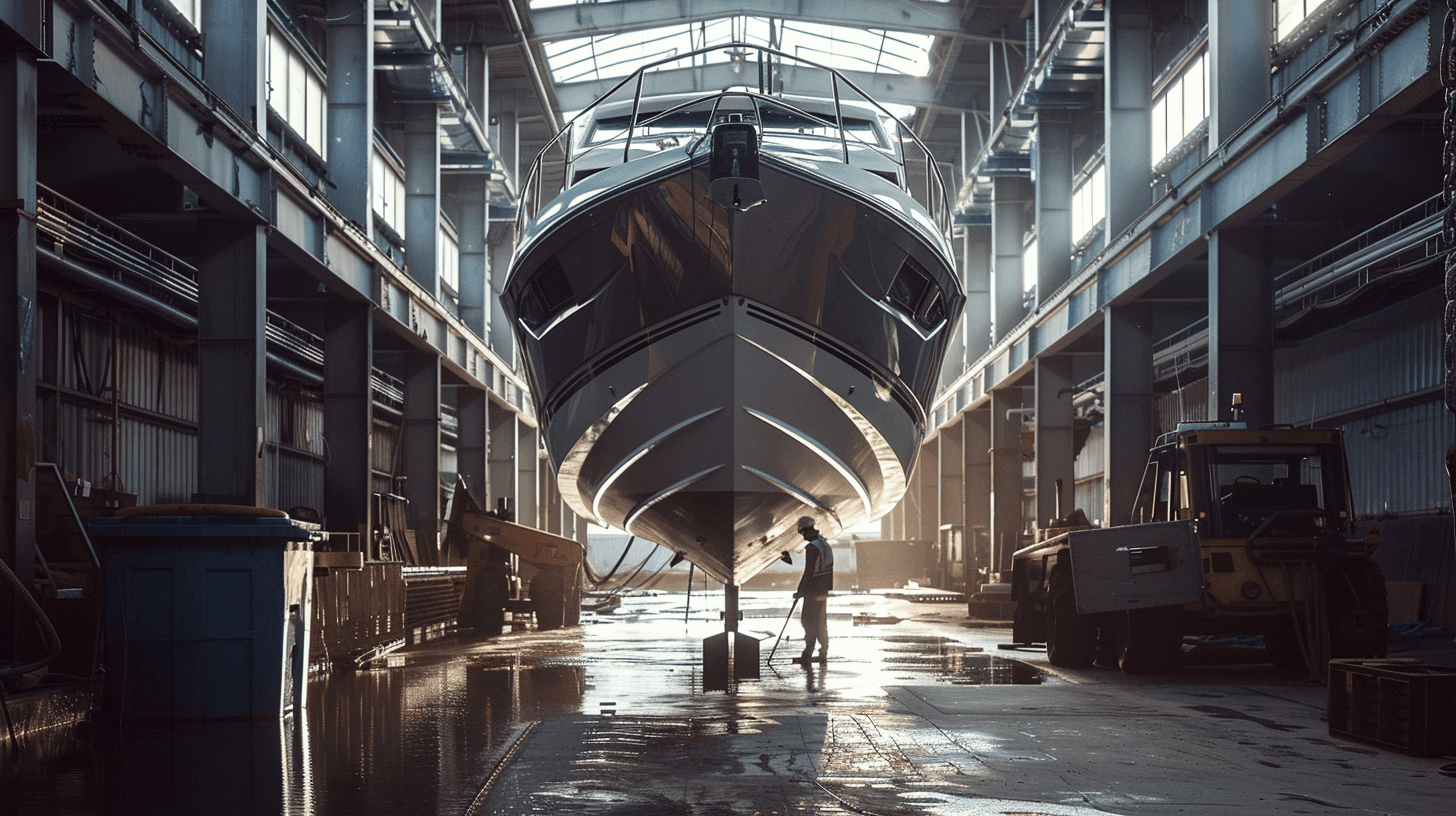
Walk the hull slowly. Look for spider cracks, soft spots, signs of repair. Ask specifically about any repairs to the hull or transom. A surveyor will catch most of this, but you want to walk away from a showing knowing whether you saw anything that surprised you.
Fuel system
Ask when the tanks were last cleaned or inspected. Ask about ethanol exposure if the boat is gas-powered. Bad fuel is the source of more on-water mechanical problems than almost any other cause, and the system is largely invisible until something goes wrong.
Bilge, batteries, and electrical
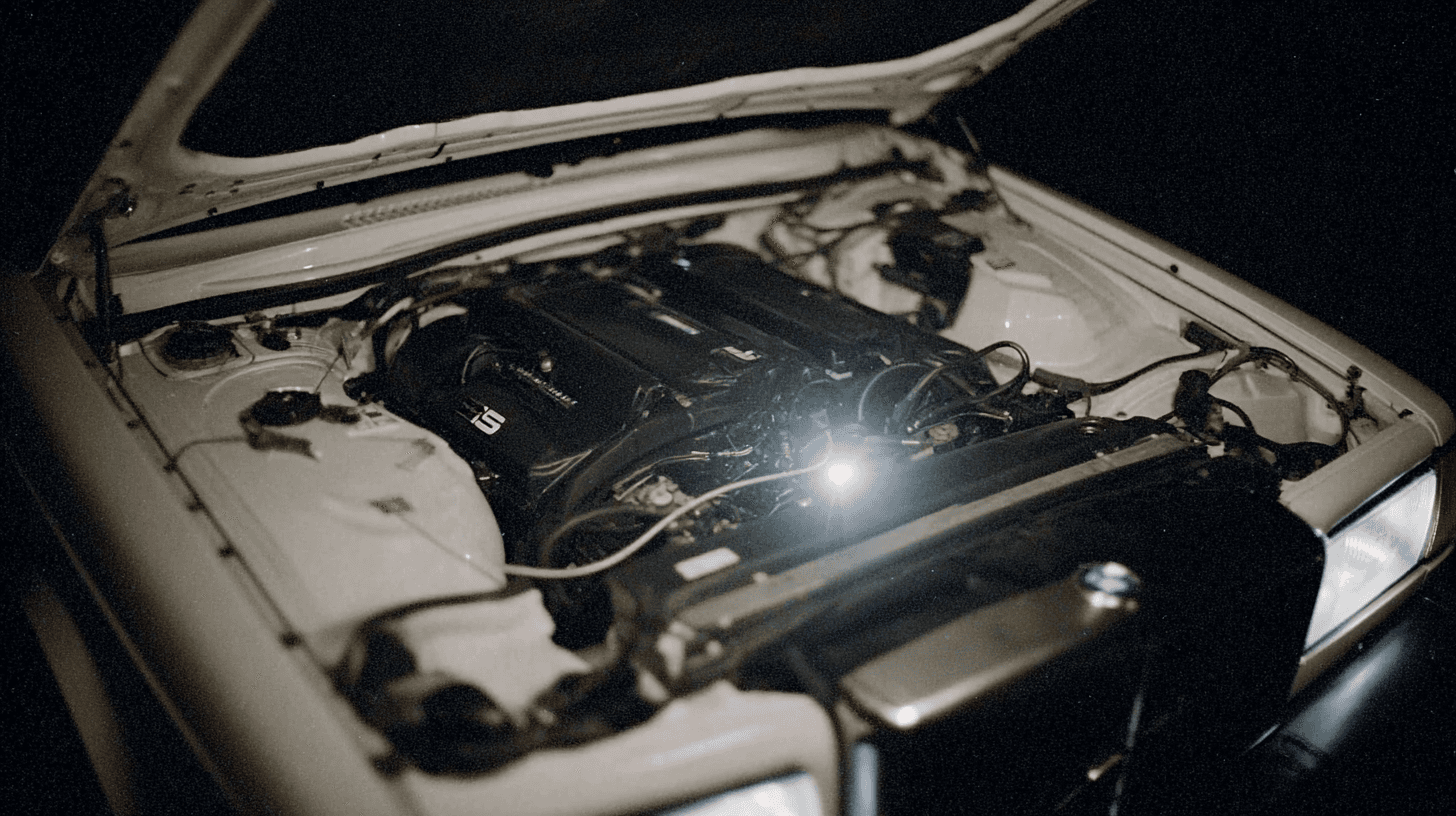
Open the engine compartment. Look at the bilge — clean and dry, or stained and oily? Look at the batteries — recent, properly secured, or aged and corroded? Look at the wiring — neat and labeled, or a tangle of additions? These tell you what the rest of the boat probably looks like in the places you can't see.
The questions you should not ask (yet)
A short list of questions that signal you don't know what matters and may weaken your position when it's time to negotiate:
"What's your bottom line?" Asked too early, this signals you have no plan. Negotiate after the survey, with information.
"Will you finance it for me?" Most private sellers won't, and asking up-front communicates the wrong things about your seriousness and your credit.
"Is the price firm?" The price isn't firm. Everybody knows the price isn't firm. Asking is fine but it doesn't get you anywhere.
"How fast does it go?" On a cruising boat, this is the wrong question. Range, fuel efficiency, and comfort at cruising speed are what matter.
The survey: the most important leverage moment in the deal
Every buyer should commission an independent marine survey before closing on a boat above a meaningful price threshold. For most cruising vessels, that threshold is anything north of $30,000. Below that, you can sometimes skip the survey if you have the boat thoroughly inspected by somebody you trust. Above that, the survey is non-negotiable.
Two important things about the survey:
First, it's your survey. You hire the surveyor. You pay them. They work for you, not the seller and not the broker. A surveyor recommended by the broker who's selling you the boat is not your independent surveyor — it's their preferred surveyor, and there's a real difference.
Second, the survey is the moment when most price negotiation actually happens. The survey will find things — every survey on every boat finds things, because every boat has issues. What matters is what's a dealbreaker, what's a negotiating point, and what's just normal wear. That's where an experienced second opinion earns its cost ten times over.
This is the part of the process most buyers underinvest in. They spend weeks looking at boats and ten minutes thinking about the survey. Reverse that ratio.
A word about consulting
Same direct line as previous articles. Reading this is a start. Walking through your specific situation with somebody who has done this — surveyed this make of boat, ridden in this size class, watched this kind of seller move boats — is faster and gets you to a better answer than figuring it out alone.
That's a meaningful portion of the consulting work I do at Offshore Captain Services. Pre-purchase walkthroughs, second opinions on surveys, sea trial support, and conversations about whether a specific boat at a specific price is the right move. Cheaper than a survey. A lot cheaper than buying the wrong boat.
Whether you do that with me or with somebody else, do it. Buying a boat is the largest single transaction most boaters will ever make outside of their house. The cost of an experienced second opinion is rounding error against that number.
The pre-purchase question checklist
If you're about to look at a boat — or you're already in the negotiating phase — here's the short version of what's in the article above. Print this. Take it with you.
Why are you selling?
How long have you owned it? Who owned it before?
Where do you keep it? Where is it serviced?
Can I see the service records?
Has it ever been in an accident or had major repairs?
Has it ever been in salt water?
How many hours on the engines, and what's the service history at major intervals?
What's the age and condition of the generator, electronics, fuel system, batteries, and electrical wiring?
Are there any known issues you'd want me to know about?
The last one is the question that catches most sellers off guard. Asked plainly, with the phrasing "is there anything you'd want me to know," it gives them an opening to disclose something they might otherwise leave out. Some will. Some won't. Either way, you've made it harder for them to claim later that they weren't asked.
ABOUT THE AUTHOR
Captain Tom Ketelhut is the owner of Offshore Captain Services LLC, based in Grosse Ile, Michigan. He holds a USCG Master 100 GRT for the Great Lakes and Inland Waters, a Master 50 GRT for Near Coastal, and a Commercial Towing Assistance endorsement. Mariner Reference #2913289. Thirty-six years in the marine industry, a lot of water under the keel.
Offshore Captain Services provides vessel deliveries, captain's coaching, first mate coaching, and pre-purchase consulting from Lake Erie to Lake Huron. To discuss a boat you're considering, visit captainoffshore.com or call 248.497.5791.