The Spring Launch Checklist: A Two-Week Countdown to Splash Day
Splash day is not the day to start thinking about splash day. Here's the two-week countdown I run with my own boat — and what to do if you find a problem at each stage.
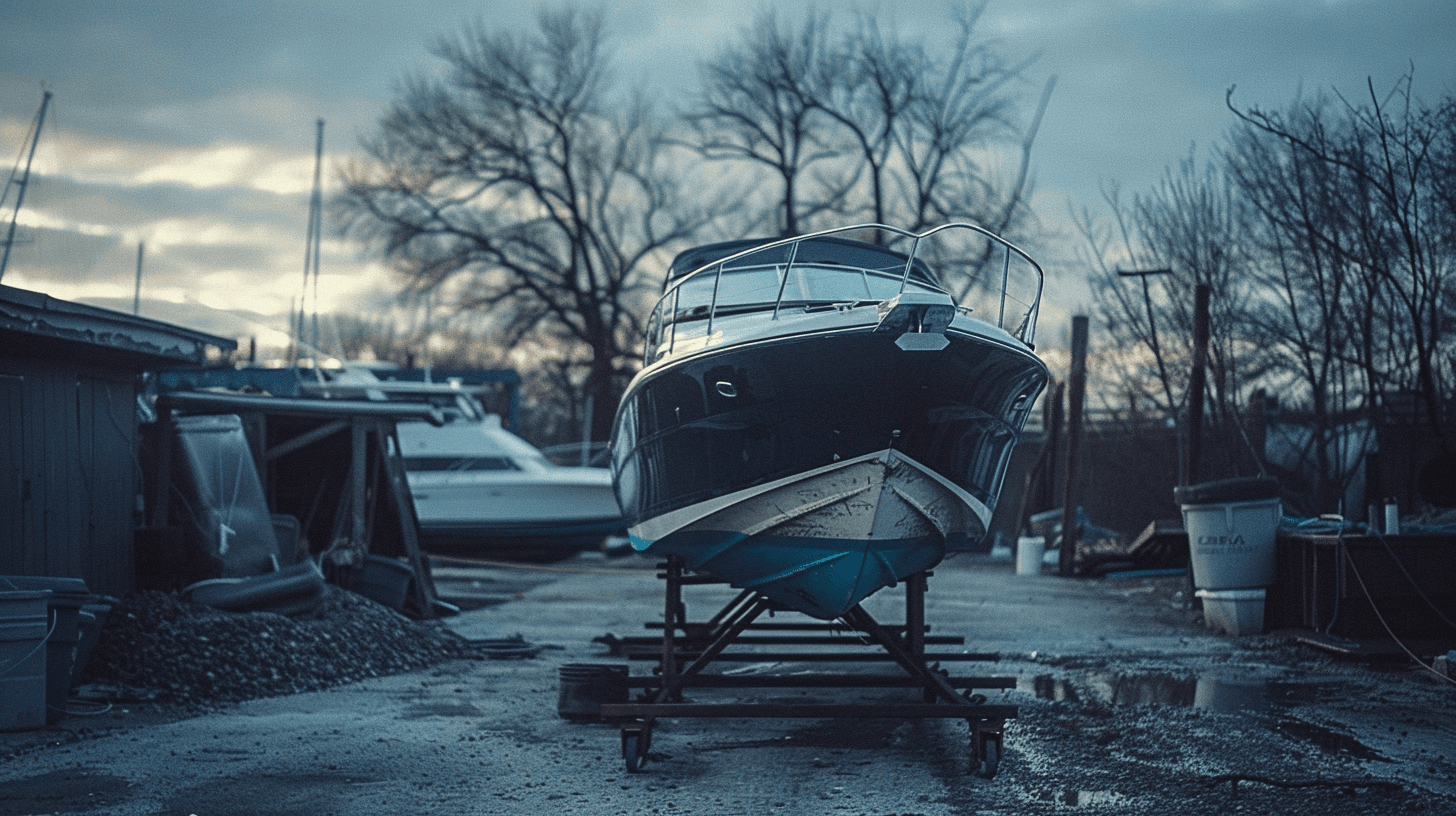
Every spring I watch the same scene play out at clubs from Grosse Ile up to Harbor Beach. An owner shows up the morning of splash day, the Travelift slings the boat into the water, the owner climbs aboard, turns the key — and something is wrong. Bilge pump won't run. Engine won't start. Stuffing box dripping like a faucet. Within thirty minutes someone's flagging down the yard manager to bring the boat back out.
Almost every time, the problem was catchable the week before. Sometimes two weeks before.
Spring commissioning isn't one big day of work. It's a countdown. Here's how I run it — for my own boat and for the clients I help every year — broken down by what should happen when.
Two Weeks Out: While She's Still on the Hard
This is the work you can only do while the boat is still on stands. Once she's in the water, half of these become a lot harder or a lot more expensive.
Walk the hull. I mean walk it. Not a glance from the ground. Get a stepladder if you have to. You're looking for blisters, gelcoat cracks, impact damage you may have missed in the fall, and any spots where the bottom paint is peeling or chalky. If you see a hairline crack near a through-hull or along a chine, that's a phone call to your yard, not a thing you note and ignore.
Inspect every through-hull and seacock. Open and close each one. They should move smoothly through their full range. If a seacock is stiff, frozen, or feels gritty, it needs to be serviced before launch. A frozen seacock is the kind of problem that doesn't matter — until the day it matters very much.
Check the running gear. Props, shafts, rudders, struts, cutlass bearings. Look for dings, bent blades, and play in the shaft. Grab the prop and try to wiggle it side to side — there should be almost none. Excessive play means a worn cutlass bearing, and that's a haul-out repair, not an in-water repair.
Bottom paint. If you didn't paint last fall, decide now whether you're painting this spring. If yes, get it on the schedule with your yard immediately. Bottom paint backs up fast in April.
Zincs. Replace them. All of them. Zincs are cheap, replacement zincs are cheap, and a boat with worn-out zincs eating its running gear is not cheap. If you don't know what zincs your boat has, your yard does.
A note on what "the yard" can and can't do: Most yards will happily handle items they know about a week in advance. The same items, requested the morning of launch, become a Travelift fee, a schedule disruption, and a frustrated yard manager. Spring is their busiest season. Plan around that.
Topsides and canvas. Wash her down. Get the winter grime off the hull and deck. Inspect the canvas — bimini, enclosure panels, snaps — for tears, broken zippers, or hardware that's pulling away from the canvas. Canvas shops are slammed in April. If you need a repair, get it in now.
One Week Out: Systems Wake-Up
Now you're getting close. This is the week to bring the boat back to life.
Batteries. Charge them, load-test them, check the water levels if they're flooded lead-acid. A battery that read fine in November may not crank in April. If you're not sure, take them to an auto parts store — most will load-test for free.
Fluids. Check engine oil, transmission fluid, coolant, power steering, and any other fluid your engines use. Top off what needs topping. If you didn't change the engine oil at fall layup, change it now — the oil that's been sitting in there all winter has acid in it from combustion byproducts, and you don't want it sitting on your bearings for another season.
Fuel. If you stabilized your fuel in the fall, good. If you didn't, plan to add a full dose of fuel stabilizer and treat it as the first stop on your first run. Old gas in particular goes bad faster than people think — diesel is more forgiving but not bulletproof.
Belts and hoses. Squeeze every coolant hose. They should feel firm, not spongy or cracking. Look at the belts for cracking, glazing, or fraying. A belt that lets go thirty miles offshore on Lake Huron is a very different problem than a belt that lets go in your slip.
Raw water system. Check the impellers if you didn't replace them in the fall. Most owners don't, and most owners should. A failed impeller takes out a heat exchanger, and a heat exchanger takes out an engine.
Strainers. Open every raw water strainer, clean it, inspect the gasket, and put it back together. Make sure you can get the lid off. A strainer lid you can't open in your slip is a strainer lid you definitely can't open in two-foot chop with a clogged intake.
Safety gear pull. Take everything out of the lazarette and the cabin lockers. Lay it on the dock or on the deck.
Life jackets: Inspect each one for tears, mildew, or shot foam. Confirm you have one for every person who'll be aboard, and a Type IV throwable.
Fire extinguishers: Check the pressure gauges. If a needle is in the red or even close to it, replace the extinguisher. Check the dates — most have a useful life of around 12 years.
Flares: Check expiration dates. Expired flares are not legal for USCG carriage requirements.
First aid kit: Pull it out, look inside, restock anything used or expired.
Sound signal: Make sure the horn works. Test the whistle.
Nav lights: Power up and confirm every nav light works. Bring spare bulbs.
Documents. Confirm your registration is current, your documentation papers are aboard, and your insurance certificate is current and accessible. If anything expired over the winter, deal with it now.
The Day Before: Final Walk
The day before launch should be a quiet day. If it isn't, you didn't do enough the week before.
Bilge: Clean and dry. Pumps tested. Float switches tested. Nothing in the bilge that shouldn't be there.
Stuffing box: If you have one, check its condition. Know what dripping rate is normal for your boat — a properly adjusted traditional packing gland drips slowly when the shaft is turning and barely at all when it's not. Dripless seals shouldn't drip at all, but they should be inspected for the bellows condition.
Engine room walk-through: Eyes on every hose, every clamp, every connection. Look for anything that's loose, weeping, or out of place. Tighten what needs tightening.
Tools and spares aboard: Basic tool kit, spare impellers, spare belts, spare fuses, electrical tape, hose clamps in your common sizes. You don't need a full machine shop, but you need enough to handle the small stuff yourself.
Fuel and water topped off: Top off your water tanks if you use them. Fuel up — you want a full tank for the first run so you have working fuel volume and flow.
Phone numbers: Tow Boat US membership current. Local marina numbers in your phone. Your yard's after-hours number.
Splash Day: Before She Goes In
You're at the yard. The Travelift is on schedule. Before they pick her, do one final pass.
Hull: Confirm bottom paint is dry, zincs are on, props are clear, no last-minute issues.
Through-hulls: Confirm every seacock is in the closed position before she goes in the water. Yes — closed. You'll open them once she's afloat and you've checked for leaks.
Drain plug: This is the one nobody wants to admit they've forgotten. The drain plug. Confirm it's in. Confirm it's tight. Now confirm it again.
The drain plug story I'll spare you: Every captain I know has one. Mine involved a phone call I'd rather not repeat. The lesson is: check it twice, every time, no matter how many seasons you've been doing this.
In the Slings: The Five-Minute Check
Once the Travelift has her in the water but the slings are still under her, you have a five-minute window where the yard can pull her right back out if something is wrong. Use it.
Open seacocks one at a time. Check for leaks at each one as you open it.
Look at the stuffing box. Check the rate of drip.
Check the bilge. Run the bilge pump.
Start the engines. Confirm raw water is flowing out the exhaust on each engine — this is the single most important thing you'll check today. No water flow, shut it down immediately.
Check the heads, the freshwater system, and any other through-hull system.
If anything is wrong, this is the moment to catch it. Once the slings come off and the boat moves to her slip, getting her back out is a much bigger ask.
The First Run: Easy Does It
Don't run her hard on the first trip out. The first run is a shakedown, not a sea trial.
Take her out at idle, get her into open water, bring the throttle up slowly, and watch every gauge — oil pressure, coolant temperature, voltage, transmission temperature if you have it. Run her at a moderate cruise for at least twenty minutes. Bring her back. Walk the engine room with the engines still warm. Look for leaks, listen for unusual noises, smell for anything off.
If the first run is clean, you're commissioned. If it isn't, you've caught the issue early enough to fix it before you've planned a weekend trip around the boat.
The One Thing Most Owners Skip
A written log. Not a fancy one — a simple notebook in the chart drawer where you record what you did, what you replaced, what you noticed, and the date. Three years from now, when something fails, you'll want to know when you last serviced it. Five years from now, when you sell the boat, a buyer's surveyor is going to ask. The owners who keep good records get better surveys, better insurance terms, and better resale prices. It's the cheapest piece of equipment on the boat and the most consistently undervalued.
That's it. Two weeks of small steps, in the right order, in the right week. Done right, splash day is boring. And boring is exactly what you want.