What a Marine Survey Actually Covers (And What It Doesn't)
Three different surveys, three different purposes. Most buyers find that out the hard way. Here's what each one catches — and what it won't.
I get a call once or twice a season that goes something like this: "Tom, I had the boat surveyed before I bought it, and now I'm three months in and the starboard engine is making a noise the surveyor never mentioned. What gives?"
What gives is that the surveyor probably did exactly what he was hired to do. He just wasn't hired to look at the engines.
Most first-time buyers — and plenty of second- and third-time buyers — don't realize there are three different kinds of marine surveys, and each one has a different job. Hire the wrong one, or skip one you needed, and you'll find out later. Usually at the worst possible time.
Let me walk through them.
The Pre-Purchase Survey
This is the big one. It's the survey you order before you close on the boat, and it's the one most people are talking about when they say "I'm getting a survey."
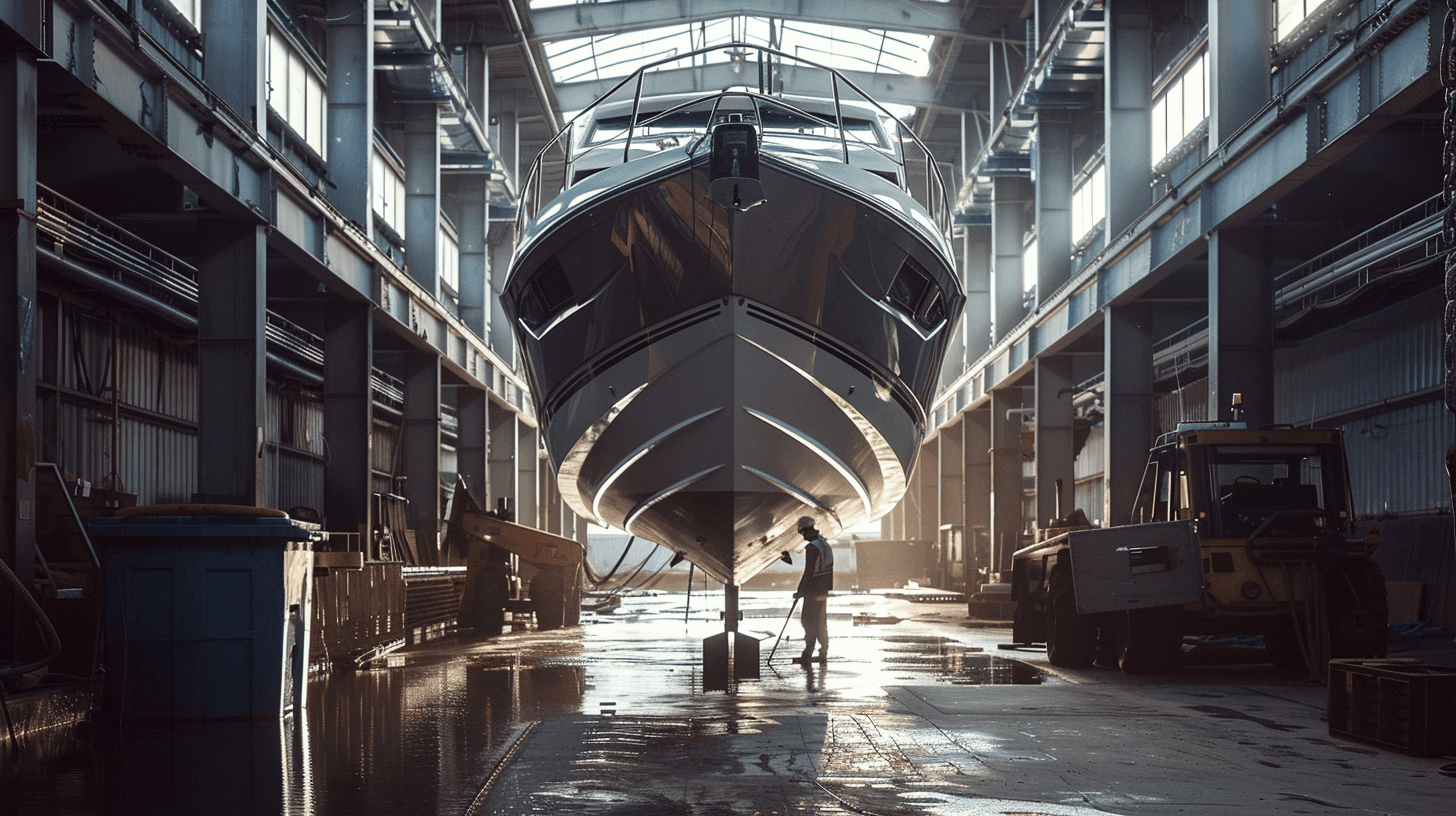
A good pre-purchase surveyor will spend most of a day on the boat. He'll pull her out of the water on a Travelift, sound the hull with a small hammer to listen for delamination or moisture, check the running gear, look at the bottom paint, inspect through-hulls and seacocks, and check the rudder posts and shaft logs. Back in the slip, he'll go through the systems — electrical panels, batteries, bilge pumps, freshwater system, head, holding tank, navigation electronics, safety gear. He'll do a sea trial with you, take her up to cruise speed, run through the gears, and watch how she handles.
What you get at the end is a written report. It'll usually have a "fair market value" and a "replacement value" listed on the front page — those numbers matter for your insurance carrier, which I'll come back to. Then there'll be a list of findings broken into categories: items that need immediate attention before the boat is safe to operate, items that should be addressed in the near term, and recommendations.
A quick note on what "near term" means: It's not a polite suggestion. If a surveyor flags something as a near-term repair, your insurance carrier may very well be reading the same report and expecting that work to be done. Don't ignore it.
Here's what a pre-purchase survey is not designed to do: tear into the engines.
The surveyor will start them, listen to them, watch the gauges, check for smoke, look for visible leaks in the engine room, and make notes about overall condition. He'll tell you whether the engines run. He will not tell you whether the engines are healthy. Those are different questions, and they require a different person.
The Engine Survey (Mechanical Survey)
This is the one people skip. Don't skip it.
An engine survey — sometimes called a mechanical survey — is performed by a marine mechanic who specializes in your specific engines. If you've got Cummins diesels, you want a Cummins guy. If you've got Volvo Penta gas engines, you want a Volvo guy. Generalists exist, but specialists catch more.
What the engine surveyor actually does:
Pulls oil samples from each engine and the transmissions, sends them to a lab for analysis. The lab report tells you whether there's metal in the oil, whether coolant is intruding, whether the wear pattern looks normal for the hours.
Compression tests or cylinder leakdown tests, depending on the engine type and what's appropriate.
Pulls the heat exchangers if accessible, checks raw water pumps, looks at impellers.
Reads the engine ECMs (the engine computers) for fault history. This is huge on modern engines — the ECM remembers things the seller may have forgotten to mention.
Inspects the exhaust system, the fuel system, belts, hoses, mounts.
Verifies hour meter accuracy where possible.
A pre-purchase surveyor cannot do this. He doesn't have the equipment, the engine-specific training, or the lab relationships. And honestly, the good ones will tell you that themselves and recommend you bring in a mechanic.
The cost of an engine survey is real — usually a few hundred to a couple thousand dollars depending on how many engines and how thorough the work — but on a boat with twin diesels worth $40,000+ each to replace, it's the cheapest insurance you'll ever buy.
The Insurance Survey (Condition and Value Survey)
This one's different from the other two because it's not for you. It's for your insurance carrier.
When you go to insure a boat — especially one over a certain age, usually 10 or 15 years depending on the carrier — the underwriter is going to require a "condition and value" survey. Sometimes called a C&V survey or just an insurance survey. The purpose is straightforward: the carrier wants an independent professional to confirm that the boat is in seaworthy condition and to set a value the policy will be written against.
If you ordered a thorough pre-purchase survey when you bought the boat, that document will usually satisfy the carrier — provided it's recent. Most carriers want a survey within the last twelve months at the time of underwriting, and they'll want a fresh one every three to five years for the life of the policy.
Where this trips people up: The insurance survey isn't always as deep as the pre-purchase. Some surveyors will offer a "condition and value only" inspection that's faster and cheaper, and that's fine for renewals — but don't confuse it with a pre-purchase. If you're buying a boat and somebody offers you a "quick C&V to satisfy the bank," that is not the survey you want before handing over a six-figure check.
The other thing worth knowing: insurance surveys are what your carrier reads when they're deciding whether to write the policy and what the deductible looks like. Findings on that report can affect your rate, your coverage limits, and your renewal eligibility. Take the recommendations seriously.
What Falls Between the Cracks
Even with all three surveys, there are things nobody is going to catch.
Trailers don't get surveyed by marine surveyors. If you're buying a boat that comes with a trailer, get the trailer looked at separately by somebody who knows trailers — bearings, brakes, frame condition, tires.
Electronics get a cursory check. The surveyor will confirm the chartplotter powers up and the radar spins. He's not going to spend two hours testing every menu and feature. If you're buying a boat with $20,000 worth of helm electronics, talk to a marine electronics installer about whether everything is current, supported, and properly integrated.
Canvas, upholstery, and cosmetics get a visual once-over and that's about it. If the bimini is delaminating or the headliner is starting to sag, the surveyor will note it, but he won't price out replacement.
And the soft stuff — the way she handles in a crosswind, how she takes a head sea, whether the helm feels right to you — none of that shows up in any survey. That's what the sea trial is for, and that's why I tell buyers to spend as much time on the sea trial as they spend reading the report. If you'd like a captain aboard for yours, that's part of my sea trial and purchase help.
The Order I'd Run Them
If you're under contract on a boat, here's how I'd sequence it:
Pre-purchase survey first. This is your gate. If the surveyor finds something disqualifying — major structural damage, a hull issue, anything that changes the deal — you stop here and renegotiate or walk. No point in spending more money.
Engine survey next, ideally same day or the day after, while the boat is already pulled or accessible. The mechanic and the surveyor will often coordinate if you ask them to.
Insurance survey. In most cases, the pre-purchase survey doubles as your insurance survey for the first year, so you're not paying for a fourth set of eyes. Confirm with your carrier in advance which surveyors they'll accept — most have a list.
Get the reports back, read them carefully, and call your surveyor to walk through anything you don't understand. Good surveyors want that call. A surveyor who won't get on the phone with you after the report is delivered is the wrong surveyor.
Who Pays for What
Buyer pays for the pre-purchase survey, the engine survey, and the haul-out for the survey (the Travelift fee). That's industry standard and rarely negotiated.
The seller is responsible for delivering the boat in the condition represented. If the survey turns up issues that weren't disclosed, that's where the price negotiation happens — repair credits, price reductions, or in some cases the seller agreeing to handle specific items before closing.
The insurance survey, when required separately, is on the buyer or owner. Always.
One Last Thing
Hire surveyors who work for you, not for the broker, not for the seller, not for the marina. Ask them directly: "Do you have any business relationship with the seller, the broker, or the marina handling this transaction?" The answer should be no. If it isn't, find somebody else.
A surveyor's only job is to tell you the truth about the boat. That's worth a lot when the boat is right, and it's worth even more when the boat isn't.