Great Lakes to Florida Boat Delivery: Routes, Cost, Timing
Truck or transit? The honest comparison for Great Lakes owners thinking about getting their boat to Florida for the winter — from someone who runs both.
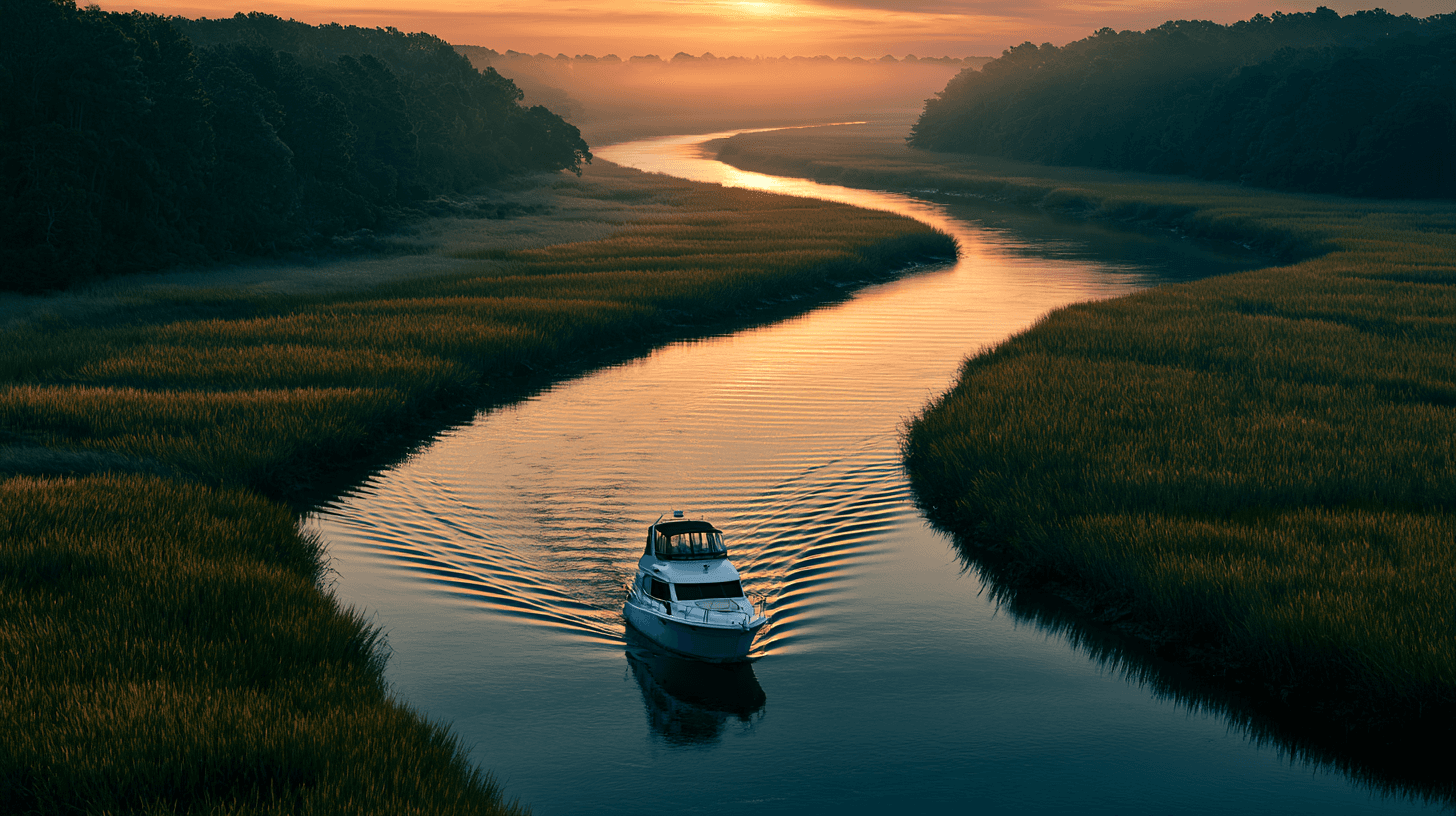
Every fall, somewhere between October and the first hard freeze, a particular conversation starts happening in marinas across SE Michigan. The owner has been thinking about it all summer. The spouse brings it up at the yacht club. Someone at the next slip just did it last year and won't shut up about how easy it was.
The conversation is about Florida.
Specifically: should we get the boat down there for the winter instead of putting it in storage? And if we do — do we ship it on a truck, or have a captain run it down?
I get this call probably twenty times a year. The honest answer is that there's no single right choice. There's a right choice for your boat, your timeline, your budget, and your appetite for having professional eyes on the vessel for several weeks. What follows is the framework I walk owners through.
The two real options
There are essentially two ways to get a Great Lakes boat to Florida.
Option one: ship it on a truck.
A specialized boat hauler loads your vessel onto a hydraulic trailer and drives it down. For most recreational boats up to roughly 55 feet, this is mechanically straightforward. The boat sits on the trailer for two to five days and arrives at a marina you've arranged in advance.
Option two: deliver it under its own power.
A licensed captain (usually with a mate, depending on size and route) takes the boat down the Erie Canal, into the Hudson, out into New York Harbor, and then south down the Atlantic Intracoastal Waterway. The delivery typically runs four to six weeks depending on weather and the route chosen.
Both work. They're different products, with different costs, different risks, and different things the owner gets out of the deal.
The ship-it case
The reasons owners choose trucking are usually practical.
It's faster. Two to five days from pickup to delivery, weather permitting. If you want the boat in Naples by Thanksgiving and you're starting from Grosse Ile in early November, trucking is the only option that hits the date.
The cost is more predictable. A trucking quote is a fixed number. A delivery has a daily rate plus expenses, and weather delays are real. I tell owners to budget delivery costs at the high end of estimates, not the low end.
The boat doesn't rack up engine hours. A delivery from SE Michigan to Florida runs close to 2,000 miles and puts roughly 150 to 200 engine hours on your boat, depending on cruise speed. For owners who watch hours carefully (particularly on diesel cruisers where hours directly affect resale) that's a real cost on top of the cash cost.
It avoids the Erie Canal. Which matters because the Erie Canal has air-draft restrictions that knock out most flybridge cruisers above a certain height. If your boat has a hardtop or a tower, you're looking at un-stepping the radar arch and antennas (a real project), the longer route through Lake Ontario, or a truck.
The downside of trucking is straightforward: you're handing your boat to a logistics company. The good ones are very good. The established haulers have been doing this for decades and have the equipment and the experience. The not-so-good ones drop boats. It happens. Vet the carrier hard, require photos at pickup, and confirm insurance.
The deliver-it case
The reasons owners choose delivery are different.
The boat gets professionally evaluated for several weeks. A captain running your boat all the way to Florida will identify every quirk, every leak, every soft spot before you do. I've handed boats back to owners with detailed lists of things they didn't know were wrong — bilge pumps cycling more than they should, an alternator charging weak, a head valve that was about to fail. That's diagnostic value you don't get any other way.
It's the cheaper option for larger boats. This surprises people. But once you get above 50 feet, trucking costs scale fast — wider trailers, permits for oversize loads, route restrictions. Above about 55 feet, delivery is often the more economical choice, not the more expensive one.
You can ride along. Some owners want to. They turn the delivery into an owner-assisted training trip — they're learning their boat for several weeks, with a professional captain right beside them, on a route they'd never otherwise run. By the time they pull into Stuart or Naples, they know their vessel in a way that fifteen years of weekend cruising on Lake St. Clair would never teach them.
The boat exercises its systems. Diesels are happier running than sitting. Weeks at cruising RPM are good for the engines, the fuel system, and the hydraulics. The argument that "engine hours hurt resale" is real but partial — engines that sit unused develop their own problems.
The downside of delivery is that it takes weeks, not days. And the boat is exposed to weather, mechanical issues, and the inevitable things that happen on a long transit. A professional captain is making decisions every day about whether to push or hold up; that's what you're paying for, but it means the arrival date isn't fixed.
The route question (if you deliver)

If you decide to deliver, there are essentially two routes south from the Great Lakes, and most owners don't realize this until the captain explains it.
The Erie Canal / Hudson / ICW route. This is the standard route. From Lake Erie or Lake Ontario, you transit the Erie Canal to Waterford, just above Albany, drop into the Hudson River, and run south past New York City and down the coast to Norfolk, where the Atlantic Intracoastal Waterway begins. From Norfolk it's protected water nearly the whole way to Florida: NOAA's Coast Pilot puts Miami at mile 1,089 of the waterway. Total distance: roughly 1,800 to 2,000 nautical miles depending on where you start and end. Total time under power: about 25 to 35 days, plus weather days.
The bridges are the catch. On the western Erie Canal, from the Niagara River to the junction with the Oswego Canal, the fixed bridges clear 15.5 feet. From Oswego east to Waterford, they clear at least 21 feet. So a boat too tall for the western canal still has a way through: the Welland Canal into Lake Ontario, across to Oswego and onto the eastern Erie. It adds a Canadian canal, a Seaway reservation and a crossing of Lake Ontario. Above 21 feet, you're un-stepping hardware before the trip or you're not running this route.
The Chicago / Mississippi / Gulf route. From Lake Michigan, some owners run south through the Chicago Sanitary and Ship Canal, down the Illinois and Mississippi Rivers, into the Gulf of Mexico, and around to Florida. This is the route the America's Great Loop crowd uses in reverse. It's longer, harder, and has its own air-draft restrictions, but it avoids the Erie Canal lock-and-bridge gauntlet.
For SE Michigan owners specifically, neither route is obvious. From Grosse Ile or Lake St. Clair, the Erie Canal route is shorter — but you have to transit Lake Erie east, and Lake Erie eastbound in October is no joke. The lake builds chop fast and the prevailing weather isn't on your side. Most captains running this route in the fall watch the weather hard for a window.
The cost picture
Owners always want the number. There isn't a single number, but here's the honest range as of late 2025 and early 2026.
Trucking for a typical 35- to 45-foot cruiser from SE Michigan to Florida: roughly $5,000 to $9,000 all-in, depending on the trailer setup, the carrier, the destination port, and how far in advance you book. Larger boats (50+ feet) scale up significantly, and oversize permits add cost.
Delivery for the same boat on the same route: published industry day rates currently sit in the $400 to $800 per day range for the captain alone, plus mate fees ($200 to $300+ per day) for larger vessels, plus fuel, dockage, food, and travel expenses to return the captain home. For a four-week ICW delivery on a 40-foot cruiser, total cost typically lands in the $15,000 to $25,000 range. Larger boats above 50 feet often run $25,000 to $40,000+.
The gap looks huge until you remember the trade-offs. Trucking is cheaper but isolates the owner from any knowledge about the boat. Delivery is more expensive but exercises the boat, identifies problems, and (for many owners) is the difference between "surviving" the trip and using the trip productively.
There's a third option that doesn't get talked about enough: owner-assisted delivery. The owner runs the boat with the captain. Some captains charge slightly less when the owner is aboard contributing labor; some charge slightly more because the captain is also coaching. Either way, you're getting the delivery plus a multi-week intensive on your vessel, which for a new owner or someone who recently moved up to a bigger boat is genuinely transformative.
Insurance, and why it has to come first
This is the conversation that needs to happen before any of the other conversations. Most marine insurance policies have navigational limits. They specify what waters the boat is covered in, and the Great Lakes are a different navigational zone than the Atlantic ICW. A standard policy may not cover the boat once it leaves Lake Erie.
There are two paths to fix this:
Get a navigational rider for the delivery. Your carrier extends your existing policy temporarily to cover the route. This is straightforward but requires advance notice — usually 30 to 60 days — and the carrier will want to know who's running the boat. If you've hired a USCG-licensed captain, they'll want the captain's credentials and Mariner Reference Number for the file.
Get a separate Florida policy. Some owners moving south permanently switch carriers entirely, since Florida marine insurance is a different market with different underwriting considerations (named storm coverage being the big one).
Either path, the order matters: confirm coverage *before* you book trucking or hire a captain. I've had owners call me three days before a planned departure realizing they don't have a rider in place and the carrier needs ten business days to process. Don't be that person.
For the captain side specifically, I have a standard credential submission form I send to insurance underwriters that includes my license details, Mariner Reference Number, and the relevant policy fields. Most carriers process it in a day or two. Your carrier may have their own form; most don't.
Timing windows
The fall window for moving south is narrower than people think, and the New York canals set the deadline. The state sets the dates each year: in 2026 the locks close to navigation on October 14 at 6 p.m. The date moves from year to year, so check the Canal Corporation's notice before you plan anything.
September:
The best window for the canal route. You're through the canal with days to spare and ahead of the worst of the fall weather on Lake Erie.
Early October:
Last call, and only if the boat is ready to go. The days are shorter, Lake Erie gets rougher, and a front that holds you in port for two days can cost you the canal.
After the canal closes:
Trucking is your practical option, and even that gets weather-dependent on the truck side once you're past Thanksgiving in any northern state.
Coming home in the spring:
The window inverts. The canals open in mid-May (May 15 in 2026), so the run north is timed to them: leave Florida in April, work up the ICW and the coast, and reach the Hudson as the locks open. If your Florida policy names a date the boat has to be out of the state for hurricane season, build the schedule backward from it. Trucking can run year-round but has its own seasonal cost patterns.
The same captain can do both ends. I take boats south in the fall and bring them home in the spring, and booking both legs at once gets you first pick of dates on each.
The honest advice: if you're thinking about doing this for the first time, make the decision in July or August for a fall move, or in February for a spring move. Late decisions limit your options and inflate your costs.
What this looks like as a project
For owners hiring me to run the delivery, here's the rough sequence:
Initial call to talk through the boat, the route, and the timeline. (30 minutes, no charge.)
Insurance confirmation — you talk to your carrier, I provide credentials, the rider goes in the file.
Contract and deposit — I have a standard delivery contract that covers the route, daily rate, expenses, and the cancellation terms. Deposit secures the dates.
Vessel readiness check — there's a checklist I send 30 days before departure. Safety equipment, mechanical systems, documentation, fuel and fluids. Everything needs to be right before I arrive.
Departure — I fly to your boat, do a final walk-through with you, and we get under way.
Daily updates — most owners want a check-in. You get one. Position, conditions, any issues, ETA to the next port.
Arrival — I hand the boat back to you (or to your Florida marina contact, depending on the arrangement) along with a full log of the transit and a list of anything I noticed underway that you should address.
For trucking, the project is shorter and simpler; book the carrier, prepare the boat for transport (fuel down, batteries secured, hardware tied off), be available for pickup and delivery, but the prep matters more than people realize. A boat prepared for truck transport is a different thing than a boat prepared for water transit.
When you get to Florida
The delivery ends at a Florida dock, and the winter starts there. Settle these before she leaves Michigan.
Where she's staying. A slip, a lift or dry storage, booked before she arrives, not when she's a day out. Wintering your boat in Florida lays out the planning sequence.
The insurance for the winter. The navigational rider covers the trip down. The months in Florida are their own conversation with your carrier, and named storm coverage is the big one.
The water. Tide, current, bridge schedules and no-wake zones all change how you run the boat. I cover what's different at the helm in boating in Florida vs. the Great Lakes.
A captain down there. I work in Florida year-round, and my boat captain services in Florida cover the rest: lessons on your own boat, a captain for the day, insurance check rides and storm moves. When she needs to move again, to a new marina, the yard or the Bahamas, that's boat delivery in Florida.
The decision framework
If I'm trying to give an owner the cleanest version of this decision, it usually comes down to four questions:
How big is the boat? Under 45 feet, trucking is usually cost-competitive and faster. Over 50 feet, delivery often becomes the more practical option. The 45-to-50 range is genuinely a coin flip that depends on the specific boat.
What's the air draft? Under 15.5 feet, the western Erie Canal is open to you. Up to 21 feet, the longer route through Lake Ontario still works. Above that, it's un-stepping hardware or the truck.
Do you want the boat assessed? If you've owned the boat for years and know it well, trucking is fine. If it's newer to you, or you've been worried about something, delivery puts professional eyes on it for weeks.
Do you want to ride along? If yes, delivery isn't really a choice, it's an opportunity. The combination of an owner-assisted delivery and Captain's Coaching is the single most efficient way I know of to get genuinely confident on a new larger boat.
If the answer to all four is "trucking," book the truck. If even one points toward delivery, the conversation is worth having.
What I do for SE Michigan owners headed south
For Grosse Ile, Detroit River, Lake St. Clair, and Lake Erie owners specifically: I run the Erie Canal / ICW route as a regular seasonal service, booked through my boat delivery service. Most years I'm doing one or two of these moves in the fall and one or two coming back in the spring. If you're thinking about it, the right time to start the conversation is this summer — not the week before you want to leave.
I also work with owners who decide trucking is the right call. The prep work — getting the boat ready for transport, coordinating with the carrier, receiving the boat in Florida — is the kind of thing a professional captain handles in a day that takes an absentee owner weeks. That's a consulting engagement, not a delivery, but it's often the highest-value thing I do for snowbird owners.
Either way, the first step is a conversation.
Keep Reading


FROM THE HELM
New articles, straight to your inbox.
A short note whenever a new piece goes up — seamanship, ownership, and lessons from the water. No spam, unsubscribe anytime.