Now scheduling fall haul-outs and Florida runs
Plan yours
Now scheduling fall haul-outs
(248) 497-5791
Deliveries
Vessel Delivery
Owner-Assisted Delivery
Seasonal Relocations
Spring & Fall Support
All delivery services
Coaching
Captain’s Coaching
First Mate Coaching
Insurance Check Rides
New Boat Owners
Consulting
Voyages
Successful Voyages
About
About Captain Tom
Credentials
Service area
Questions
Contact
Resources
From the Helm
All articles
Reading paths
Glossary
Newsletter

SERVICE AREA
Captain Services on Lake Erie
USCG-licensed vessel deliveries, captain's coaching, and First Mate training for boat owners across Lake Erie's western basin — from the Detroit River mouth out to Put-in-Bay and Sandusky.
Or give me a call at (248) 497-5791. If I'm on the water, I'll call you back same day.

USCG Master 100 GRT
GREAT LAKES & INLAND WATERS
USCG Master 50 GRT
NEAR COASTAL
Commercial Towing Assistance
Endorsement
B.S. Mechanical Eng.
U of M Dearborn
Past Commodore
Ford Yacht Club · 2004–2006
USCG Master 100 GRT
GREAT LAKES & INLAND WATERS
USCG Master 50 GRT
NEAR COASTAL
Commercial Towing Assistance
Endorsement
B.S. Mechanical Eng.
U of M Dearborn
Past Commodore
Ford Yacht Club · 2004–2006
WHERE WE OPERATE
Home Waters
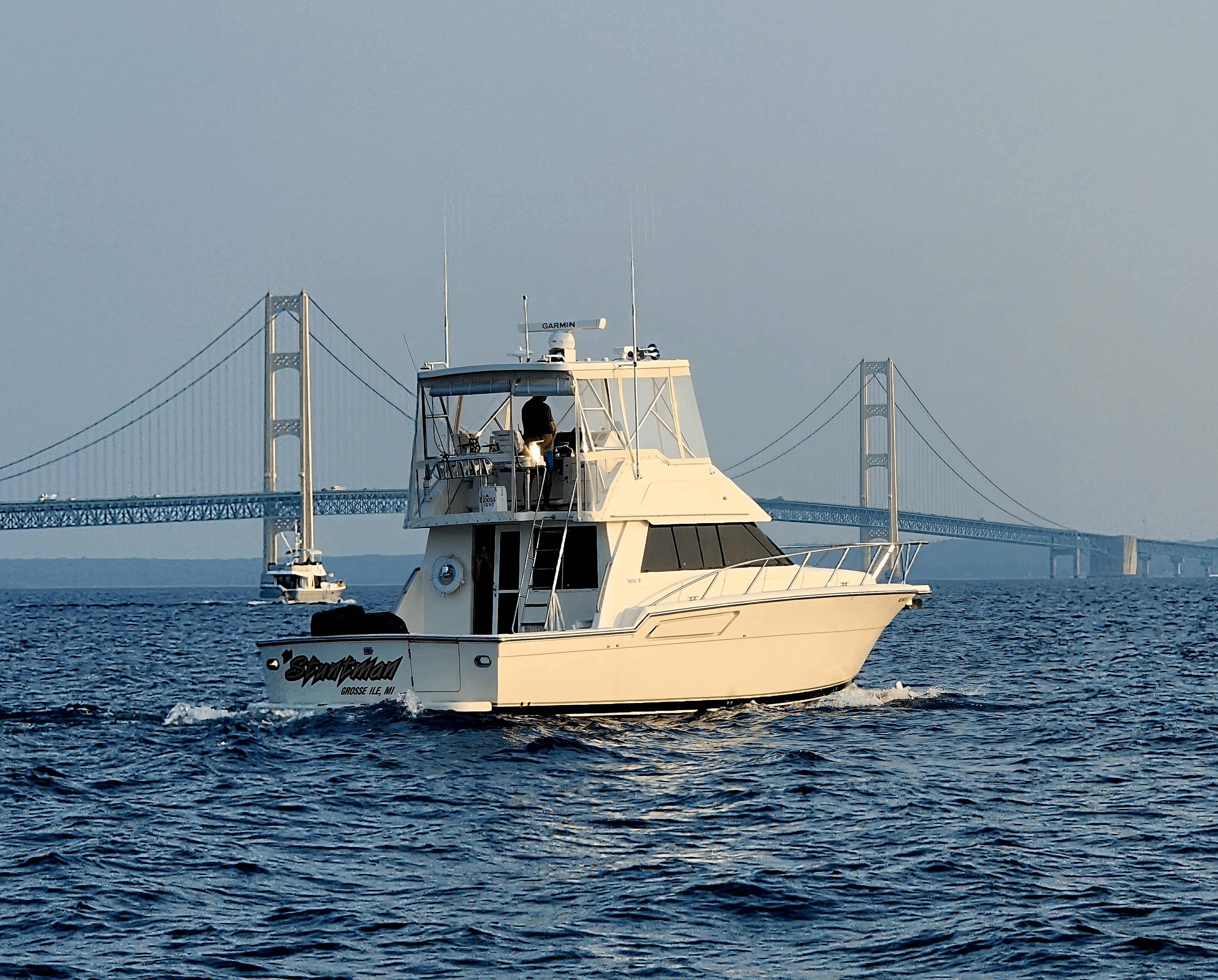
The western basin of Lake Erie is two miles south of my office on Grosse Ile. From the Detroit River mouth out across to Put-in-Bay, Kelleys Island, Catawba, and Sandusky — and north along the Michigan shoreline through Brest Bay to Toledo Beach Marina — these are the waters I run most often outside the Detroit River corridor itself. If you keep your boat anywhere on the Michigan or Ohio side of western Lake Erie, or you're a Great Lakes owner who runs the islands as part of your summer cruising, this is home territory. Lake Erie is the most misunderstood of the Great Lakes. People assume that because it's the smallest by volume and the shallowest, it's the easiest. The opposite is closer to the truth — Lake Erie's shallowness is exactly what makes it the most weather-sensitive Great Lake, and the most demanding for owners who haven't run it before.
WHERE WE OPERATE
Home Waters
The western basin of Lake Erie is two miles south of my office on Grosse Ile. From the Detroit River mouth out across to Put-in-Bay, Kelleys Island, Catawba, and Sandusky — and north along the Michigan shoreline through Brest Bay to Toledo Beach Marina — these are the waters I run most often outside the Detroit River corridor itself. If you keep your boat anywhere on the Michigan or Ohio side of western Lake Erie, or you're a Great Lakes owner who runs the islands as part of your summer cruising, this is home territory. Lake Erie is the most misunderstood of the Great Lakes. People assume that because it's the smallest by volume and the shallowest, it's the easiest. The opposite is closer to the truth — Lake Erie's shallowness is exactly what makes it the most weather-sensitive Great Lake, and the most demanding for owners who haven't run it before.
WHAT I DO
What I do for Lake Erie boat owners.
The full menu of services applies on Lake Erie. The most common engagements:
WHAT I DO
What I do for Lake Erie boat owners.
The full menu of services applies on Lake Erie. The most common engagements:
WHAT TO KNOW
What you should know about boating on Lake Erie.
A few things I'd tell any new owner running this water.
01
The lake builds and lays down faster than any of the others.
Lake Erie's average depth is only 62 feet, and the western basin is shallower still — about 24 feet on average. That shallowness is why the lake responds to wind almost instantly. A 9 AM trip to Put-in-Bay can become a very different return trip by 3 PM if a thunderstorm rolls through and a 20-knot wind picks up. Owners who learned to boat on Lake Michigan or Lake Huron consistently underestimate how fast Erie changes character. Watch the wind forecast and the radar more than the sky.
02
Summer thunderstorms are the dominant hazard.
Erie's location and shallow profile make it a thunderstorm magnet from late June through August. Most accidents on Lake Erie happen when boaters underestimate a building line of storms — particularly afternoon and evening systems coming off Ohio. The window between "I see clouds" and "we're in 5-foot chop with hail" can be under 30 minutes. Trip planning here means knowing your nearest harbor of refuge at all times.
03
The Lake Erie Islands are the western basin's center of gravity.
Put-in-Bay, Kelleys Island, Middle Bass, and Pelee (Canadian) are the dominant cruising destinations from the western basin. Boaters from Detroit, Grosse Ile, Wyandotte, and Toledo all converge on these islands on summer weekends. That means crowded approaches, full transient slips, and inexperienced boat traffic in the harbors. Knowing how to hold position waiting for a slip — and knowing the alternative anchorages when the marinas are full — is fundamental Lake Erie cruising.
04
Walleye season changes the math.
From mid-April through June, the western basin is the busiest sport-fishing water in the Great Lakes. Tens of thousands of fishing boats operate here during the walleye run. If you're transiting during walleye season, expect crowded launch ramps, packed marinas, and unpredictable small-boat traffic patterns out on the water. Plan trip times accordingly — early morning runs are calmer in every sense.
05
The international border crosses the basin.
The Canadian shoreline runs along the north side of the western basin. If you cross to Pelee or Leamington, US Customs and Border Protection rules apply on return. Most owners don't think about this until they're already across.
Local marinas I work with.
I've delivered boats to and from most of the major marinas around the western basin, including:
MARINAS (NOT LIMITED TO)
If your boat lives at any of these — or you're planning to base there — I can speak to dockage, the approaches, and the local quirks from direct experience.
WHAT TO KNOW
Why Lake Erie owners hire a professional captain.
The reasons that come up most often:
01
The first season on Lake Erie is the hardest season.
Owners new to Erie consistently report that their first summer is the most stressful — weather caught them off guard, trips got cut short, plans changed underway. Coaching compresses that learning curve dramatically. By the end of a five-module Captain's Coaching engagement, you've practiced the situations you'd otherwise be learning the hard way over multiple seasons.
02
You bought the boat somewhere else.
A lot of Lake Erie boats come from Florida, the Carolinas, or the Hudson Valley via the Erie Canal. Bringing them home is a delivery — sometimes a multi-week one. I run those routes regularly.
03
You're planning to run the islands.
If your home port is Detroit, Grosse Ile, or Wyandotte and you want to start running to Put-in-Bay or Sandusky for weekends, the trip is genuinely longer and more weather-dependent than owners expect. Coaching for the run — including timing, fuel planning, harbor of refuge identification, and emergency protocols — is one of the most common engagements for downriver owners stepping up to island cruising.
04
Insurance asked for a captain.
Carriers often want a USCG-licensed captain on the first delivery of a new vessel to Lake Erie, or documented coaching hours before they extend coverage on a boat that will be operating offshore. I provide credentials, contracts, and the paperwork they need.
EXCLUSIVE PROGRAM
The First Mate Coaching Package
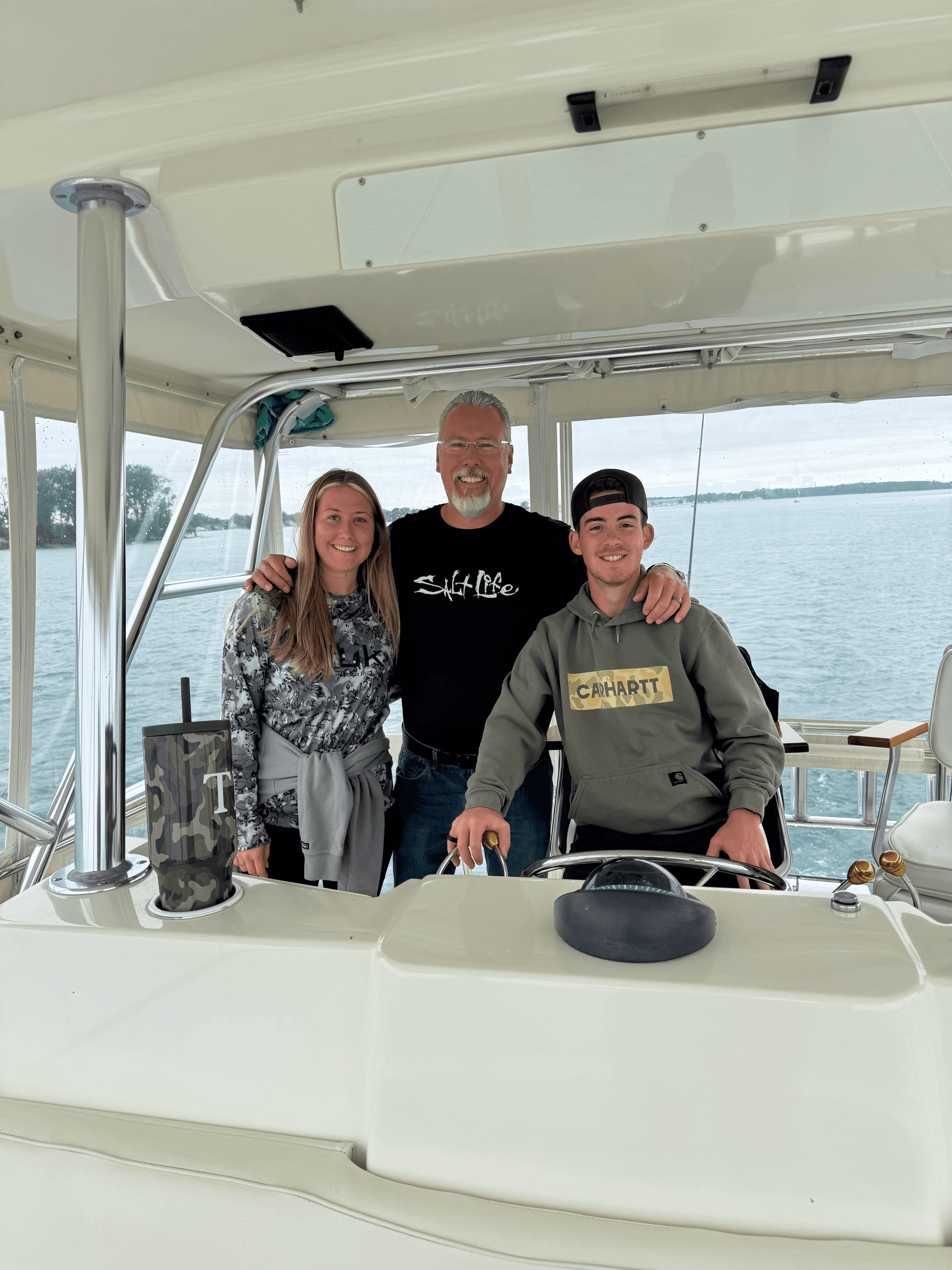
Deck leadership, dock lines, VHF radio, trip planning, and what to do in the terrifying event that your own captain has been injured or suffers a medical emergency. Your decisions and actions as the First Mate matter.
Let OCS bolster your knowledge and confidence. The only program of its kind on the Great Lakes.
WHAT TO KNOW
Why Lake Erie owners hire a professional captain.
The reasons that come up most often:
01
The first season on Lake Erie is the hardest season.
Owners new to Erie consistently report that their first summer is the most stressful — weather caught them off guard, trips got cut short, plans changed underway. Coaching compresses that learning curve dramatically. By the end of a five-module Captain's Coaching engagement, you've practiced the situations you'd otherwise be learning the hard way over multiple seasons.
02
You bought the boat somewhere else.
A lot of Lake Erie boats come from Florida, the Carolinas, or the Hudson Valley via the Erie Canal. Bringing them home is a delivery — sometimes a multi-week one. I run those routes regularly.
03
You're planning to run the islands.
If your home port is Detroit, Grosse Ile, or Wyandotte and you want to start running to Put-in-Bay or Sandusky for weekends, the trip is genuinely longer and more weather-dependent than owners expect. Coaching for the run — including timing, fuel planning, harbor of refuge identification, and emergency protocols — is one of the most common engagements for downriver owners stepping up to island cruising.
04
Insurance asked for a captain.
Carriers often want a USCG-licensed captain on the first delivery of a new vessel to Lake Erie, or documented coaching hours before they extend coverage on a boat that will be operating offshore. I provide credentials, contracts, and the paperwork they need.
EXCLUSIVE PROGRAM
The First Mate Coaching Package
Deck leadership, dock lines, VHF radio, trip planning, and what to do in the terrifying event that your own captain has been injured or suffers a medical emergency. Your decisions and actions as the First Mate matter.
Let OCS bolster your knowledge and confidence. The only program of its kind on the Great Lakes.
ABOUT CAPTAIN TOM
Professionally licensed, with 36 years of context you can put to work.
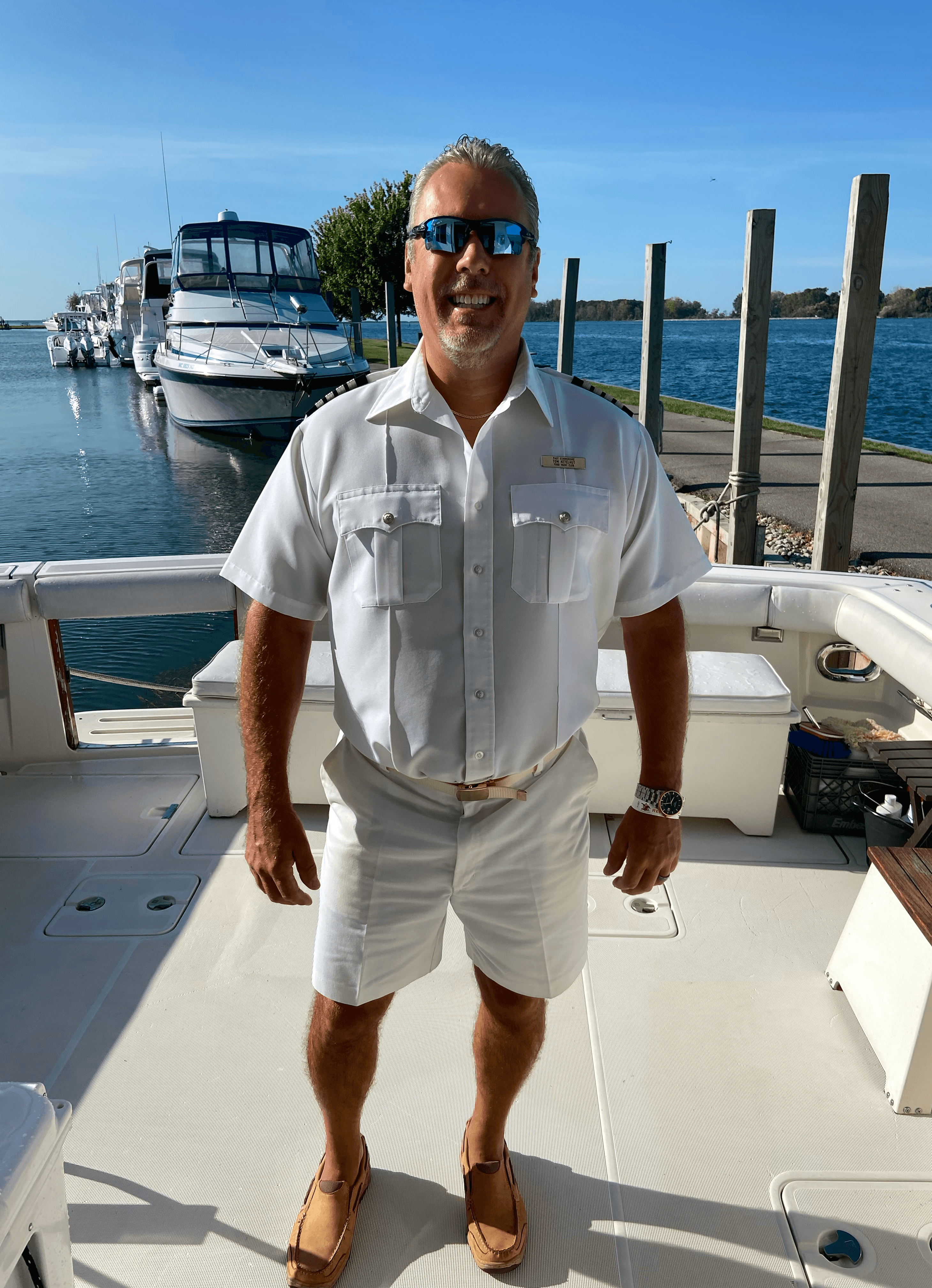
I've been running Lake Erie's western basin for decades — out of Grosse Ile, where my office sits two miles from the Detroit River mouth and the open lake. Three years on the Ford Yacht Club Board of Directors, Commodore from 2004 to 2006. Currently President of the Ford Yacht Club Past Commodores. I hold a USCG Master 100 GRT license for the Great Lakes and Inland Waters, plus a 50 GRT Near Coastal Master, both with the Commercial Towing Assistance endorsement. USCG Mariner Reference Number 2913289. If you're keeping a boat anywhere on Lake Erie — Michigan side, Ohio side, or you're using the islands as your summer base — let's talk.

Tom Ketelhut
Owner, Offshore Captain Services

ABOUT CAPTAIN TOM
Professionally licensed, with 36 years of context you can put to work.
I've been running Lake Erie's western basin for decades — out of Grosse Ile, where my office sits two miles from the Detroit River mouth and the open lake. Three years on the Ford Yacht Club Board of Directors, Commodore from 2004 to 2006. Currently President of the Ford Yacht Club Past Commodores. I hold a USCG Master 100 GRT license for the Great Lakes and Inland Waters, plus a 50 GRT Near Coastal Master, both with the Commercial Towing Assistance endorsement. USCG Mariner Reference Number 2913289. If you're keeping a boat anywhere on Lake Erie — Michigan side, Ohio side, or you're using the islands as your summer base — let's talk.
Tom Ketelhut
Owner, Offshore Captain Services
LEARN MORE
Frequently Asked Questions
Do you work with Ohio-side Lake Erie boats?
Yes. My USCG license covers the entire Great Lakes, and I regularly work with owners based in Toledo, Port Clinton, Catawba, Sandusky, and the Lake Erie Islands. For deliveries between the Michigan and Ohio shorelines — or to and from the islands — I'll go wherever your boat needs to go.
Will you come to my marina for coaching?
Yes. All coaching is conducted on your boat, in your home waters. For Lake Erie slips on the Michigan side, I come to you with travel built into the engagement. For Ohio-side slips, the engagement structure is the same; travel is factored in.
What size vessel do you handle?
My USCG license covers vessels up to 100 Gross Register Tons. Most coaching and delivery work on Lake Erie is on 30- to 65-foot cruisers and sportfish.
Can you help me run between Lake Erie and the Detroit River?
Yes — that's a common delivery. The transit between the western basin and the Detroit River corridor has its own freighter timing, channel constraints at the river mouth, and weather windows. I run both directions regularly.
How does insurance coverage work?
I provide my USCG credentials and Mariner Reference Number 2913289 to your carrier, and the carrier issues a rider or written confirmation. I have a standard professional mariner credential submission form for this purpose. Most carriers process it in a day or two.
More about Lake Erie

READY TO GET STARTED?
Let's talk about your boat.
Every engagement starts with a conversation. Tell me about your vessel, your waters, and what you're working toward.
Or give me a call at (248)-497-5791. If I’m on the water, I’ll call you back same day.
READY TO GET STARTED?
Let's talk about your boat.
Every engagement starts with a conversation. Tell me about your vessel, your waters, and what you're working toward.
Or give me a call at (248)-497-5791. If I’m on the water, I’ll call you back same day.
READY TO GET STARTED?
Let's talk about your boat.
Every engagement starts with a conversation. Tell me about your vessel, your waters, and what you're working toward.
Or give me a call at (248)-497-5791. If I’m on the water, I’ll call you back same day.
Explore
©️ 2026 Offshore Captain Services LLC · All rights reserved
Explore
©️ 2026 Offshore Captain Services LLC · All rights reserved
Explore
©️ 2026 Offshore Captain Services LLC · All rights reserved