Now scheduling fall haul-outs and Florida runs
Plan yours
Now scheduling fall haul-outs
(248) 497-5791
Deliveries
Vessel Delivery
Owner-Assisted Delivery
Seasonal Relocations
Spring & Fall Support
All delivery services
Coaching
Captain’s Coaching
First Mate Coaching
Insurance Check Rides
New Boat Owners
Consulting
Voyages
Successful Voyages
About
About Captain Tom
Credentials
Service area
Questions
Contact
Resources
From the Helm
All articles
Reading paths
Glossary
Newsletter

SERVICE AREA
Captain Services on Lake St. Clair, Michigan
USCG-licensed vessel deliveries, captain's coaching, and First Mate
training for boat owners across Lake St. Clair — from St. Clair
Shores up to Anchor Bay.
Or give me a call at (248) 497-5791. If I'm on the water, I'll call you back same day.

USCG Master 100 GRT
GREAT LAKES & INLAND WATERS
USCG Master 50 GRT
NEAR COASTAL
Commercial Towing Assistance
Endorsement
B.S. Mechanical Eng.
U of M Dearborn
Past Commodore
Ford Yacht Club · 2004–2006
USCG Master 100 GRT
GREAT LAKES & INLAND WATERS
USCG Master 50 GRT
NEAR COASTAL
Commercial Towing Assistance
Endorsement
B.S. Mechanical Eng.
U of M Dearborn
Past Commodore
Ford Yacht Club · 2004–2006
WHERE WE OPERATE
Home Waters
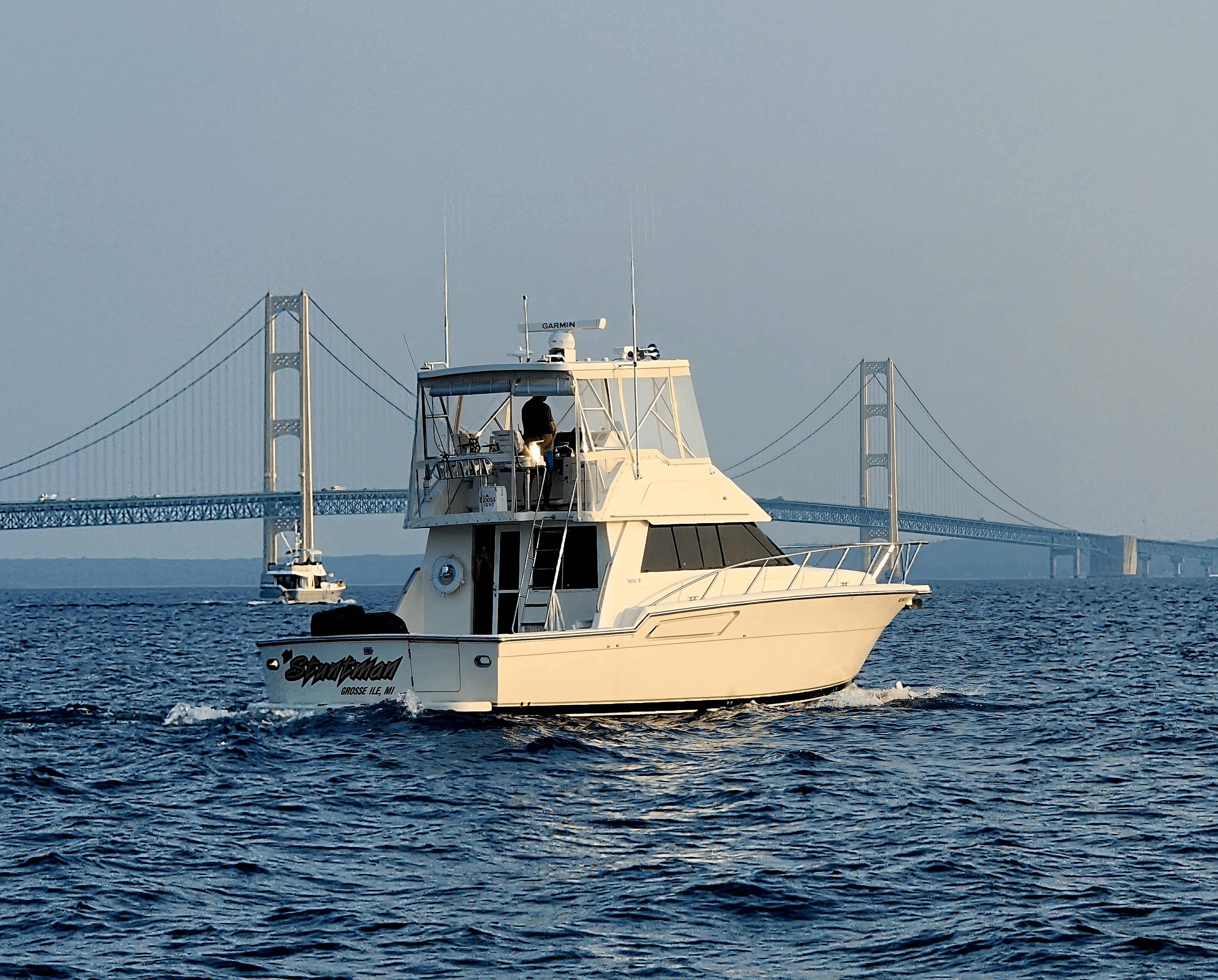
Lake St. Clair is the busiest recreational boating water in Southeast Michigan, and it's one of the waters I run most often. From the Detroit River mouth at the southwest end up to Anchor Bay in the north, across to the Canadian shoreline, and into the St. Clair River delta — these are home waters. If your boat lives at one of the Harrison Township marinas, on the Nautical Mile in St. Clair Shores, in the Clinton River canal system, or up on Anchor Bay, I've worked these areas. Probably your specific marina, probably your specific channel approach. That experience matters because Lake St. Clair is not the boating water people assume it is. It looks like a big open lake on a chart. On the water, it's a shallow, busy, weather-sensitive basin that demands more local knowledge than most owners realize when they buy in.
WHERE WE OPERATE
Home Waters
Lake St. Clair is the busiest recreational boating water in Southeast Michigan, and it's one of the waters I run most often. From the Detroit River mouth at the southwest end up to Anchor Bay in the north, across to the Canadian shoreline, and into the St. Clair River delta — these are home waters. If your boat lives at one of the Harrison Township marinas, on the Nautical Mile in St. Clair Shores, in the Clinton River canal system, or up on Anchor Bay, I've worked these areas. Probably your specific marina, probably your specific channel approach. That experience matters because Lake St. Clair is not the boating water people assume it is. It looks like a big open lake on a chart. On the water, it's a shallow, busy, weather-sensitive basin that demands more local knowledge than most owners realize when they buy in.
WHAT I DO
What I do for Lake St. Clair boat owners.
The full menu of services applies here — same as anywhere else on the Great Lakes. The most common engagements with Lake St. Clair owners are:
WHAT I DO
What I do for Lake St. Clair boat owners.
The full menu of services applies here — same as anywhere else on the Great Lakes. The most common engagements with Lake St. Clair owners are:
WHAT TO KNOW
What you should know about boating on Lake St. Clair.
A few things I'd tell any new owner keeping a boat here.
01
The lake is shallower than it looks.
The greatest natural depth is only about 19 feet, and the average across the basin is around 11 feet. Outside the main shipping channel, depth changes can be abrupt — places where you'll go from 27 feet to 2 feet in a few boat lengths if you're not watching the chart. Both shorelines have shoals that extend further offshore than beginners expect. Stay at least a half mile off any shoreline unless you're in a marked channel, and read your chart before deviating.
02
Wind builds chop fast.
Because the lake is shallow, it responds to wind almost immediately. A 15-knot afternoon breeze that would barely raise a ripple on Lake Huron can build 3- to 4-foot chop on St. Clair in an hour. The chop is short-period and confused, especially when the freighter wakes from the shipping channel meet wind-driven waves coming off the lake. New owners regularly underestimate how rough this water gets compared to its size on a map.
03
The shipping channel runs right through the middle.
The dredged channel from the Detroit River up to the St. Clair Cutoff carries 700-foot lakers across the lake constantly. Pleasure craft cross this channel — they don't share it. Crossing rules are different from transiting rules, and freighters at speed in the channel cannot stop or maneuver. Knowing how to read AIS, time your crossing, and use VHF Channel 16 (and 13 for bridge-to-bridge with commercial traffic) is fundamental Lake St. Clair seamanship.
04
Anchorages are tougher than you'd think.
Lake St. Clair has limited good anchorages, and several of the popular ones rock badly even in light wind because freighter wakes and shallow-water reflection set up confused chop after dark. Metropark lagoon, the lee side of Peche Island, and parts of Anchor Bay protected by the delta are the more reliable spots. Open anchorages on the lake itself often disappoint.
Local marinas I work with.
I've delivered boats to and from most of the marinas on and around Grosse Ile, including:
MARINAS (NOT LIMITED TO)
If your boat lives at any of these — or you're considering moving it to one — I can speak to the dockage, the approaches, and the local quirks from direct experience.
WHAT TO KNOW
Why Lake St. Clair owners hire a professional captain.
The reasons that come up most often:
01
The boat just got bigger.
Lake St. Clair is where a lot of SE Michigan owners step up — from a 24-foot bowrider to a 32-foot cruiser, or from a 32-footer to a 40-foot motor yacht. Every step up changes the docking math, the fueling math, and the weather math. Coaching is the fastest way to get comfortable on the new boat without putting the gel coat at
risk on the dock approach.
02
You bought the boat somewhere else.
A lot of Lake St. Clair boats come from Lake Erie, from Ohio, from the Hudson Valley, even from Florida. Bringing them home is a delivery — sometimes a multi-week one. I run that route as a regular service.
03
You want your spouse or partner ready.
First Mate Coaching exists because every dock approach is calmer when the person handling lines knows what they're doing — and because if something goes wrong out there, the person beside thecaptain needs to know the protocol. The only program of its kind on the Great Lakes.
04
Insurance asked for a captain.
If your carrier wants a USCG-licensed captain on board for a delivery — or a coaching session documented before they extend coverage — I can provide credentials, contracts, and the paperwork they need.
EXCLUSIVE PROGRAM
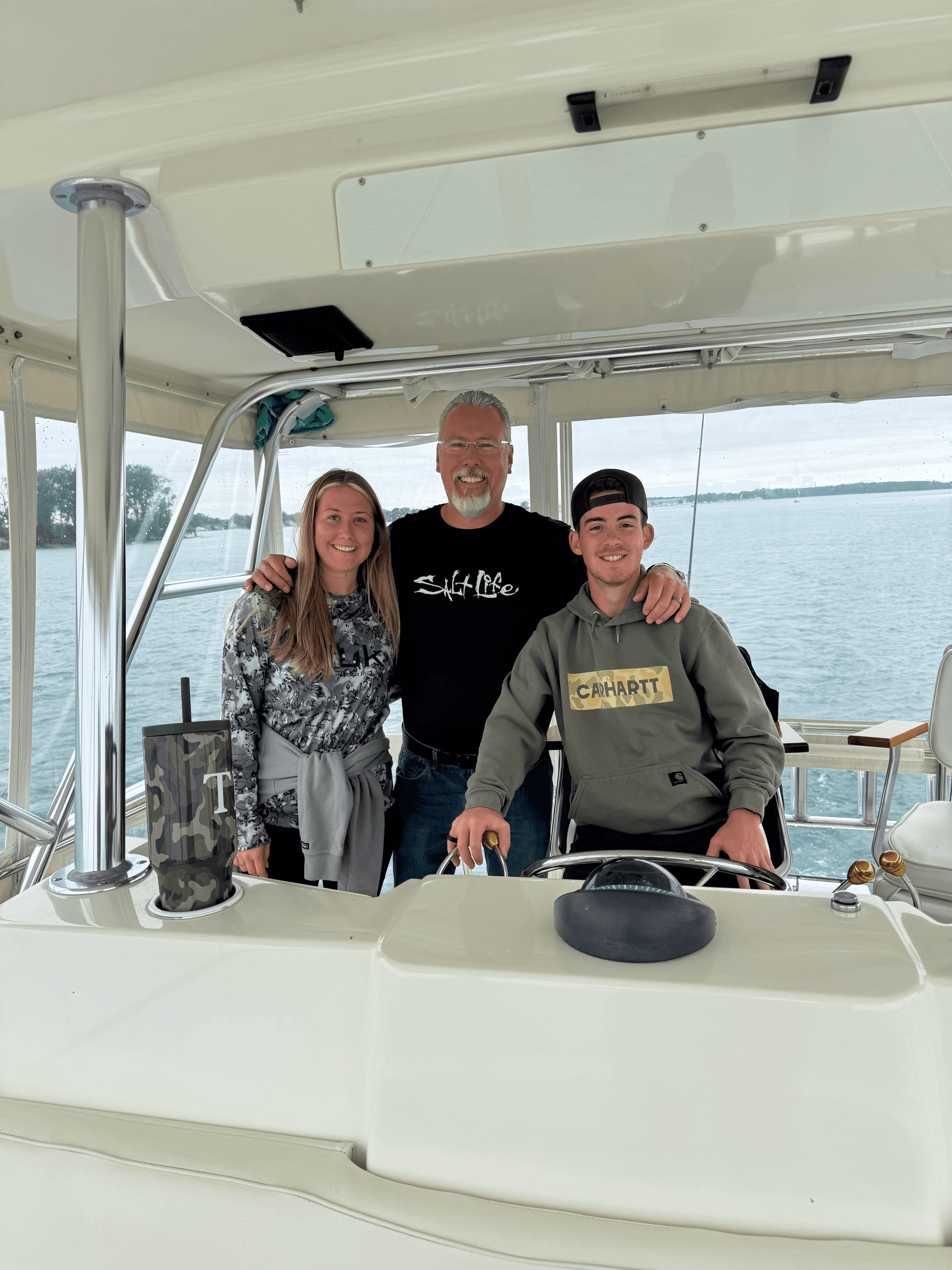
The First Mate Coaching Package
Deck leadership, dock lines, VHF radio, trip planning, and what to do in the terrifying event that your own captain has been injured or suffers a medical emergency. Your decisions and actions as the First Mate matter.
Let OCS bolster your knowledge and confidence. The only program of its kind on the Great Lakes.
WHAT TO KNOW
Why Lake St. Clair owners hire a professional captain.
The reasons that come up most often:
01
The boat just got bigger.
Lake St. Clair is where a lot of SE Michigan owners step up — from a 24-foot bowrider to a 32-foot cruiser, or from a 32-footer to a 40-foot motor yacht. Every step up changes the docking math, the fueling math, and the weather math. Coaching is the fastest way to get comfortable on the new boat without putting the gel coat at
risk on the dock approach.
02
You bought the boat somewhere else.
A lot of Lake St. Clair boats come from Lake Erie, from Ohio, from the Hudson Valley, even from Florida. Bringing them home is a delivery — sometimes a multi-week one. I run that route as a regular service.
03
You want your spouse or partner ready.
First Mate Coaching exists because every dock approach is calmer when the person handling lines knows what they're doing — and because if something goes wrong out there, the person beside thecaptain needs to know the protocol. The only program of its kind on the Great Lakes.
04
Insurance asked for a captain.
If your carrier wants a USCG-licensed captain on board for a delivery — or a coaching session documented before they extend coverage — I can provide credentials, contracts, and the paperwork they need.
EXCLUSIVE PROGRAM
The First Mate Coaching Package
Deck leadership, dock lines, VHF radio, trip planning, and what to do in the terrifying event that your own captain has been injured or suffers a medical emergency. Your decisions and actions as the First Mate matter.
Let OCS bolster your knowledge and confidence. The only program of its kind on the Great Lakes.
ABOUT CAPTAIN TOM
Professionally licensed, with 36 years of context you can put to work.
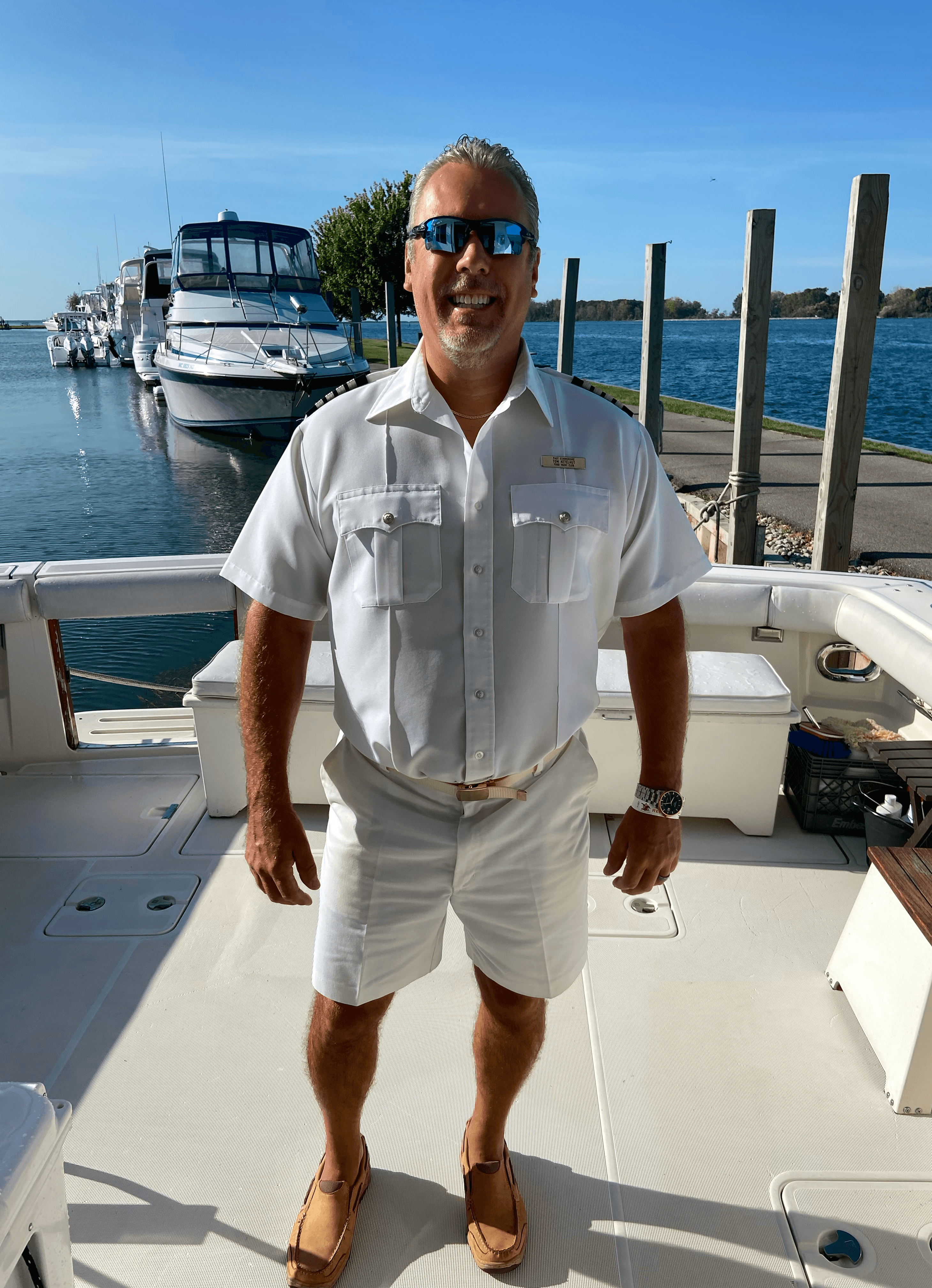
I've been on Lake St. Clair waters since I was a kid. Six years working in a SE Michigan marina before I had a real job title. Three years on the Ford Yacht Club Board of Directors, Commodore from 2004 to 2006. Currently President of the Ford Yacht Club Past Commodores. I hold a USCG Master 100 GRT license for the Great Lakes and Inland Waters, plus a 50 GRT Near Coastal Master, both with the Commercial Towing Assistance endorsement. USCG Mariner Reference Number 2913289. Home port: Grosse Ile, twenty minutes south of the lake at the mouth of the Detroit River. If you're keeping a boat anywhere on Lake St. Clair — Harrison Township, St. Clair Shores, Grosse Pointe, Anchor Bay, or anywhere in between — let's talk.

Tom Ketelhut
Owner, Offshore Captain Services

ABOUT CAPTAIN TOM
Professionally licensed, with 36 years of context you can put to work.
I've been on Lake St. Clair waters since I was a kid. Six years working in a SE Michigan marina before I had a real job title. Three years on the Ford Yacht Club Board of Directors, Commodore from 2004 to 2006. Currently President of the Ford Yacht Club Past Commodores. I hold a USCG Master 100 GRT license for the Great Lakes and Inland Waters, plus a 50 GRT Near Coastal Master, both with the Commercial Towing Assistance endorsement. USCG Mariner Reference Number 2913289. Home port: Grosse Ile, twenty minutes south of the lake at the mouth of the Detroit River. If you're keeping a boat anywhere on Lake St. Clair — Harrison Township, St. Clair Shores, Grosse Pointe, Anchor Bay, or anywhere in between — let's talk.
Tom Ketelhut
Owner, Offshore Captain Services
LEARN MORE
Frequently Asked Questions
Do you only work with Lake St. Clair boats?
No. Lake St. Clair is one of the waters I run most often, but I work with owners across SE Michigan and the Great Lakes — Grosse Ile, Wyandotte, Trenton, Grosse Pointe, the Detroit River, the St. Clair River, Lake Huron, and Lake Erie. For deliveries, I'll go wherever your boat needs to go.
Will you come to my marina for coaching?
Yes. All coaching is conducted on your boat, in your home waters. For Lake St. Clair slips — Harrison Township, St. Clair Shores, Grosse Pointe, Anchor Bay — I come to you. Travel for slips outside SE Michigan is factored into the engagement.
What size vessel do you handle?
My USCG license covers vessels up to 100 Gross Register Tons, which covers the vast majority of recreational boats on Lake St. Clair. Most coaching work is on 30- to 65-foot cruisers and sportfish.
Can you help me transit between Lake St. Clair and Lake Erie or Lake Huron?
Yes — that's a common delivery for Lake St. Clair owners. The trip down the Detroit River to Lake Erie or up the St. Clair River to Lake Huron each has its own currents, traffic, and bridge schedules. I run both routes regularly and can either deliver the boat directly or coach you through the route on your own vessel.
How do I know my insurance will cover a captain you hire?
I provide my USCG credentials and Mariner Reference Number 2913289 to your carrier, and the carrier issues a rider or written confirmation. I have a standard professional mariner credential submission form for this purpose. Most carriers process it in a day or two.
More about Lake St. Clair
 Raft Off at Muscamoot Bay: The Biggest Day on Lake St. Clair, Run RightFrom the Dock · 5 minJul 24
 Keeping a Boat in Harrison Township: Marina Row, Anchor Bay, and the Ride Down the RiverOwnership · 5 minJul 20
 A Spotlight on the Grosse Pointe Yacht Club: The Tower You Steer ByFrom the Dock · 9 minJul 16
READY TO GET STARTED?
Let's talk about your boat.
Every engagement starts with a conversation. Tell me about your vessel, your waters, and what you're working toward.
Or give me a call at (248)-497-5791. If I’m on the water, I’ll call you back same day.
READY TO GET STARTED?
Let's talk about your boat.
Every engagement starts with a conversation. Tell me about your vessel, your waters, and what you're working toward.
Or give me a call at (248)-497-5791. If I’m on the water, I’ll call you back same day.
READY TO GET STARTED?
Let's talk about your boat.
Every engagement starts with a conversation. Tell me about your vessel, your waters, and what you're working toward.
Or give me a call at (248)-497-5791. If I’m on the water, I’ll call you back same day.
Explore
©️ 2026 Offshore Captain Services LLC · All rights reserved
Explore
©️ 2026 Offshore Captain Services LLC · All rights reserved
Explore
©️ 2026 Offshore Captain Services LLC · All rights reserved