Boat Guest Etiquette: A First-Timer's Guide to Getting Invited Back
Somebody invited you out on their boat. Here are the unwritten rules that make you the guest who gets asked back instead of the story told at the dock.
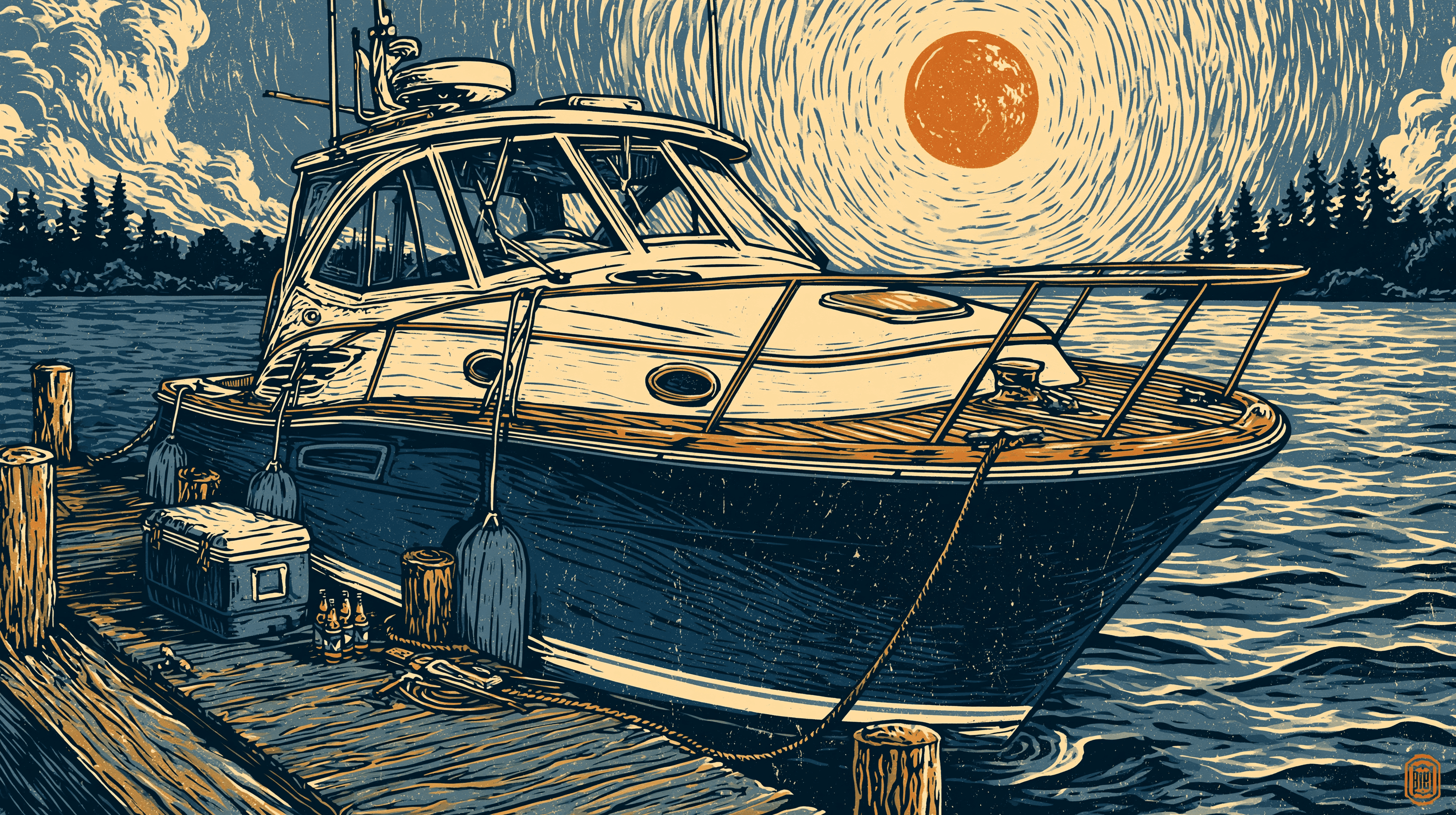
Somebody invited you out on their boat. That's a real compliment, and it usually comes with a quiet hope attached: that you'll be the guest who gets asked back, not the one who becomes a story at the dock.
I've had every kind of first-timer aboard over the years. The one who wants to help with everything. The one who won't move from the cushion. The one who brought a bottle of wine in actual glass. None of them did anything unforgivable, and most of what they got wrong came down to not knowing the unwritten rules. So here are the rules. Follow them and you'll fit right in, whether it's your first time on the water or your tenth.
Wear the right shoes
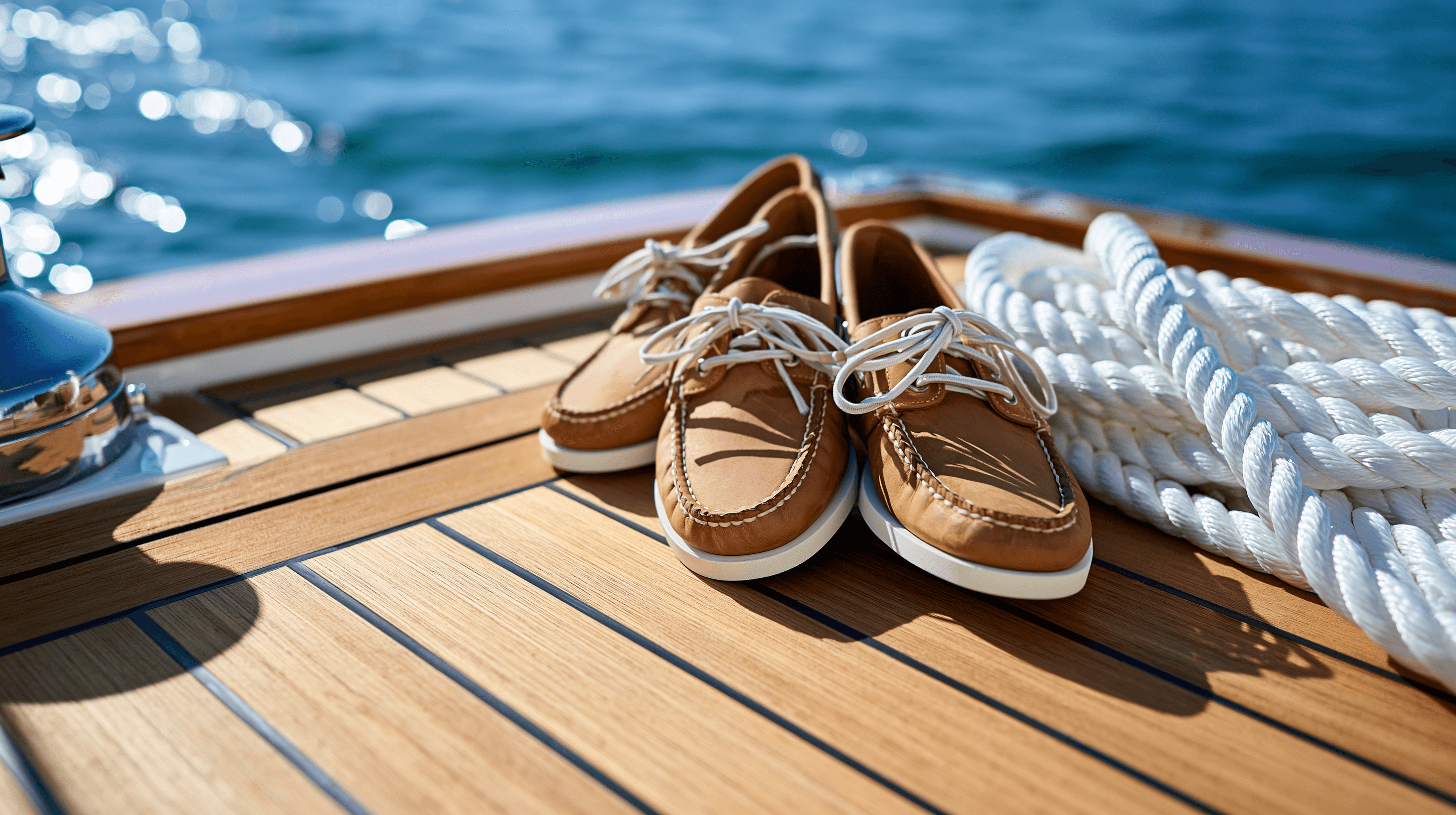
This is the one people get wrong before they even step aboard. You want non-marking soles, the kind that won't leave black scuff marks across a clean deck. White-soled boat shoes or clean sneakers are the standard. Skip the heels, skip the cleats, and don't plan on going barefoot. A boat deck has cleats, hatches, and hardware that will find your bare toes the moment you stop looking.
A wet deck on a moving boat is a slightly tilted, slightly slick surface with things bolted to it. Good footing is the difference between a relaxed day and a turned ankle.
Watch where you sit and where you step
On most cruisers there's a right place to be while the boat is underway, and your captain will point it out. Sit where you're told, hold on when you're moving around, and keep your weight low and centered when the boat is in motion. Climbing up to the bow for a better photo while the boat is making way is how people end up in the water.
Hatches, the engine cover, and anything that isn't clearly a walking surface are not steps. If you're not sure whether something is meant to be stood on, ask. It costs you nothing and saves the host a repair.
Don't touch the controls
The wheel, the throttle, the trim, the radio: hands off unless you're invited. It seems obvious until you're sitting next to a row of switches you don't understand and curiosity gets the better of you. If you want to know how any of it works, ask. Most boat owners are glad to walk you through it. Just don't go exploring on your own while the captain is busy bringing the boat into a slip.
The same goes for lines. A dock line under load can do real damage if it's let go at the wrong moment. If the captain hands you a line and tells you what to do with it, great. If not, leave it alone.
Use the lifelines and rails for what they're for
The rails and lifelines around the edge of the boat are there to keep you aboard, not to haul yourself up by. Use the cabin top, a grab rail, or a solid part of the structure to steady yourself, and ask your host to point out what's safe to lean on. On older boats especially, not everything that looks sturdy is.
Leave the loose jewelry at home
Rings, bracelets, long necklaces, anything that can catch on hardware or slip off into the water while you're gripping a rail. The harbor has swallowed a lot of wedding rings. Leave the good stuff on the dresser.
Bring a hat, sunscreen, and a layer
Water throws sunlight back up at you, so you're getting it from above and below at the same time. People who'd never burn on land come back from a day on the water looking like a stop sign. And the weather out on Lake St. Clair or Lake Erie can turn cooler and breezier than it was at the dock, fast. A hat that won't blow off, real sunscreen, and a light jacket aren't fussy extras. They're the difference between a good memory and a rough afternoon.
Speak up early if you start feeling seasick
If your stomach turns, say something the minute you notice. Don't tough it out until it's a problem for everyone. A good host would much rather hand you a ginger chew and point you at the horizon than deal with the alternative. Feeling queasy on the water is common and nothing to be embarrassed about. Pretending you're fine almost never ends with you actually being fine.
Skip the glass
A broken bottle below deck is a genuine hazard on a boat where people are barefoot. Cans, plastic, anything that won't shatter is the way to go. It's a small thing that saves a real headache.
Bring something to share
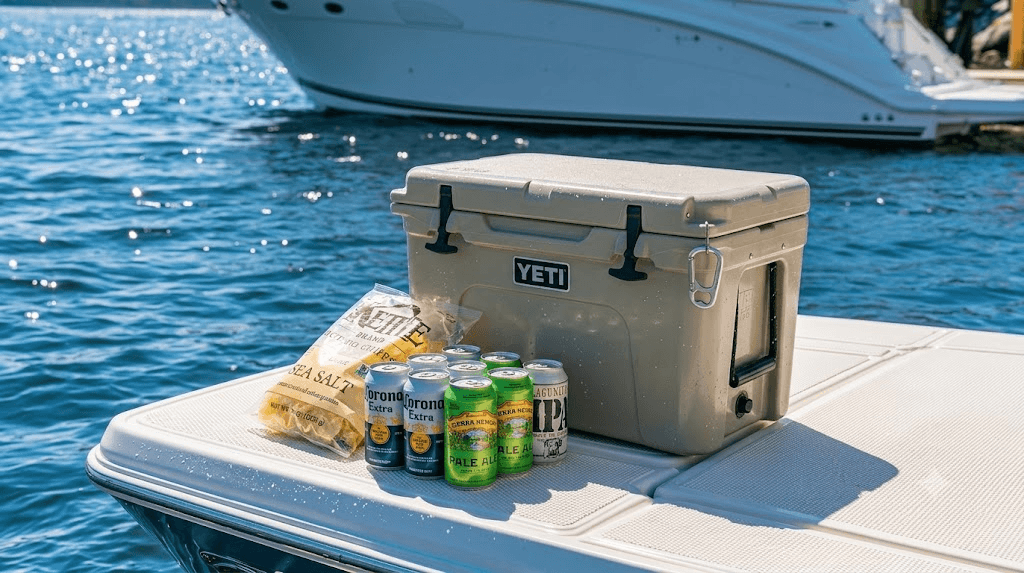
Showing up to someone's boat empty-handed lands about the same as showing up to a dinner party with nothing in your hands. A six-pack of what your host actually drinks goes a long way, so pay attention to what's in his hand or just ask ahead. A bag of chips, some fruit, anything easy to pass around and easy to clean up. Nobody expects you to provision the trip. They're just hoping you understood that a free day on the water and bringing nothing aren't supposed to go together.
Ask how the head works before you need to
The marine toilet, the head, does not work like the one at home. It involves pumping and valves, and every boat's system is a little different, with its own rules about what can and can't go down it. Using it wrong is one of the fastest ways to ruin a day for everyone aboard. There's no shame in asking for the two-minute tutorial before you need it. There's plenty of shame in the alternative. On a short afternoon run, the head is usually for emergencies only, so if you think you'll need it before you're back at the dock, just ask.
Offer to help, then do exactly what's asked
Most captains are happy to put a willing guest to work: holding a fender, taking a line at the dock, keeping an eye out for traffic. It's a good way to feel like crew instead of cargo. But offering to help means asking "what can I do?" and then doing that and only that. Grabbing for something and guessing is how good intentions turn into a dent in the gelcoat.
Say thank you, and mean it
This is the one that costs nothing and matters most. Owning a boat is a serious amount of time, money, and weekends spent fixing things you didn't know could break. Bringing you along is someone sharing their hobby, their boat, and their patience with you. A real thank-you, maybe with an offer to cover fuel or bring the snacks next time, is most of what keeps the invitations coming.
—
Going out on someone else's boat for the first time is a little like being let into a world with its own rules and its own vocabulary. Read the room, ask good questions, and watch where you step, and you'll be the guest the captain is glad he invited.
A lot of these same habits are exactly what we work on in First Mate Coaching, where a guest learns to become real crew: line handling, fending off at the dock, working with the captain instead of around him. And if you're the one doing the inviting and want your own boat handling sharp enough to make every guest comfortable, that's the heart of Captain's Coaching. Either way, if you've got questions about getting more confident on the water, a quick call sorts out most of it. You can reach me through the contact page.