The First 50 Miles on a New-to-You Boat
The wire clears, the keys are yours, and the boat is a stranger. What she'll teach you in the first 50 miles, and who should be aboard when she does.

The wire clears, the broker shakes your hand, and the boat is yours. Somewhere between that moment and the first time you bring her into your home slip with your family watching, you’re going to learn who she actually is. The only question is how, and with whom aboard.
Here’s the thing about a new-to-you boat that the buying process doesn’t prepare you for: every boat is unique in how she handles, in constantly changing conditions, and nothing on the closing paperwork covers it. You can own a boat completely and know her not at all. The first 50 miles is where that gap closes, one surprise at a time. It’s one step on the list I walk every new boat owner through.
What the survey didn’t tell you
A good marine survey is worth every dollar, and I tell every buyer to get one. But understand what it is: a report on her condition, not her character. The surveyor can tell you the hull is sound, the engines compress evenly, and the wiring won’t burn. He cannot tell you how she carries her stern in a crosswind, what she does when you back her down hard, or which of her gauges is an optimist.
That knowledge doesn’t transfer at closing. The previous owner had it, built over years, and most of it left the dock with him. The sea trial gave you an hour of it, on a calm day, with the seller picking the conditions. The rest is waiting for you out on the water.
What she’ll teach you in the first 50 miles
Some of what a new-to-you boat reveals early, in roughly the order it shows up:
How she behaves at dead slow. Prop walk, steerage at idle, how much way she carries when you pull the throttles back. This is docking knowledge, and you need it before the first tight fairway, not after.
Her real cruising speed and fuel burn. Not the listing’s numbers. Hers, loaded the way you load her, in the chop you actually get. The fuel math on every future trip depends on these two figures being honest.
What the gauges actually mean. Most boats have at least one gauge with a personality: the fuel needle that drops fast in the top half, the temp gauge that runs a little warm and always has. Learning which readings are normal is how you’ll someday recognize the one that isn’t.
Her sounds. Every boat has a soundtrack: the pumps that cycle, the hum that lives at certain RPM. The first miles teach you the baseline, and the baseline is what makes a new noise stand out later.
The systems’ habits. The generator’s cold-start ritual, the head’s quirks, which breaker trips when two appliances run. Small stuff at the dock. Less small fifty miles from one.
How she takes a sea. Where her comfortable trim lives, what she does in a beam chop, when she wants tabs. The lake will pick the lesson day; it’s rarely the day you’d choose.
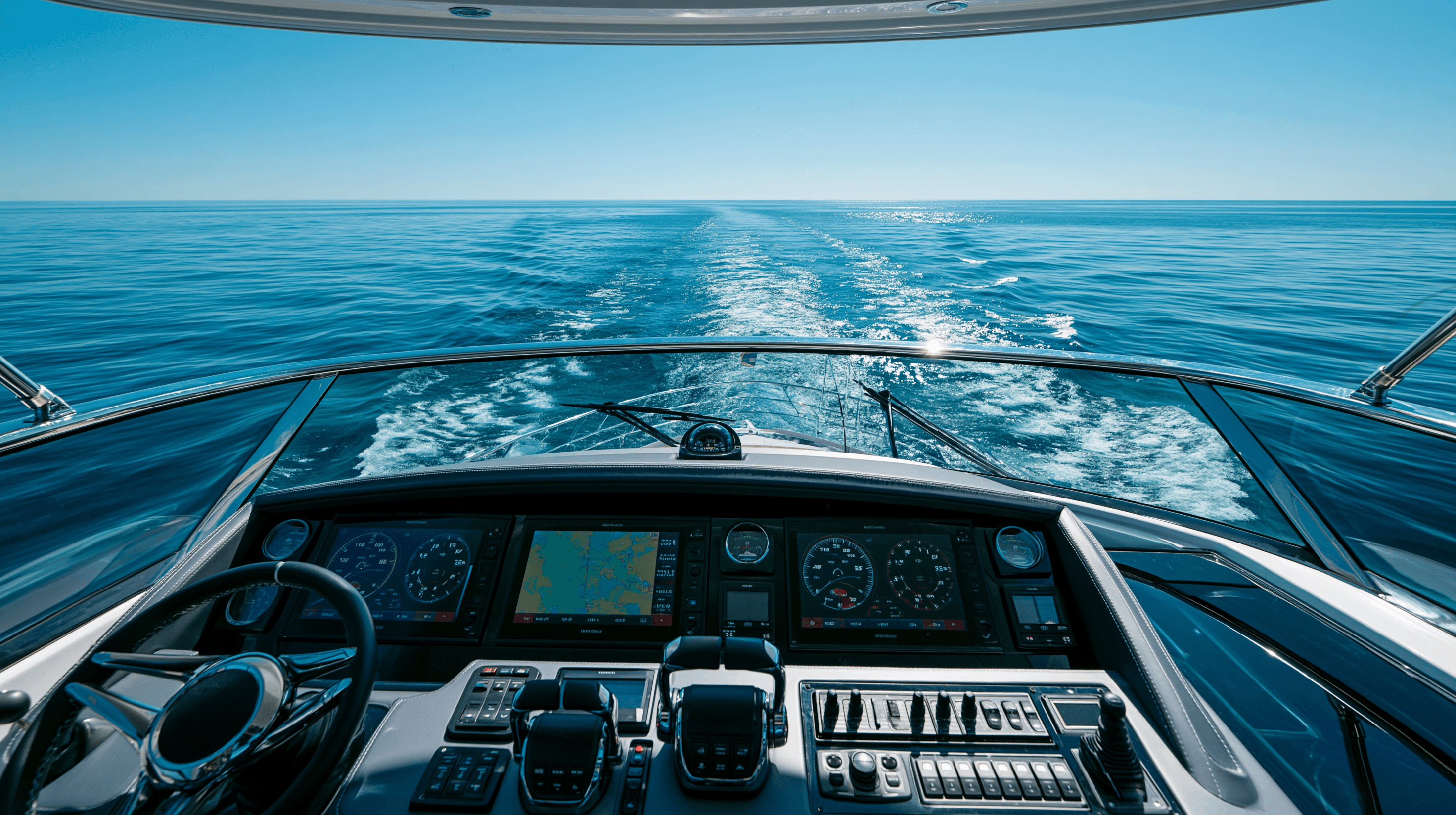
The worst classroom is a solo final exam
Now look at that list and notice when it all shows up: underway, on a boat you’ve never run, often on the very first trip, which for most buyers is the delivery home. That trip is the densest learning experience in your entire ownership, and the common plan for it is to wing it alone, or worse, with the whole family aboard as witnesses.
I’ve taken plenty of calls that start with some version of “we got her home, but it wasn’t pretty.” Nobody got hurt in most of those stories. But the owner spent the best classroom he’ll ever get white-knuckled instead of learning, and the boat spent it teaching him the hard way. If you’ve moved up in size, there’s an extra wrinkle: some insurance carriers want to see experience or training on the bigger boat before they’re comfortable, and “I figured it out on the way home” is not the answer they’re looking for.
Make the trip home the lesson
The fix is simple, and it’s the best-value decision in the whole purchase: put a licensed captain beside you for the delivery and run her home yourself, with help.
The boat has to make the trip anyway. Ride it as instruction and every item on the list above gets learned with a professional standing next to you: the docking reps happen in marinas you’ve never seen with someone coaching the approach, the fuel burn gets measured properly on day one, the engine room checks become a habit before bad habits form, and the ship’s log starts with an entry from her first day in your ownership. By the time you turn into your home fairway, you’re not bringing home a stranger. I’ve written more about how these trips work if you want the full picture. If you’d rather the boat simply arrive and skip the trip, a straight yacht delivery does that instead.
However you run those first 50 miles, run them deliberately. Pick a calm day, leave the audience ashore, and let her tell you who she is a little at a time. If you bought a boat in Florida, the canal calendar decides when those miles happen. And if you’re closing on a boat this season and the trip home is on your mind, that’s exactly the call I like getting. Few things in this work beat watching an owner and a boat get acquainted properly.
Keep Reading


FROM THE HELM
New articles, straight to your inbox.
A short note whenever a new piece goes up — seamanship, ownership, and lessons from the water. No spam, unsubscribe anytime.