How Long Does a Boat Delivery Take?
Miles divided by boat speed is the floor. Weather, fuel stops, and daylight set the ceiling. How I build a delivery window you can plan around.
How long does a boat delivery take? Here’s the honest answer: it’s a range, and any captain who hands you a firm date instead of a range is guessing. The good news is that the range isn’t mysterious. It’s math plus margin, and once you see how it’s built, you can plan around it with confidence.
I quote every Great Lakes boat delivery as a window, and this article shows the work: the math that sets the floor, the real-world factors that stretch it, and what typical trips actually look like on a calendar.
The floor: miles, speed, and daylight
A delivery’s minimum duration is simple division. Distance divided by the boat’s honest cruising speed gives running hours, and deliveries run in daylight, so a long summer day yields about 10 underway hours. That converts to daily mileage, and daily mileage is the number to hold onto:
Displacement trawler (6–8 knots): roughly 60 to 80 miles a day. Steady, efficient, and unhurried, which is the point of the boat.
Semi-displacement or slow cruiser (9–12 knots): roughly 90 to 120 miles a day, conditions permitting.
Planing cruiser (18+ knots): 150 miles and up is possible, but fuel stops eat the advantage. A boat that burns hard on plane visits more fuel docks, and every stop costs the better part of an hour.
That’s the floor. No delivery comes in under it, and almost none lands exactly on it, because of everything in the next section.
What stretches the floor into the real schedule
Weather days. The biggest variable on the lakes. I build margin into every estimate, more in spring and fall, because a front that closes Lake Huron for a day isn’t a delay so much as a certainty you haven’t met yet. A waiting day in port is the schedule working, not failing.
Daylight by season. The same trip takes more calendar days in October than in July. Ten underway hours in midsummer shrinks toward seven or eight on the shoulders of the season.
Fuel range and harbor spacing. The route has to land somewhere safe each night, and on some stretches of the lakes the harbors are where they are, not where the math wants them. A day sometimes ends early because the next good stop is three hours past sunset.
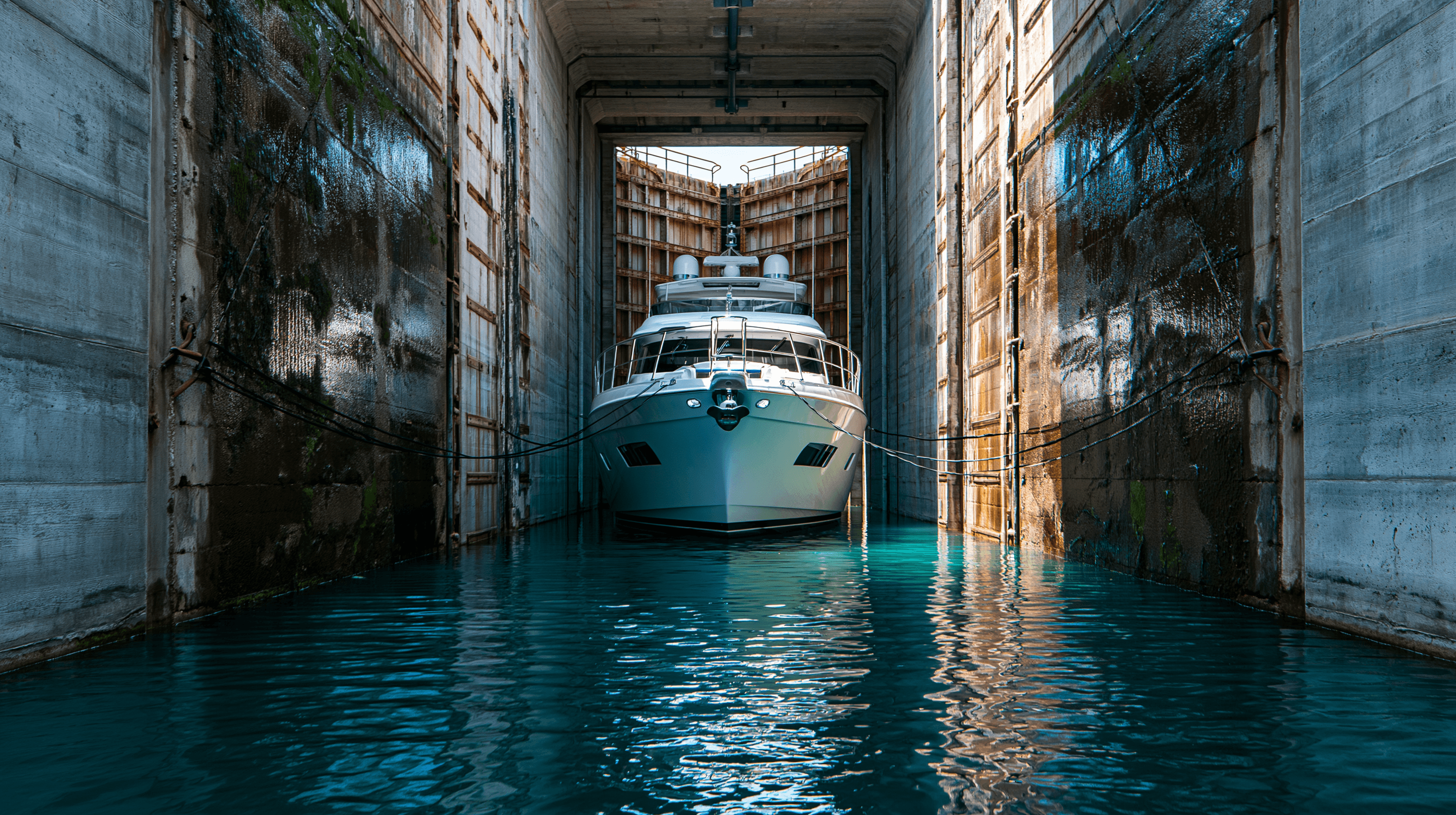
Locks, bridges, and canals. Lock transits and bridge schedules run on their own clocks. A route that includes them gets days added, not hours.
A boat I’m still learning. The first day aboard an unfamiliar boat runs conservative on purpose. I’d rather discover a fuel gauge’s lies forty miles from a marina than a hundred.
What typical Great Lakes trips look like
The one-lake hop. A run up Lake St. Clair, a Detroit River transit, or a short coastal leg on Erie or Huron: one to two days for most boats, often weather-flexible enough to slide a day either way.
The multi-lake run. Something like the lower Detroit River to northern Lake Huron, or a Huron crossing en route to the North Channel: figure several days to a week once weather margin is in, depending entirely on the boat’s daily mileage.
Going south. A Great Lakes boat headed to Florida is a multi-week project measured on a calendar, not a watch, with its own routes and timing windows. Runs inside Florida work on the same math, and I’ve laid out the common ones on my Florida boat delivery page.
Why you get a window, not a date
When I quote a delivery I give a departure window and an arrival window, and I’d encourage you to be wary of anyone who promises a hard arrival date weeks out. A fixed date creates pressure, and pressure is how boats get run through weather they should have waited out. My contract gives me the sole right to halt a trip when conditions or the boat aren’t safe, and a schedule with honest margin is what lets that clause protect your boat instead of fighting the calendar.
A few things genuinely shrink the window, and they’re all yours to control. A flexible departure lets me start on the front edge of a good weather stretch instead of waiting through a bad one. A boat that’s ready when I arrive doesn’t spend day one on dead batteries. And an honest cruising speed makes the estimate true; the math only works with real numbers in it.
So plan the slip party for the weekend after the arrival window, not the day the window opens. The boat will get there, on the lake’s schedule and in one piece, and the days are the unit the whole trip is built on, schedule and invoice alike. If you’ve got a trip in mind and want a real window for it, give me a call with the boat’s speed and the two ports. That’s usually all I need to sketch it.