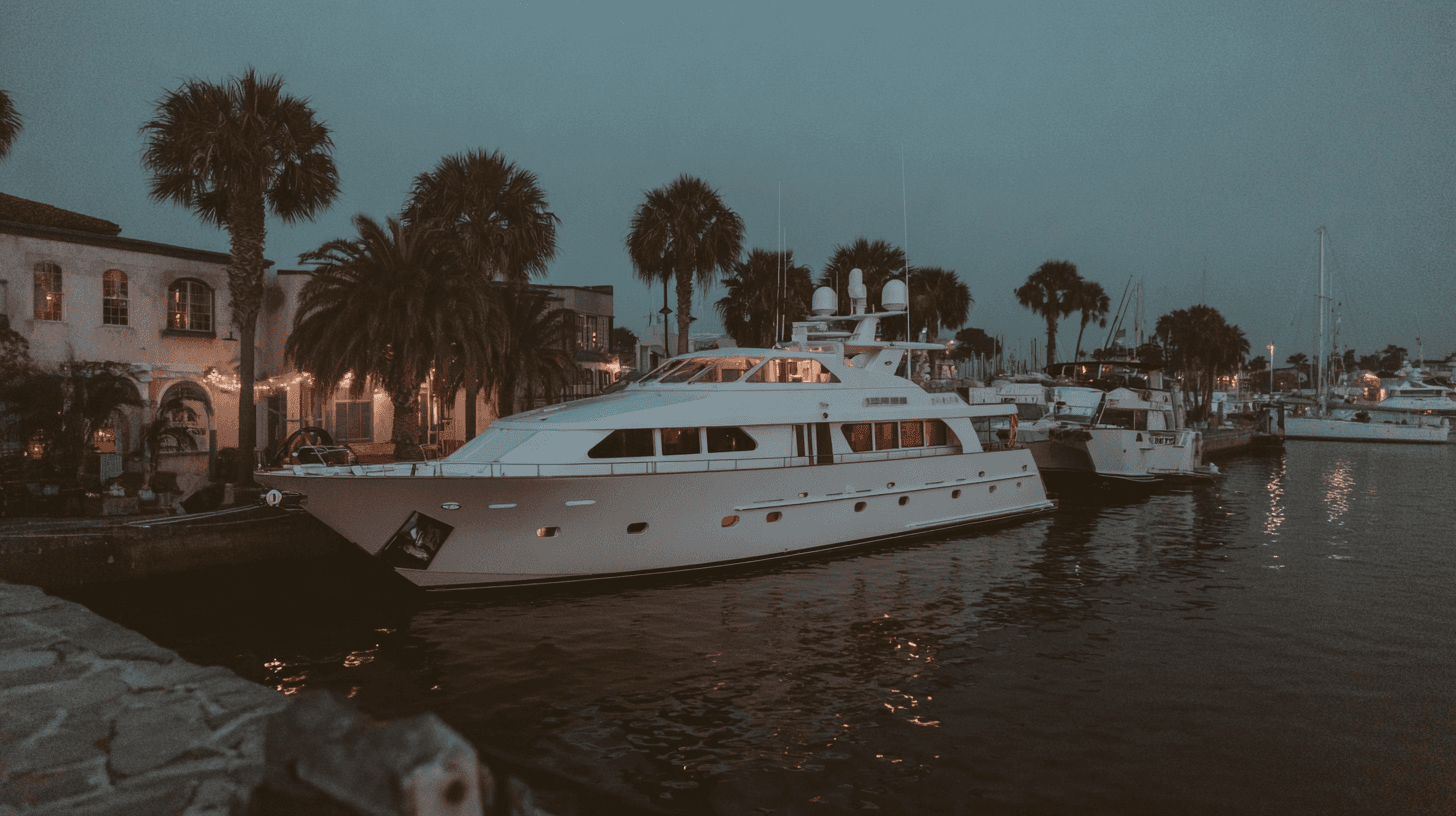
Setting Anchor Without Drifting Into Anyone
That guy who drops the hook and drifts into someone's swim platform? He's not unlucky — he didn't set the anchor. Here's how to do it right.

Setting Anchor Without Drifting Into Anyone
You've seen that guy. He pulls into the anchorage, drops the hook, kills the engines, pops a beer, and an hour later he's drifting into someone else's swim platform. Nobody likes that guy. And here's the part nobody says out loud — most of the time, he doesn't know he did anything wrong. He thinks the anchor "let go." It didn't let go. It never set.
Anchoring is one of those skills that looks like a coin-flip from the outside. Drop the chain, wait, see what happens. On a quiet afternoon in twelve feet of mud, you can get away with almost anything. On a windier afternoon in twenty-five feet of weed-covered bottom, you can't get away with much. The difference between the two boats isn't usually the anchor. It's the technique.
This is how I set the hook on a delivery, and how I teach owners to do it on their own boats.
Where you drop matters more than how you drop
Before the anchor leaves the bow, look around. Wind direction. Current direction. Where every other boat in the anchorage is lying, and where they'd swing to if the wind shifted ninety degrees. What's between you and the closest hard object if you drag a hundred feet. That's the picture you need.
The actual mechanical act of dropping an anchor is the easiest part of anchoring. Picking the spot is the hard part.
I want the boat upwind and up-current of where I want to end up after I've paid out scope. So I idle slowly past my target, into the wind, until I'm directly above where I want the anchor to bite. That's where the chain starts going.
Scope: 7:1 isn't a suggestion
Scope is the ratio of rode (chain plus line) to the vertical distance from the bottom of the water to your bow roller — not the waterline. This is the part most people get wrong, and BoatUS lays it out cleanly: if your bow roller sits four feet above the water and you're in six feet of water, 30 feet of rode is a 3:1 scope, not the 5:1 it looks like.
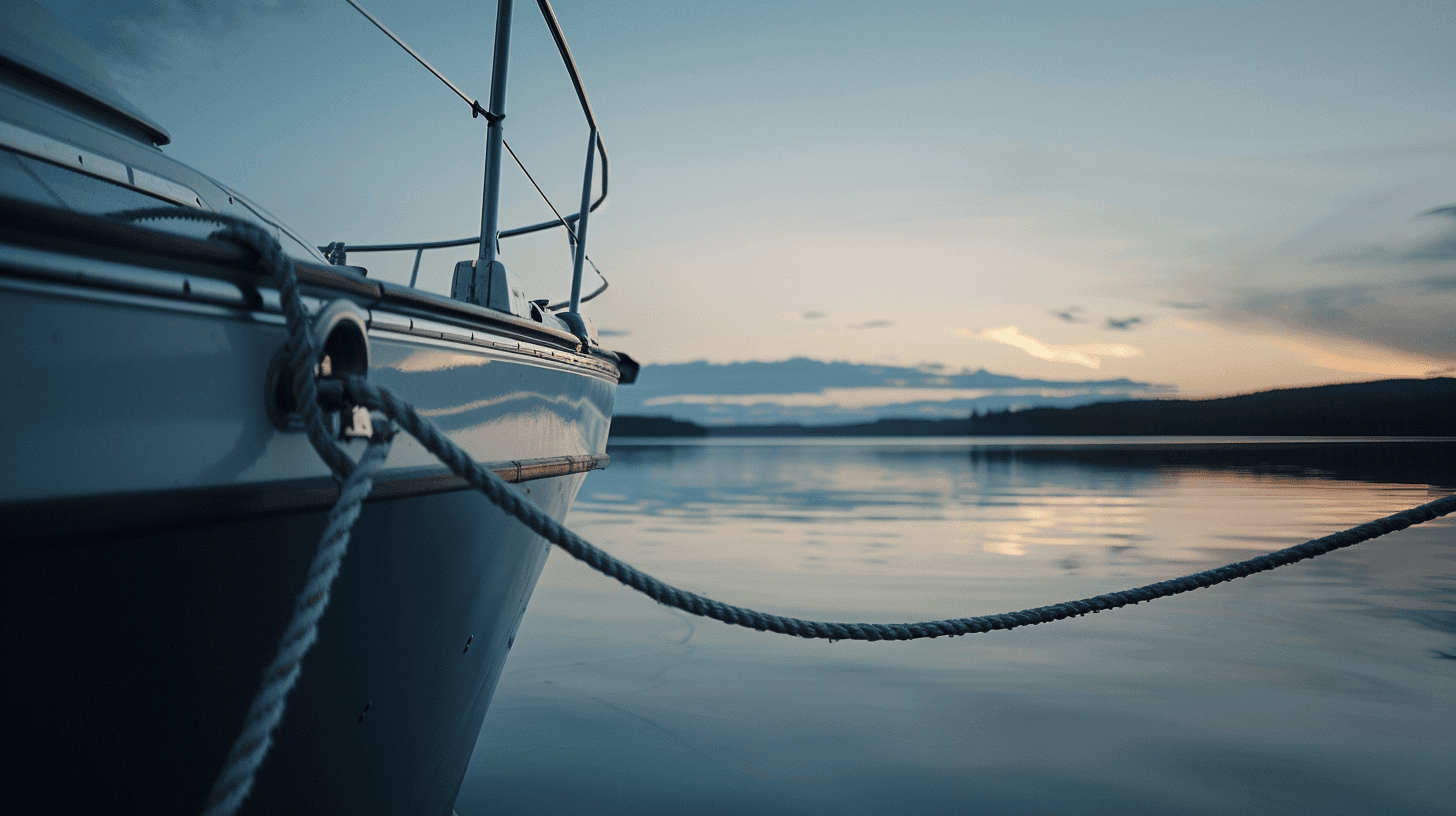
The BoatUS Foundation recommends a 7:1 ratio for overnight anchoring, with 5:1 as the minimum for short stops in protected water. In 15 feet of water with a 5-foot bow roller, 7:1 is 140 feet of rode. That sounds like a lot. It is a lot. It's also what keeps the pull on the anchor horizontal, which is what makes the flukes dig in. Short-scope an anchor and you're pulling it up out of the bottom every time the bow lifts on a chop.
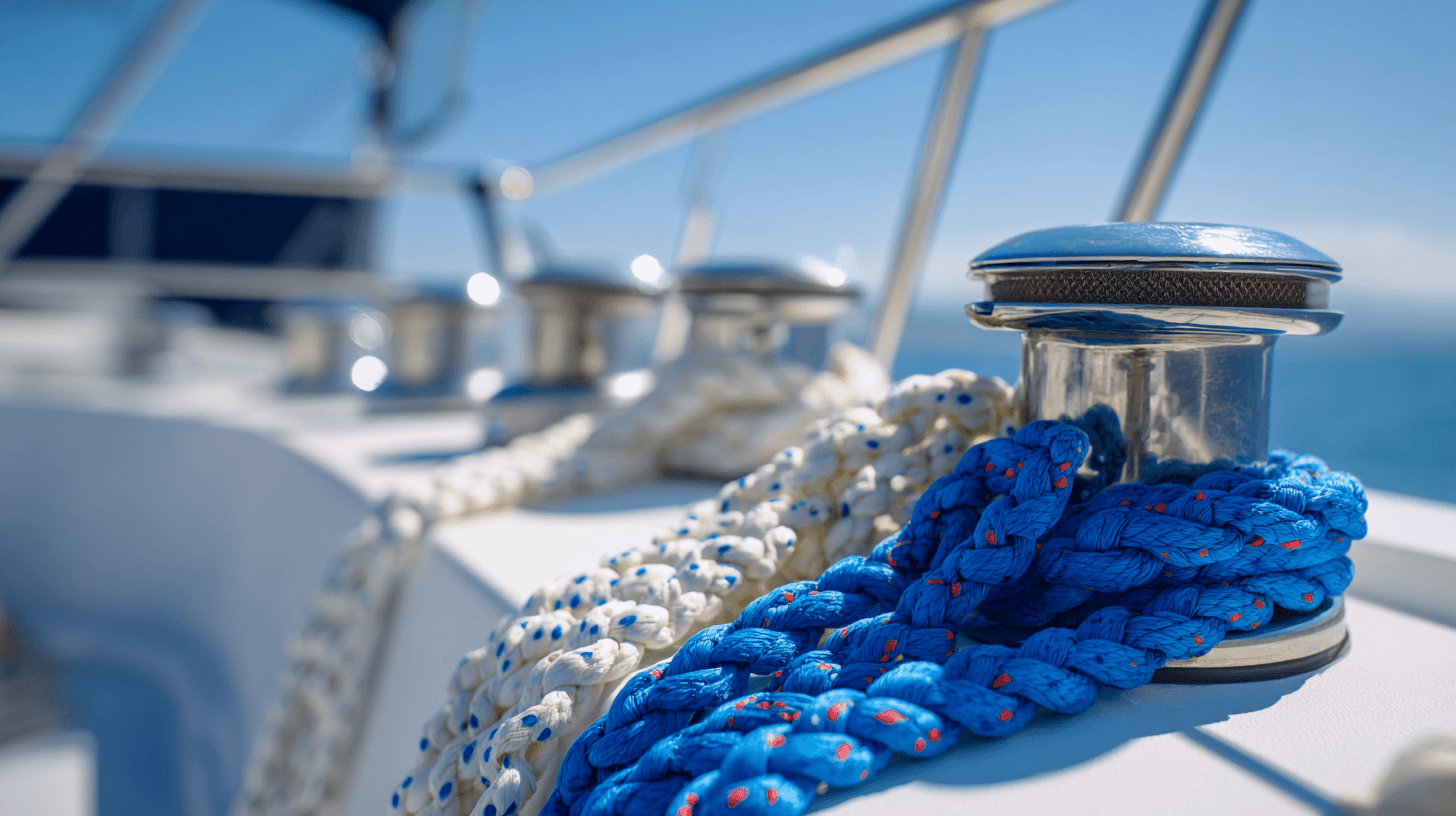
Most boats I step onto for deliveries don't have enough rode marked. If you can't tell at a glance how much chain you've let out, fix that before the season. Paint marks every 25 feet, or use the colored tags they sell. Counting "by feel" is how you end up with 60 feet out when you thought you had 120.
Set the hook — don't just drop it
Dropping the anchor isn't setting it. Setting it is what comes next, and it's the step the drifting guy skipped.
Once the chain is paid out to scope, let the boat drift back on the wind until the slack comes out of the rode. Then touch the engines into reverse — slow at first, just enough to put a load on the rode. If the anchor's biting, the bow will pull around and the boat will stop. If it's not biting, you'll feel it: the boat keeps moving, the rode stays slack, and you're plowing the bottom.
When I feel the bow tug down and hold, I bump up the reverse for ten or fifteen seconds at about 1,000 RPM. If we hold against that, the anchor is set. Take a sight line on two fixed points — a tree on shore lined up with a navigation marker, or two buildings — and watch them for a minute. If those points don't move relative to each other, you're set. If they slide, the anchor is dragging and you start over.
Now do the swing room math
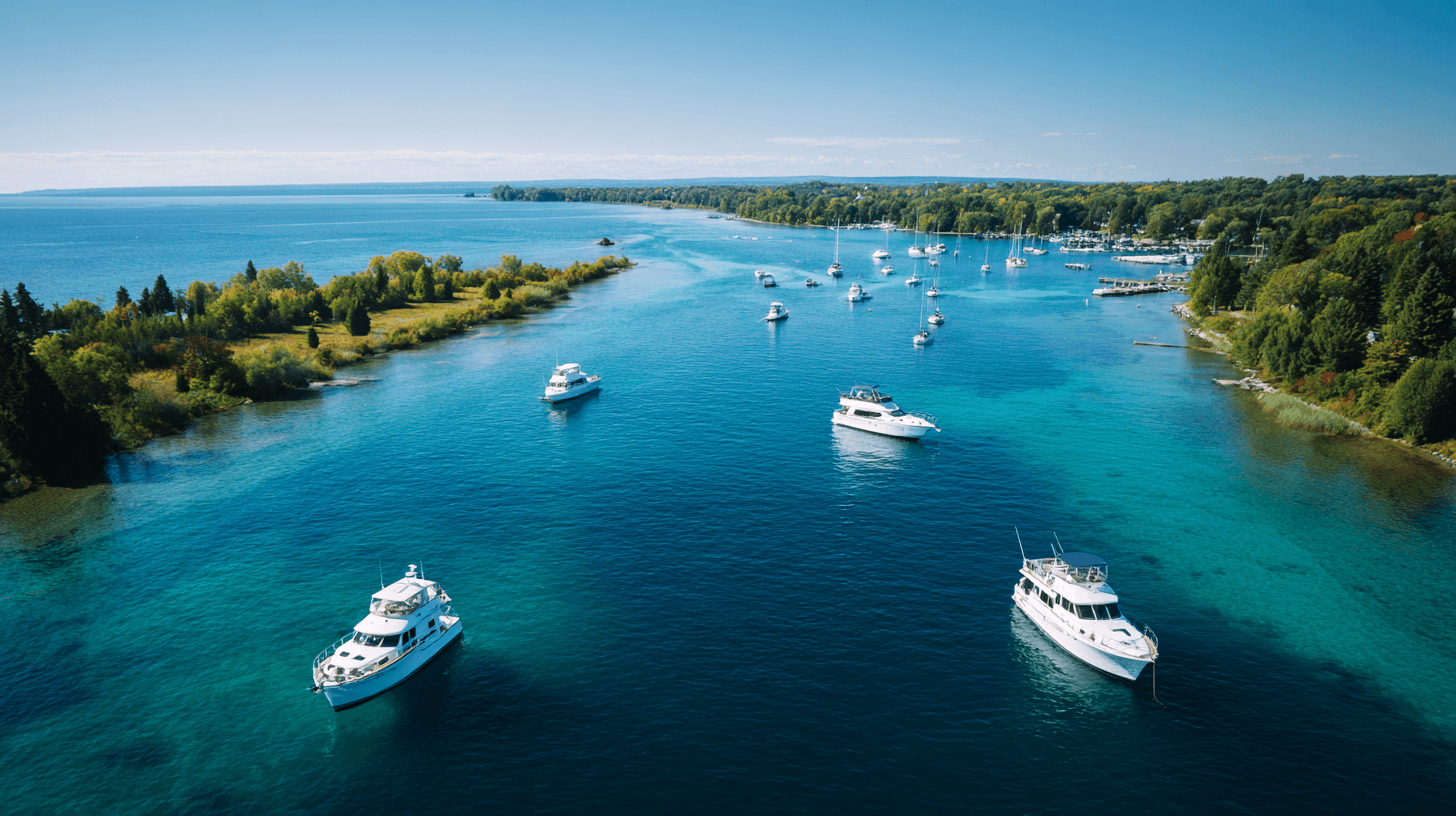
You're not anchored at a single point. You're anchored at the center of a circle with a radius equal to your scope plus your boat length. Wind shifts, current shifts, every boat on the hook swings.
Before you go below, picture the full circle you're going to occupy across every wind direction tonight, and make sure no part of it touches another boat's circle or a hard object. Two boats with different scopes and different boat lengths swing on different arcs. Just because you're parallel right now doesn't mean you'll still be parallel at 3 AM when the wind comes around to the north.
The First Mate's job is the set
On a well-run boat, the captain runs the helm and the First Mate runs the bow. The First Mate signals what's happening up front — chain paying out, anchor on bottom, scope reached, rode coming tight — because the captain can't see any of it from the helm.
This is one of the spots where pre-agreed hand signals between captain and First Mate save a lot of yelling across the deck. Flat hand for "stop paying out." Thumb up for "set." Flat palm pushed forward for "more reverse." Pick the signals before you leave the dock, not while you're trying to anchor in a crosswind with a hundred feet of chain in the water.
If you've never worked through the anchoring routine with your First Mate specifically, that's worth fixing before the season. It's part of what the First Mate Coaching Package covers, and it's the difference between a one-shot set and three attempts in front of the whole anchorage.
Anchor light at night
When the sun goes down and you're anchored anywhere other than a designated special anchorage, USCG Inland Navigation Rule 30 requires an all-around white light visible around the entire horizon, from sunset to sunrise, in any condition of visibility. For boats in the 30 to 65 foot range, that's not optional — and even inside a designated anchorage the BoatUS Foundation calls showing one prudent. Your neighbor at 2 AM won't know it's "designated."
Test the light before you need it. The anchor light bulb that worked last September has a way of being the one that's burned out tonight.
Weighing without the drama
Bringing the anchor back up is the reverse of setting it, and the part most people get wrong. The boat motors slowly forward toward the anchor while the First Mate retrieves rode. The goal is to keep the rode coming up vertically — not to drag the boat onto the anchor by hauling. Pulling a 40-foot boat forward with a windlass and a wet line is a good way to break a windlass.
When the rode is straight up and down, the boat is over the anchor. The First Mate signals, and the captain bumps forward a touch to break the anchor free. Then it's straight up, and you're done.
If the anchor is fouled — wrapped on a cable, a rock, an old mooring chain — that's a different problem, and one worth solving slowly. Don't try to muscle a stuck anchor free with the windlass. You'll either tear out the windlass or tear out the bow roller. Cleat the rode off, motor the boat in a different direction, and try to roll the anchor out from a new angle.
Practice somewhere boring
The worst place to learn how to anchor is the first time you actually need to. Find a quiet stretch of Lake St. Clair or a lee on Lake Erie on a weekday afternoon, pick a spot with nothing around you, and run the routine ten times. Drop, set, check, weigh, repeat. The whole sequence becomes muscle memory in an afternoon — and the next time you're grabbing a spot at Put-in-Bay on a Saturday or anchoring in a quiet bay in the North Channel on a delivery, your hands already know what to do.
Anchoring is one of five modules in the Captain's Coaching package for exactly this reason. It looks simple from a distance, and it has a lot of small steps that matter. If you want to run through it on your own boat in your own water, that's the kind of thing I help with. A quick conversation usually sorts out what makes sense for the season.