What the Detroit River Asks of Boat Owners
700-foot freighters, one-way commercial channels, and a current that lies to you. What the Detroit River actually asks of recreational boat owners.
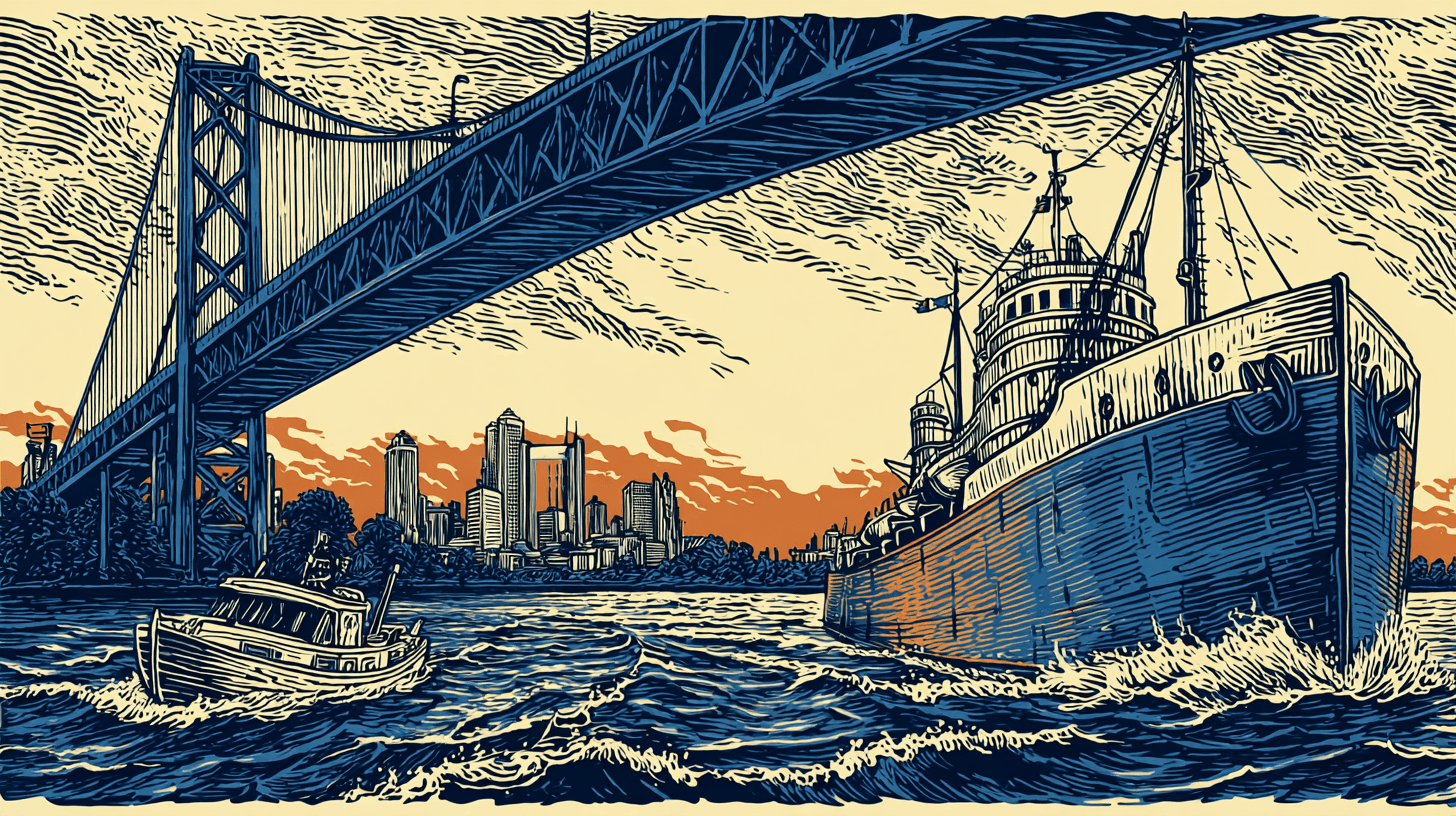
If you keep a boat on the Detroit River, sooner or later you'll come up past Wyandotte at first light and find yourself sharing the channel with a 700-foot laker — close enough to read the name off her bow, far enough that AIS pegged her ten minutes ago. You've done everything right. You called her on Channel 16. You're clear of the deep water. None of that changes the fact that for a couple of minutes you're a small recreational boat sharing a corridor with a vessel that displaces more water than your entire marina. The math says you're fine. The instincts have to catch up.
That's the Detroit River. Not bad, not dangerous, not something to avoid. Just busy in a way that asks for more attention than the inland lake most boat owners learned on. I run this water constantly — my office sits on Grosse Ile at the south end of the river, and the corridor from Lake St. Clair down to Lake Erie is part of half my boat deliveries downriver. New owners on this river — people who keep boats in Detroit, Wyandotte, Trenton, Grosse Ile — tend to find their first season more demanding than they expected. This is what to know going in.
The water you're actually on
The Detroit River runs north-to-south, connecting Lake St. Clair to Lake Erie. It forms the international border between Michigan and Ontario for its full length, and it's one of the busiest commercial shipping corridors in the country — the USGS estimates around 68 million metric tons of cargo pass through annually. Most of that is iron ore, coal, and limestone moving on 700-foot Great Lakes freighters.
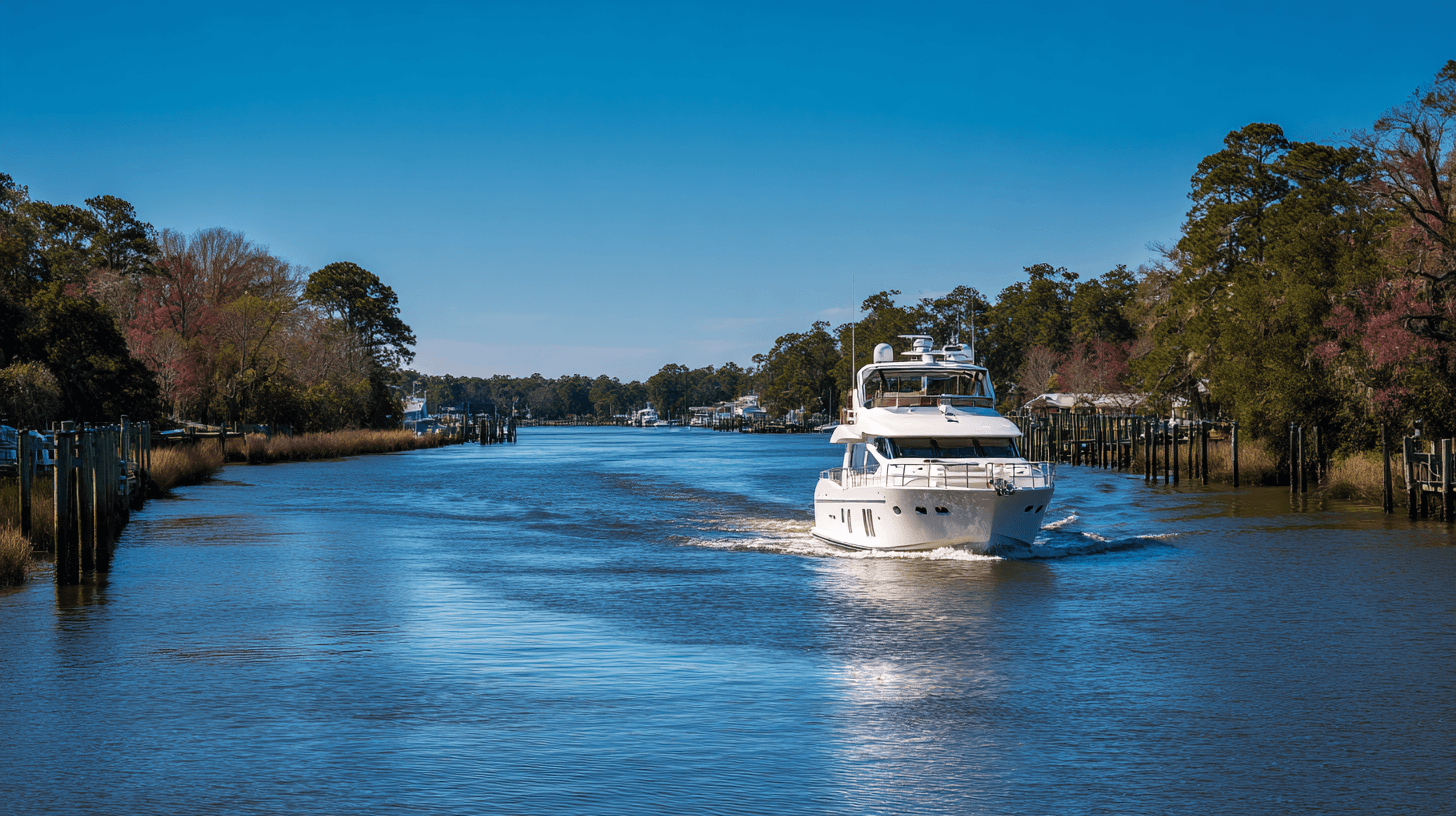
The channel is between half a mile and two miles wide depending on where you are. Pleasure craft generally stay closer to the U.S. shore for routine transits and out of the deep channel altogether when freighters are working it. Your chartplotter shows the channel and the shoaling outside it. Pay attention to both.
Channel discipline isn't optional
Most owners don't realize the lower river is split into two one-way commercial channels. The Amherstburg Channel handles upbound ships. The Livingstone Channel, west of Bois Blanc Island, handles downbound. You can't just "use either channel" — if you enter one, you need to be going the right direction.
Pleasure craft don't normally need to be in either. The exception is the transit south from the river into Lake Erie, where the Livingstone Channel is sometimes the cleanest route around the islands. If you take it, you're going with the downbound freighters, and you're acting like one — moving steadily, sticking to the channel, and getting out of the way of anything overtaking. This is exactly the kind of thing Captain's Coaching walks through on your own boat, in real time.
Five short blasts means now
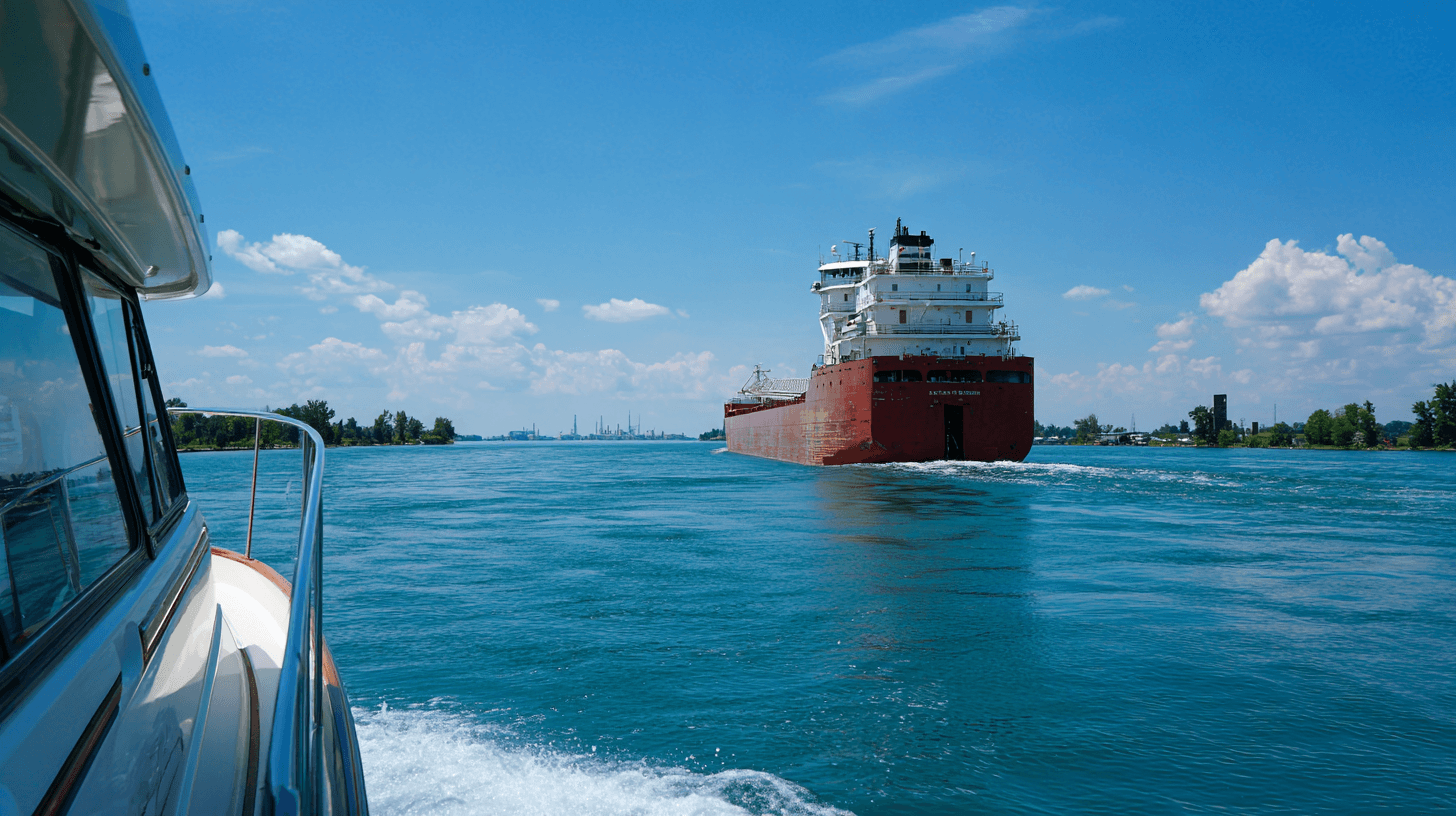
You will, sooner or later, hear five short blasts on a freighter horn somewhere on this river. Per USCG Inland Navigation Rule 34(d), that's the danger signal — sounded by any vessel in doubt about the safety of a passing maneuver. On the Detroit River, the vessel sounding it is almost always a freighter, and the doubt is almost always about you.
If you hear five short blasts and you're anywhere near a commercial ship, the answer is simple: move. Not in two minutes. Now. Toward the U.S. shore, out of the channel, away from the ship's path. Don't wait to figure out who blew the horn and why. Get clear first, sort it out after.
The current is doing more than you think
The Detroit River flows. Always. South, lake-to-lake, and harder than most owners realize. The current pushes you on the way down and works against you on the way back. That changes your fuel burn, your time-and-distance math, and your dock approaches.
The Trenton Channel — the narrow western channel between Grosse Ile and the Michigan shore — runs especially fast. The current there is amplified by water flow from the Trenton Channel power plant, and new owners coming home against it after a day out on Lake Erie are routinely surprised by how slow their groundspeed becomes. If you keep your boat in Trenton, Wyandotte, or Grosse Ile, the Trenton Channel is something you'll deal with every time you leave and return.
The right move isn't fighting the current. It's planning for it. Know which direction it's helping you and which direction it's not. Adjust your departure and return times accordingly. And when you're docking in the Trenton Channel, factor the current into your approach the same way you'd factor wind.
Bridges and the Belle Isle pinch point
The Belle Isle bridge creates an upper-river chokepoint for boats with any meaningful air draft. If your boat is on the larger side of the 30-to-65-foot range that keeps me in business — flybridge, hardtop, antennas, you know what you have — confirm the air draft before you commit to a northbound transit toward Lake St. Clair. Other bridges on the river have their own schedules and clearance constraints. Plan ahead, call ahead, and don't try to time it tight.
Bridge timing is exactly the kind of trip-planning detail that earns its keep in the coaching session. It's also the kind of thing that ruins a Sunday afternoon if you skip it.
The mouth at Lake Erie
When the river opens into Lake Erie at the south end, the water gets shallower fast and the weather gets different fast. Lake Erie is the warmest, shallowest, and fastest-changing of the Great Lakes. The same afternoon that's flat calm on the Detroit River can be a steep chop on Erie within an hour.
If you're transiting south past the Livingstone Channel to fish or cruise, check the NOAA marine forecast for the western basin before you go — not the morning before, not the night before, but right before you leave. Erie changes that fast.
How owners actually get good at this river
The Detroit River doesn't reward bookwork. It rewards hours on the water with someone who knows the channels, the timing, and the spots where it specifically asks more of you. That's what coaching does on this water — on your boat, in your home corridor, going through the actual segments you transit on a typical day.
If you keep a boat on the Detroit River and the river still feels like more than you signed up for, that's normal. A conversation usually sorts out what makes sense for the season.