Filing a Float Plan: A First Mate's Template
A float plan isn't filed with the Coast Guard. It's the one piece of paper that brings the call in if something goes wrong on the water. Here's the First Mate's template.
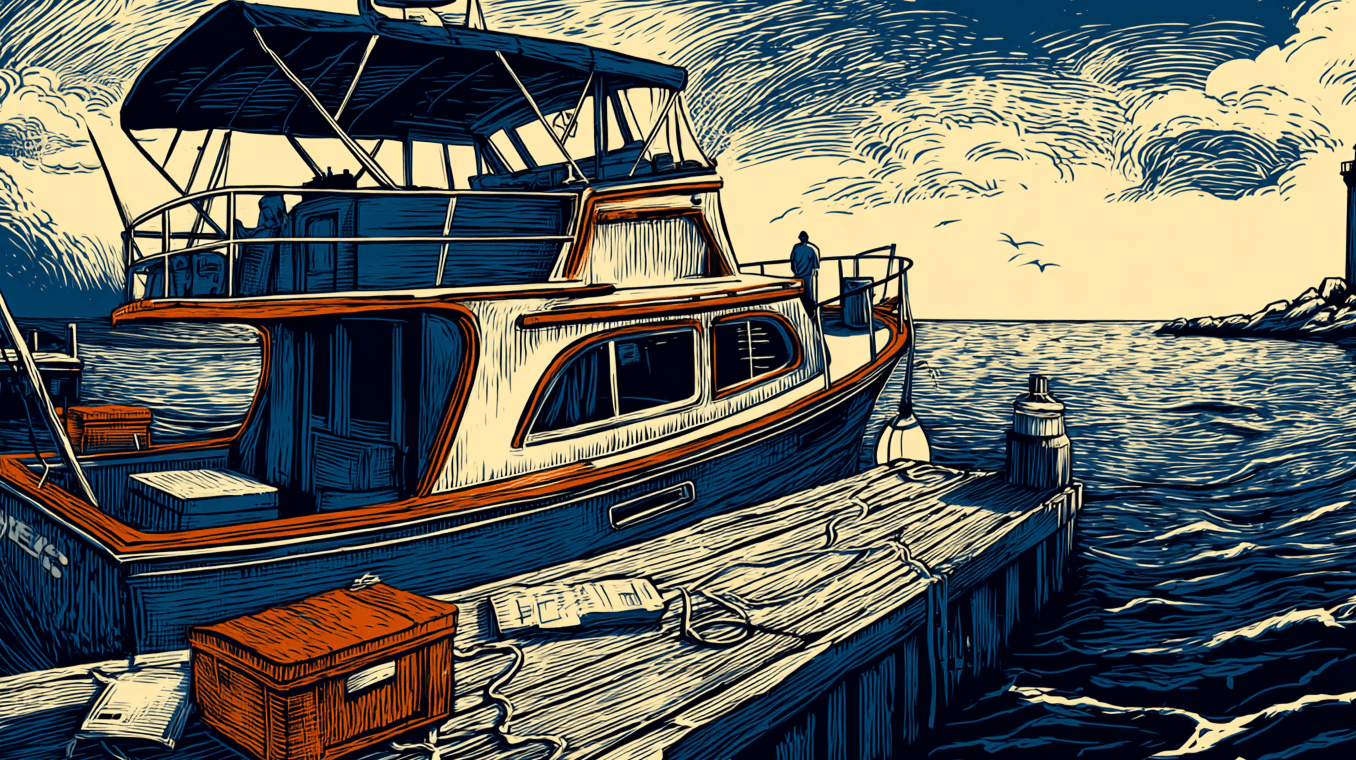
If your boat goes silent on Lake Erie for six hours, who knows to start asking questions? Who has a description of your vessel, your route, your expected return time, and the right phone number to call? That should be one person ashore holding your float plan. Getting that plan into their hands is the First Mate's job.
It's a small piece of paperwork that earns its keep. Done right, it's the difference between a Coast Guard search starting at 9 PM with everything they need, and starting at midnight with someone on the phone trying to remember the color of your hull.
What a float plan is, and isn't
A float plan is a written-down trip summary. Vessel description, who's on board, where you're going, when you expect to be back, and what to do if you're not back when you said. That's it. There is no government form. There is no place to submit it. The U.S. Coast Guard is explicit on their boating safety page: do not file this with the Coast Guard. They don't accept float plans.
What they accept is the call that comes from the person you left it with. That person, holding the right piece of paper at 9 PM when you should have been home by 7, is the entire mechanism.
Who should hold it
One person. Ashore. Sober at the relevant time. Reachable.
Not another boat in your group. If something happens to you, something may have happened to them. They're not the safety backstop; they're another boat.
Not "the marina office." Marinas close. Marina staff turn over. Unless you've made a specific arrangement with the dockmaster who's actually on duty that day, the marina isn't the right answer.
A family member at home, a friend who knows you boat, a yacht-club member who's not going out with you. Those are the kinds of people who work. The qualifier is simple: would they actually pick up the phone at 9 PM on a Sunday, and would they actually make a call if they didn't hear from you by then? If the answer to both is yes, they're your person. If you have to wonder, find someone else.
What goes on it
The USCG Auxiliary's Float Plan Central publishes the canonical template, and it covers more than most boaters realize. The First Mate's job is making sure the fields are filled accurately, with current information, before the lines come off.
The full template has detail; the working minimum is roughly this:
A First Mate's Float Plan Template
Vessel:
Name, registration or documentation number, hull color, length, make and model, distinguishing features. A photo if you can attach one.
Communications:
VHF channel monitored. DSC MMSI number if your radio has one. Cell phone numbers on board, and which carrier (cell coverage on Lake Huron is not the same as on Lake St. Clair).
Crew:
Names, contact numbers, ages, and any medical conditions that matter in a rescue scenario.
Trip:
Departure point and time. Route with specific waypoints (not "heading north"). Planned stops. Destination. Estimated return as a firm time, not a range.
Safety equipment on board:
PFDs (count and type), throwable, fire extinguishers, flares, EPIRB or PLB with registration number.
If overdue:
Contact information for the holder. Coast Guard sector phone. Local marine emergency number.
Two fields most boaters skip and shouldn't: the DSC MMSI number, because that's what lets the Coast Guard query your radio directly when the search starts; and a firm return time. A range ("we'll be back sometime between 5 and 8") is not a return time. It's a window in which nobody will call anyone, because nobody knows when "overdue" starts.
When to file it
The honest answer is "more often than most people do." The serious answer:
Every overnight trip.
Every trip into waters you don't run regularly.
Every trip where VHF coverage gets thin (Lake Huron's North Channel, the open middle of Lake Erie, anywhere outside reliable cell range).
Any trip with non-experienced crew on board, because if something happens to the captain, the float plan and the First Mate's emergency response become the two things that matter.
For routine day trips on your home waters, the call is yours. I file something quick even on familiar runs. A text to my wife with the departure, the route, and the back-by-time. It's not the full plan. It's the activation trigger, which is the part that does the work.
How to actually file it
The mechanics are not complicated. Get the plan into the holder's hands before you leave the dock. Email a PDF, text a photo of a filled-in template, or hand them a printed copy when you drop the dog off. Whichever channel they're most likely to actually read.
Then say it out loud: "Plan's in your email. We're back by 7. If you haven't heard from me by 8, call the boat on VHF 16, then call me on cell, then call the Coast Guard. The numbers are on the plan." That sentence is the difference between a float plan and a piece of paper.
The return-side discipline matters as much as the front side. When you're back at the dock, text the holder. Back at slip, all good. If your plans change underway, update them. Different route, unscheduled overnight stop, anything that moves the return time. Search and rescue resources cost real money to launch, and they get launched when a float plan goes unclosed.
When it activates
The holder doesn't make a judgment call. The plan has a return time on it. If that time passes by a reasonable margin and they haven't heard from you, they run a short escalation:
Call the boat on VHF 16 if they have a radio, or call the marina and ask the dockmaster to.
Call cell phones on the plan.
Call the Coast Guard sector listed on the plan.
The USCG Auxiliary template includes a Boating Emergency Guide that walks the holder through this step by step. Print it with the plan. It removes the "what do I do, what do I do" moment from the person who's already worried.
The First Mate's role
The Captain runs the boat. The First Mate runs the float plan. That's the division on most well-run boats I've been on.
The First Mate fills out the plan, sends it to the holder, confirms the holder will be reachable, says the activation sentence out loud, and closes it out on return. The Captain is checking strainers and oil and the chartplotter. Both jobs are happening at the same time, and the boat doesn't leave until both are done.
Filing a float plan isn't an emergency procedure. It's a routine, the same way removing the lines is a routine. When First Mate Coaching talks about the role being more than handling lines, this is one of the things it means. You're the person whose paperwork brings the call in if something goes wrong, and you're the person who closes the loop when it doesn't.
If you're new to the seat and want to walk through a routine that covers this and the rest of what the role actually involves, that's the conversation to have.
Keep Reading



FROM THE HELM
New articles, straight to your inbox.
A short note whenever a new piece goes up — seamanship, ownership, and lessons from the water. No spam, unsubscribe anytime.