Boating the Trenton Channel: The Quiet Side of the Detroit River
The big freighters run the other side of the island. The Trenton Channel is where Downriver actually boats. Here's how my home water works.
Grosse Ile is my home port, so the Trenton Channel is the water I run more than any other on earth. It's the west side of the lower Detroit River, the stretch that separates the island from the mainland towns of Riverview, Trenton, and Gibraltar, with Wyandotte sitting just above the channel's head. The big freighters run the deep channels on the east side of the island. Over here it's pleasure boats, fishermen, and two swing bridges that will teach you patience whether you want the lesson or not.
If you keep a boat anywhere Downriver, or you're bringing one home through this stretch, here's what the channel actually asks of you.
The two bridges
The Trenton Channel has two crossings to Grosse Ile, and both of them swing.
The Grosse Ile Toll Bridge sits at the north end of the channel, connecting the island to Riverview. This is the one with a published schedule that matters. Under the Coast Guard's drawbridge regulation for the Trenton Channel, from 7 a.m. to 11 p.m. the draw opens for pleasure craft only on the hour and half-hour, in a window that runs from three minutes before to three minutes after. Miss the window and you're holding station for up to thirty minutes. Overnight, 11 p.m. to 7 a.m., it opens on signal.
The Grosse Ile Parkway bridge, the free bridge, crosses at the island's south half. It's the Wayne County span, and it's also a swing bridge.
Toll Bridge openings for pleasure craft
7 a.m. to 11 p.m.: on the hour and half-hour only, three minutes before to three minutes after.
11 p.m. to 7 a.m.: on signal. Plan your run so you arrive a few minutes early, hold station off to the side of the channel, and stay clear of any commercial traffic, which gets priority.
My advice after a few hundred passes: treat the bridge windows as part of your trip plan, not an interruption to it. If you're timing a run down to Lake Erie, work backward from the half-hour. Holding station in a current with other boats stacking up behind you is a boat-handling exercise nobody enjoys, and it's exactly the kind of close-quarters control I work on with owners in Captain's Coaching.
Reading the channel
The channel itself is honest water, but it's river water. There's current, and it always runs toward Lake Erie. NOAA's Coast Pilot 6 covers this stretch, and a current chart matters more here than people expect, because depths outside the marked water get thin in a hurry, especially toward the south end where the channel opens up around the islands.
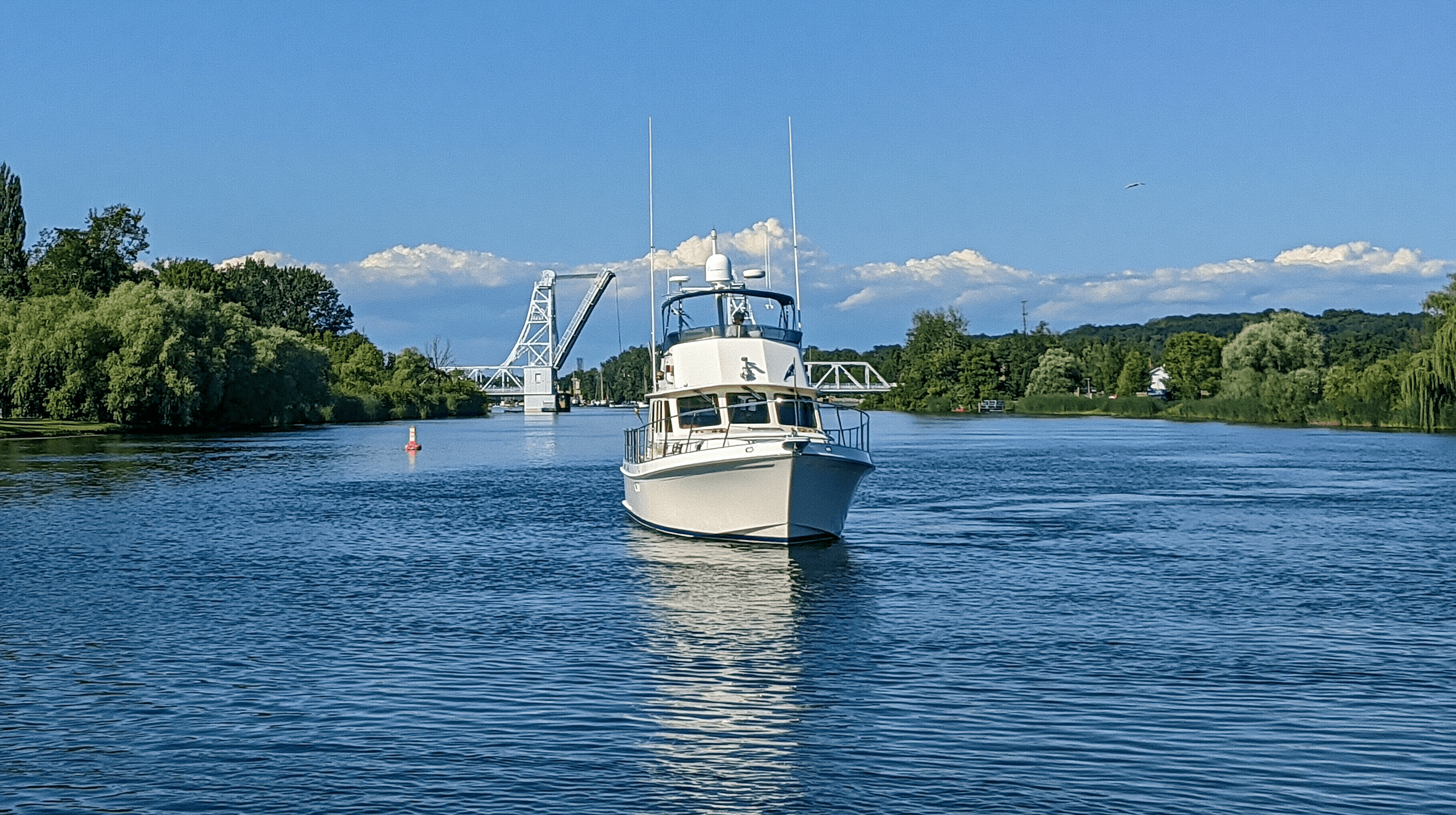
A few habits that serve you well here:
Stay in the marked channel until you have local knowledge. The temptation to cut corners around the island's south end has put more than a few props into the bottom.
Mind the current at the docks. Every marina and seawall along this stretch involves landing a boat in moving water. Set your lines and fenders for it before you're committed, and know how you'll use the current instead of fighting it.
Watch for fishermen. Spring walleye season turns parts of the channel into a parking lot. Slow down, give them room, and check your wake.
Wyandotte to the lake
The head of the channel puts you at Wyandotte, which has one of the better working waterfronts on the river. Run south and you pass Riverview and Trenton, the Elizabeth Park lagoon, and the marsh shoreline of the Detroit River International Wildlife Refuge on the mainland side. South of the island the river opens toward the islands at the mouth, where half of Downriver anchors out and rafts up on a good July Saturday.
Clear the south end and you're on Lake Erie, which is a different animal entirely. It's the shallowest of the Great Lakes and it builds a short, steep chop faster than any water I run. I wrote more about that transition in my Lake Erie piece, but the short version is: the channel is protected water, and the lake is not. Check the forecast before you commit to the open water, not after.
Home water
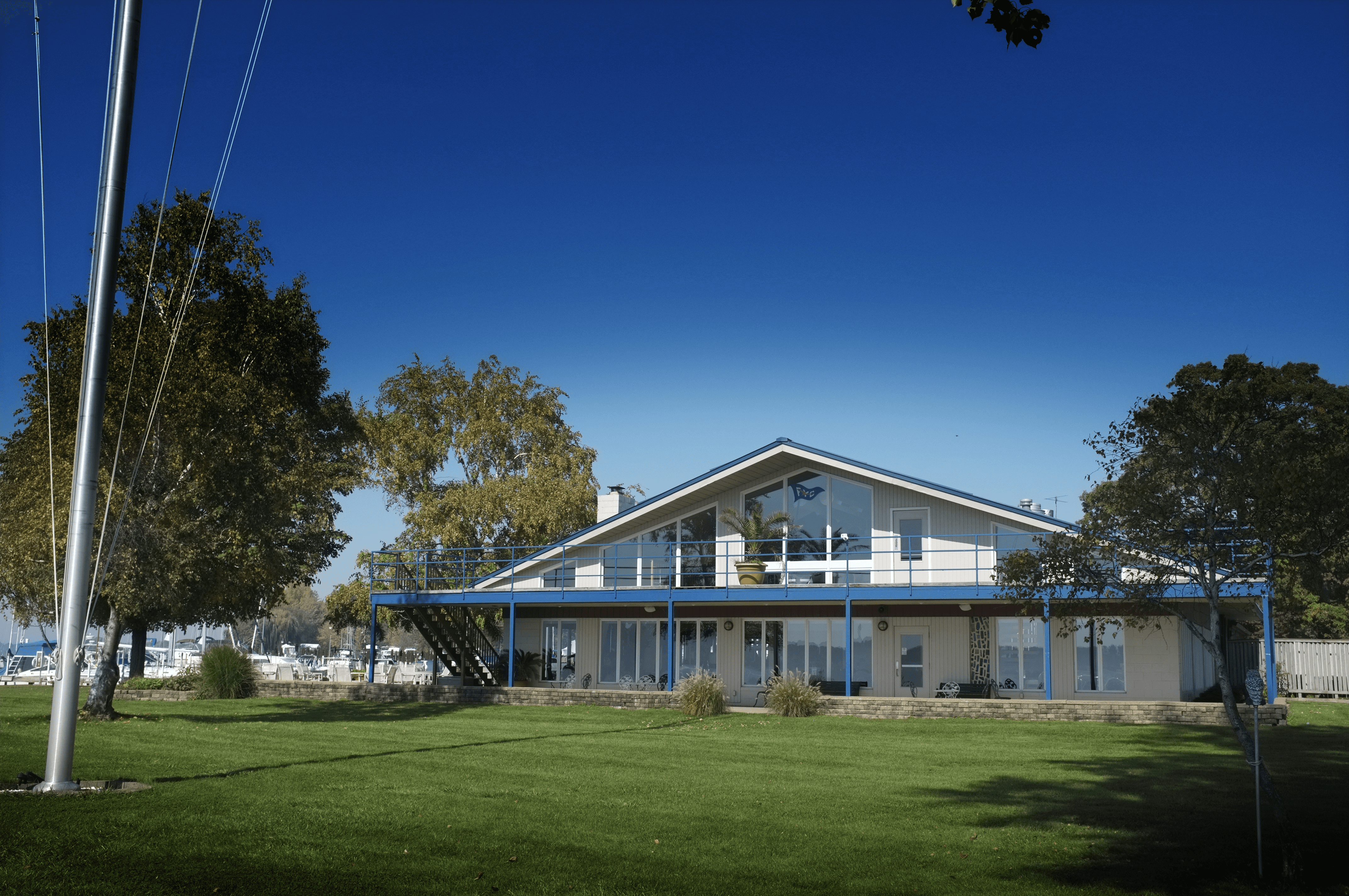
The Trenton Channel is also where you'll find Ford Yacht Club, my club, on the Frenchman's Creek side of Grosse Ile. I've served as Commodore there, and I've watched thousands of boats come and go through this channel over the years. Most handle it fine. The ones that don't usually made the same mistake: they treated river water like lake water and let the current make their decisions for them.
If you're bringing a boat home to a Downriver marina, moving one out for the winter, or you want a coaching day on your own home water before the season gets busy, that's what I do. A quick call sorts out most of it.