What Lake Erie Asks of Boat Owners
The shallowest Great Lake is the quickest to turn. How I think about the western basin, the islands run, and Erie's short, square waves.

Lake Erie's average depth is 62 feet. Hold onto that number, because it explains nearly everything about how this lake treats the people who boat on it.
I run deliveries and coaching sessions across Lake Erie every season, and it's the lake my clients ask about with the most respect in their voice. They've heard the stories. Some of them have lived one. The reputation is earned, but it's also misunderstood. Erie isn't out to get anyone. It's a shallow lake that obeys physics, and once you understand what the shallowness does, the lake gets a lot more predictable.
Why shallow water makes steep water
The EPA's Great Lakes data puts Erie's average depth at 62 feet, the shallowest of the five by a wide margin. The western basin, the stretch you enter when you come out of the mouth of the Detroit River, averages about 24 feet.
Here's what that means on the water. In deep water, wind energy spreads out into long, rolling waves with room between them. A boat rises and falls and keeps her rhythm. In shallow water, that same energy has nowhere to go but up. The waves get short, steep, and close together. Boaters call them square waves, and the name fits. The bow comes off one and lands in the next before the boat ever settles.
This is why a 4-foot forecast on Erie is not the same day as a 4-foot forecast on Lake Huron. Same number, different lake, very different ride. The period between waves is what beats up a boat and her crew, not the height alone. Erie's period is short on its best days and brutal when the wind has been working.
The other thing shallow water does is build fast. A breeze that wouldn't raise a whitecap on Huron can put a genuine chop on the western basin inside of an hour. The lake you launched into is not always the lake you come home on.
[CALLOUT CARD: Erie in one sentence: the shallowest Great Lake builds the steepest waves in the least time, and the western basin, averaging 24 feet deep, is where it happens fastest.]
The western basin, from the river mouth south
For boaters coming down the Detroit River, the western basin is the front porch of Lake Erie. It's also the most distinct piece of the lake: shallow, warm, turbid, and busy.
A few things to know about this stretch. The bottom is fine sediment that stirs easily, so water clarity is poor and reading depth by eye is a non-starter. Stay honest with your chartplotter and your depth sounder. Shoals and reefs sit around the island group, and they're charted accurately, but charted only helps the captain who's looking. The basin also carries heavy traffic in season: fishing boats working the reefs, cruisers heading for the islands, and commercial vessels making for the Detroit River channel. Keep your head up and your speed appropriate to the visibility around you.
None of this is a reason to avoid the western basin. It's some of the best cruising water in the region. It just rewards the boater who treats 24 feet of water with the attention it asks for.
The islands run
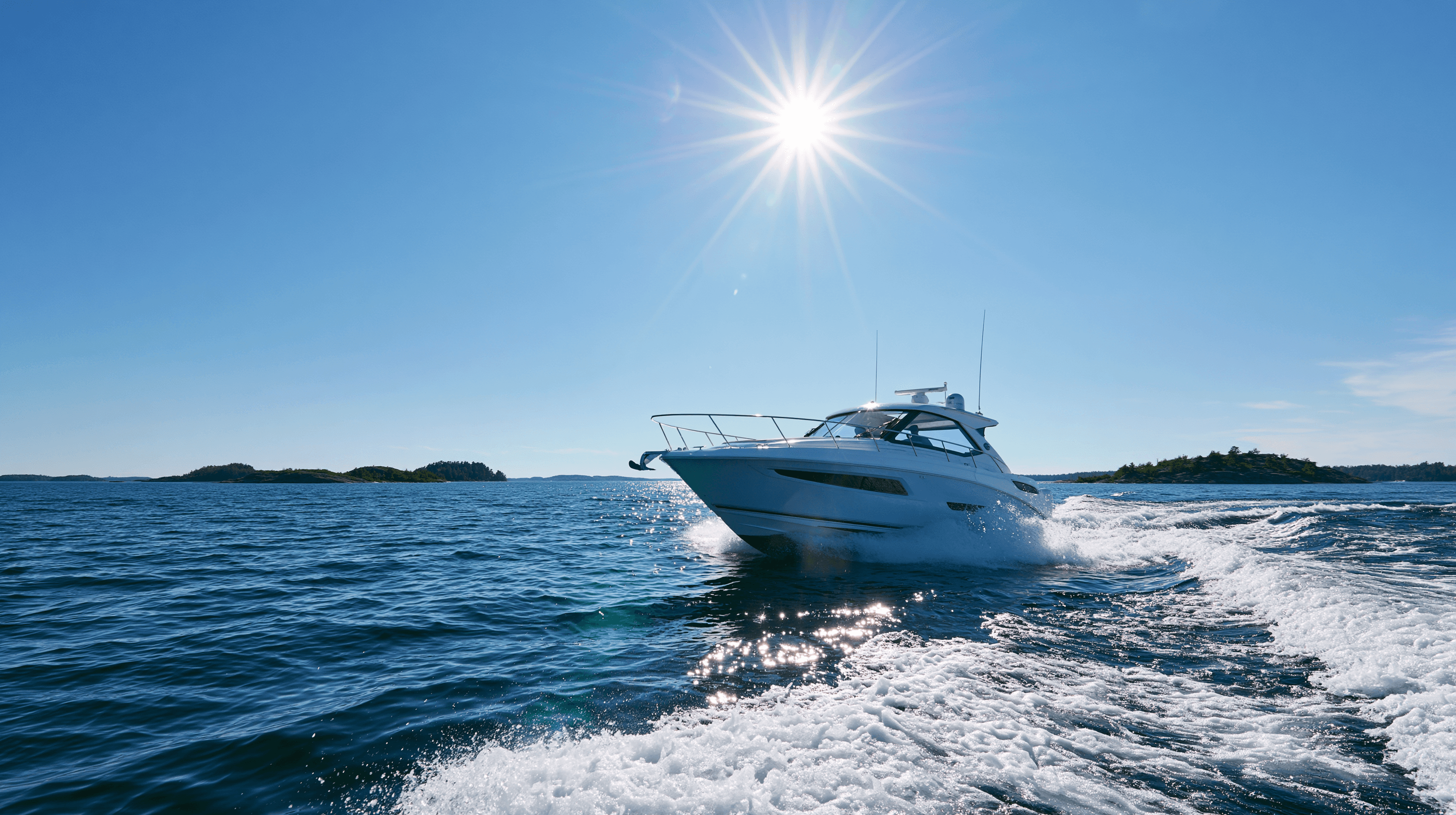
Put-in-Bay on South Bass Island, Middle Bass, Kelleys Island. For most boaters in southeast Michigan, this is the run that justifies the boat. From the lower Detroit River it's a comfortable day trip in settled weather, and the harbors are built for visitors.
Two pieces of advice from a lot of trips down there. First, summer weekends are crowded, and crowded anchorages punish sloppy anchoring. If you're going to swing on the hook off the islands, set it properly and know it's holding before you crack the first drink. The boat that drags in a packed anchorage ruins more afternoons than the weather does.
Second, plan the trip home before you leave the dock. The islands sit in open water, and the return leg is where I see people get into trouble. The forecast that was fine at 9 a.m. is a different document by 4 p.m., and a tired crew in a beam chop makes mistakes. Check conditions before you pull the hook, not after.
Reading Erie's weather
Every trip on this lake starts with the NOAA marine forecast, and I mean every trip. Erie changes faster than the forecast cycle, so the discipline isn't checking once. It's checking the night before, the morning of, and again before the return leg.
Pay attention to two things beyond the wave height number. Wind duration matters more than wind speed on this lake; a 15-knot wind that's been blowing all night has built a very different lake than a 15-knot wind that started an hour ago. And wind direction tells you where the fetch is. A west wind has the whole length of the lake to work with by the time it reaches the eastern end. A northeaster stacks everything into the western basin and the island passages.
When the window is marginal, it pays to have a Plan B. Another day, another route along a protected shoreline, or a slip in a harbor you hadn't planned on. I've waited out weather in more Erie ports than I can count, and I've never once regretted the wait. Know before you go, and be willing to change your mind when the lake changes hers.
The long lake
Erie runs roughly east to west for a couple hundred miles, which surprises boaters who only know the western basin. If you're heading east toward Buffalo, the Welland Canal, or points well beyond, you're planning a multi-day passage with real open-water legs and a handful of harbors you should know before you need them.
The Pelee Passage, between Point Pelee and Pelee Island, funnels the commercial traffic crossing the lake. Treat it the way you'd treat the Detroit River channel: know where the big ships are, make your intentions obvious, and give them the room their tonnage demands.
An eastbound Erie passage is a genuinely great trip. It's also exactly the kind of run where having an experienced captain aboard for the first one pays for itself, whether that's a coaching passage on your own boat or a delivery where you ride along and learn the lake.
Respect, not fear
Erie's reputation scares some boaters off, and that's a shame, because the lake gives back everything it asks for. Warm water, the best island cruising in the region, and more good harbors than you'll get to in a season. The boaters who get into trouble out there are almost never unlucky. They're unprepared, or they ignored a window closing in plain sight.
Pick your weather, mind the western basin's depth, and plan the trip home as carefully as the trip out. Do that and Erie will treat you fine.
If you're thinking about an islands trip, an eastbound passage, or just getting comfortable on this lake with someone who knows it, that's a conversation worth having. A quick call sorts out most of it.