Wintering Your Boat in Florida: How Great Lakes Snowbirds Plan the Run South
The boats that winter in Florida don't decide in October. They decide in July. Here's the planning sequence that makes the snowbird run work.

The boats that winter in Florida don’t decide in October. They decide in July. By the time the leaves turn, the good slips are reserved, the delivery calendars are full, and the insurance questions have either been answered or become problems. If you’ve been kicking around the idea of following your boat south instead of shrink-wrapping it, this is the planning sequence, and this is the month to start it.
Why owners make the run
The math is simple enough: a Great Lakes boat gets maybe six months of season if the weather cooperates. A boat wintering in Florida gets twelve, and the owner gets January weekends on the water instead of walking past a shrink-wrapped hull in a storage yard. Against that you weigh the delivery cost each way, southern slip fees, and the planning load. For owners who already spend part of the winter south, the boat joining them often pencils out better than they expect.
The timing windows, and why they’re narrow
The trip south threads between two seasons. Leave too early and you’re running into the heart of Atlantic hurricane season, which NOAA defines as June 1 through November 30, with the peak around September 10 and most activity between mid-August and mid-October. Leave too late and you’re racing cold weather, short days, and seasonal closures on the inland waterways along the route.
That squeeze is also where your insurance carrier enters the conversation. Many policies restrict where the boat can be during hurricane season, and those windows vary by carrier and policy. Call your agent in July, not October, and get the dates that apply to your boat in writing. It’s the same principle behind why I won’t deliver without an insurance rider: the paperwork conversation happens before the boat moves, every time.
The route, briefly
There’s more than one way south, and I covered the routes, the legs, and the decision points in detail in the Great Lakes to Florida delivery guide. The short version: it’s a multi-week undertaking through big lakes, rivers, and coastal water, and how long it takes depends on the boat, the route, and the weather’s opinion of your schedule. Some of the route overlaps water I covered in the Great Loop guide, because snowbirds and Loopers share a lot of miles.
Three ways to get the boat there
Hire the delivery. The boat travels on its own bottom with a licensed captain while you fly down to meet it. This is the vessel delivery work I do, and fall is the busy season for exactly this run. Once it’s down there, I work in Florida too, so the boat can keep the same captain at both ends, and you can hire a captain in Florida for the days you’d rather not run it yourself.
Make it a trip. An owner-assisted delivery puts you aboard for some or all of it, part delivery and part training voyage on your own boat. Owners who do this once tend to come back different boaters. It’s the single best classroom I know. If you can’t spare the weeks, a few boating lessons in Florida after she arrives cover the tide, the current and the bridges.
Truck it. Overland transport is the third option, and for some boats and timelines it’s the right one. It trades the voyage for logistics: hauling, decommissioning for road travel, and recommissioning on arrival. Worth pricing against the water route before you decide, not assumed to be cheaper.
The spring side of the equation
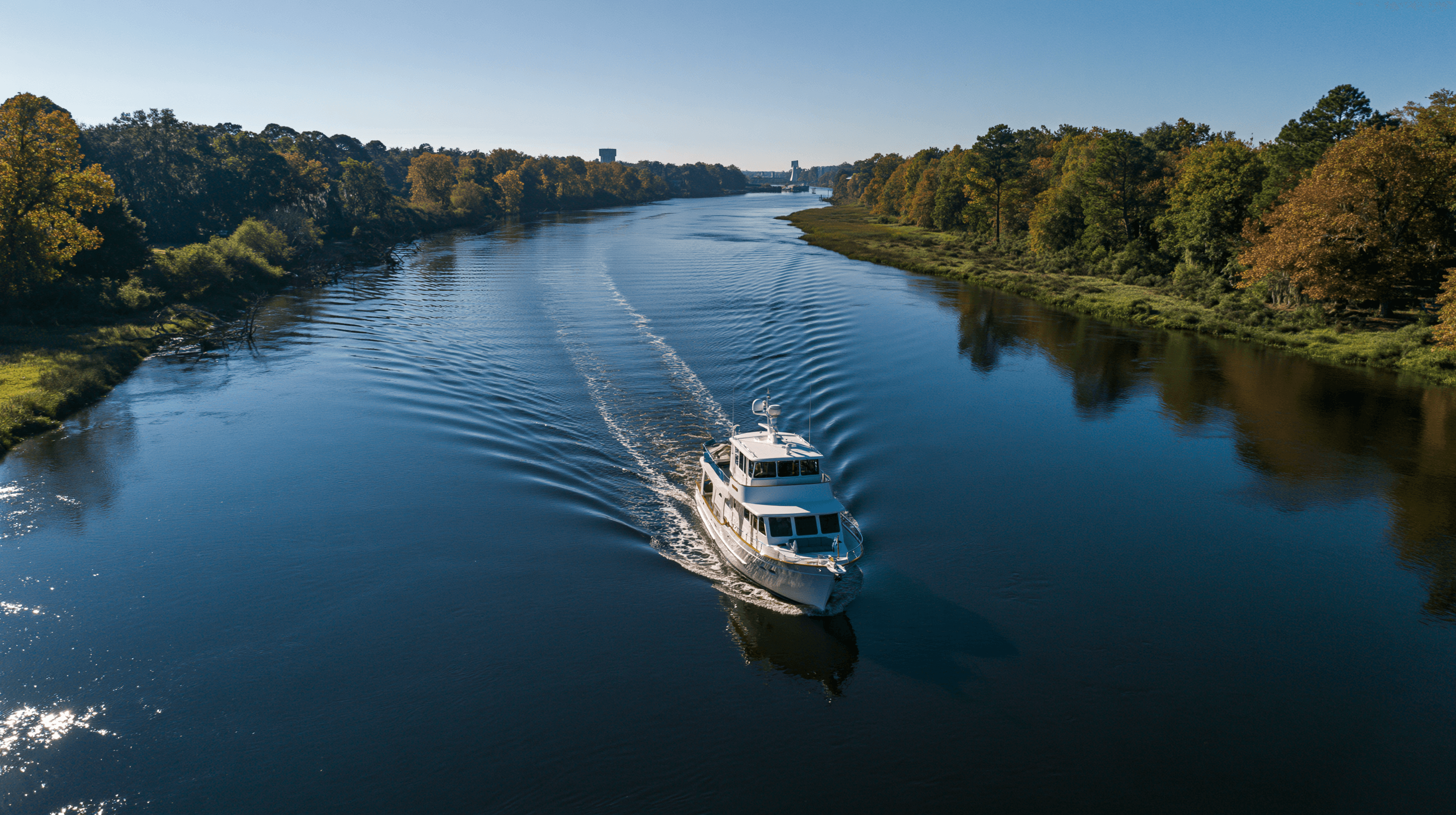
Whatever goes south must come north, and the return run has its own window: late spring, after the northern water opens up and before your policy’s hurricane-season clock starts again. Book both directions at once if you can. Owners who plan the round trip in July get their pick of dates on both ends; owners who plan one leg at a time end up negotiating with the calendar.
If a Florida winter is on the table for your boat this year, the whole thing starts with one conversation about dates, routes, and what your policy allows. That’s a quick call, and July is the right month to have it.
Keep Reading

FROM THE HELM
New articles, straight to your inbox.
A short note whenever a new piece goes up — seamanship, ownership, and lessons from the water. No spam, unsubscribe anytime.