Captain's Coaching
A Day of Coaching on a New Jeanneau at Jefferson Beach Marina
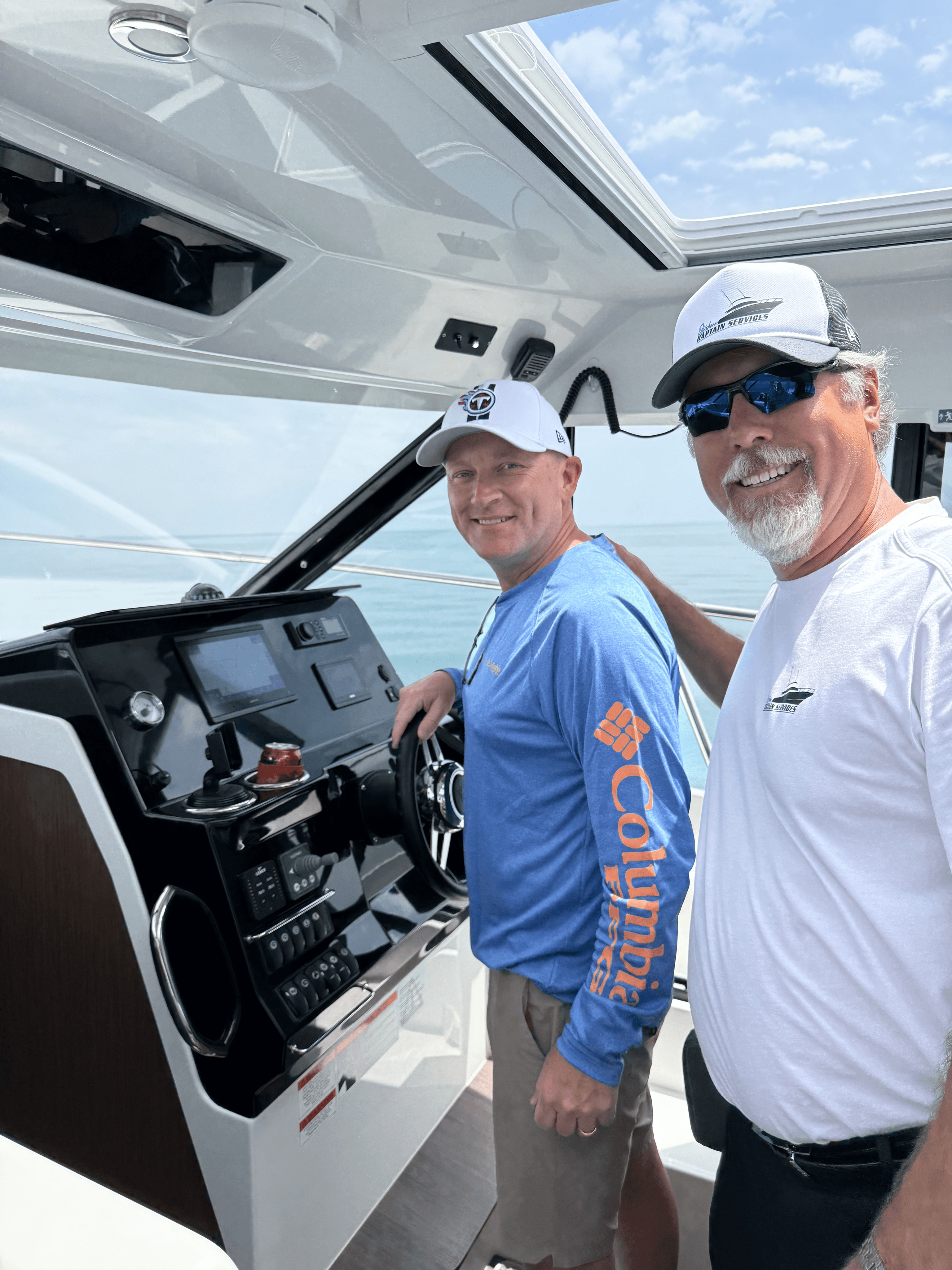
Danny and Lesley's Jeanneau was a good boat that was new to them. One day at Jefferson Beach turned her into a boat they knew, down to saving a sideways approach.
Vessel
2023 Jeanneau NC 1095 · twin Yamaha 300HP outboards
Where
Jefferson Beach Marina, Lake St. Clair
Conditions
Clear, mid-70s, NNE winds 5 mph
Why the Owners Called
Danny and Lesley had a beautiful boat that was new to them: a 2023 Jeanneau NC 1095 with twin Yamaha 300s, low hours, indoor-stored over the winter. A good boat. But a boat you haven’t run before is a stranger, no matter how clean the hours are, and Danny and Lesley wanted a day to get properly acquainted with it before the season got going. That’s a smart call. Most of the trouble I see on the water comes from owners learning a new boat’s habits the hard way, in tight quarters, with an audience.
How the Day Went
We started at the dock at Jefferson Beach with the boat still tied up, because that’s where most of the real learning happens. We walked the pre-cruise checks, went through the electronic binnacle controls, and ran a few line-securing drills on the cleats and dock poles. We covered the proper sequence for coming off shore power: AC panel off on the boat first, then the breaker on the dock pedestal, then pull the cord. Do it in that order every time and you never get a surprise. I also made the case for a below-deck look before and after every cruise. You want to know your seacocks, your bilge, and the general state of things while the boat is sitting still, not when something’s already wrong.
Then we got underway. I took her out of slip A30 first to get a feel for her, and this is a nice-handling boat. She climbs onto plane with very little bow rise and answers the trim tabs and drive trim well. She liked a 4,200 rpm cruise and, trimmed right for the day, ran better than 25 knots. Once I had a sense of her, Danny took the helm and worked a full series of maneuvers: stopping, rotating, getting on plane, working the trim and tabs, crossing an oncoming boat’s wake, checking all around before every course change, right of way, and backing her down in open water. Lake St. Clair had a fair amount of debris that day, so situational awareness was part of the lesson whether we planned it or not.
While we had open water, we reviewed the First Mate’s role if something happens to the captain. That’s a conversation every boating couple should have, and there’s a fuller write-up on it in the From the Helm section of the site.
We identified the no-wake markers outside the marina and the buoy off the shoal to the east of the harbor entrance, then Danny brought her back in and put her in the slip on the electronic controls alone, clean. From there we ran over to the Watermark and practiced approaches to the wall, simulating a lunch stop, a dinner stop, a fuel dock, and backing off the same wall. He did well on all of it. We backed up and down the fairway without issue and worked on sterning her in. Danny picked up the key lesson quickly: when the bow thruster pushes the bow toward the dock, the stern tends to swing away, and you correct that with the drives.
For the last exercise, I handed him the whole job. Unsecure the boat, run to open water, get on plane, set the ride, bring us home. We got a touch sideways coming into the slip, and Danny recovered nicely and put her away clean. That recovery is worth more than a perfect approach. The boat that never gets away from you a little is the boat you’re not learning on.
What I Took Away
Danny’s prior boating experience carried over well. He developed a feel for the throttles, the bow thruster, and the boat’s handling fast, and the whole family was a pleasure to spend a day with. We had fun out there, which is the part people forget is allowed. I left a copy of the coaching package on board and sent the family home with a list of things to keep practicing.
What I Left Them to Work On:
Keep practicing dockings: bow in, stern in, against a wall, off the wall
Lengthen the fender lines so fenders can hang horizontal when needed
Carry a handheld VHF as backup comms
Start a vessel logbook: maintenance, operations, fuel, notable events
Get familiar with every thru-hull below the waterline before you ever need to
Pick up a USCG Rules of the Road handbook and a Richardson’s Chartbook
Arrival
Favorable weather, a quick-learning owner, and a good boat made for a clean day. Danny and Lesley came off the water knowing their Jeanneau a great deal better than they knew her at 0900, which is the entire point.
If you’ve got a boat that’s new to you this season, a day of coaching is the cheapest insurance you’ll buy all year. A quick call sorts out what would help most.