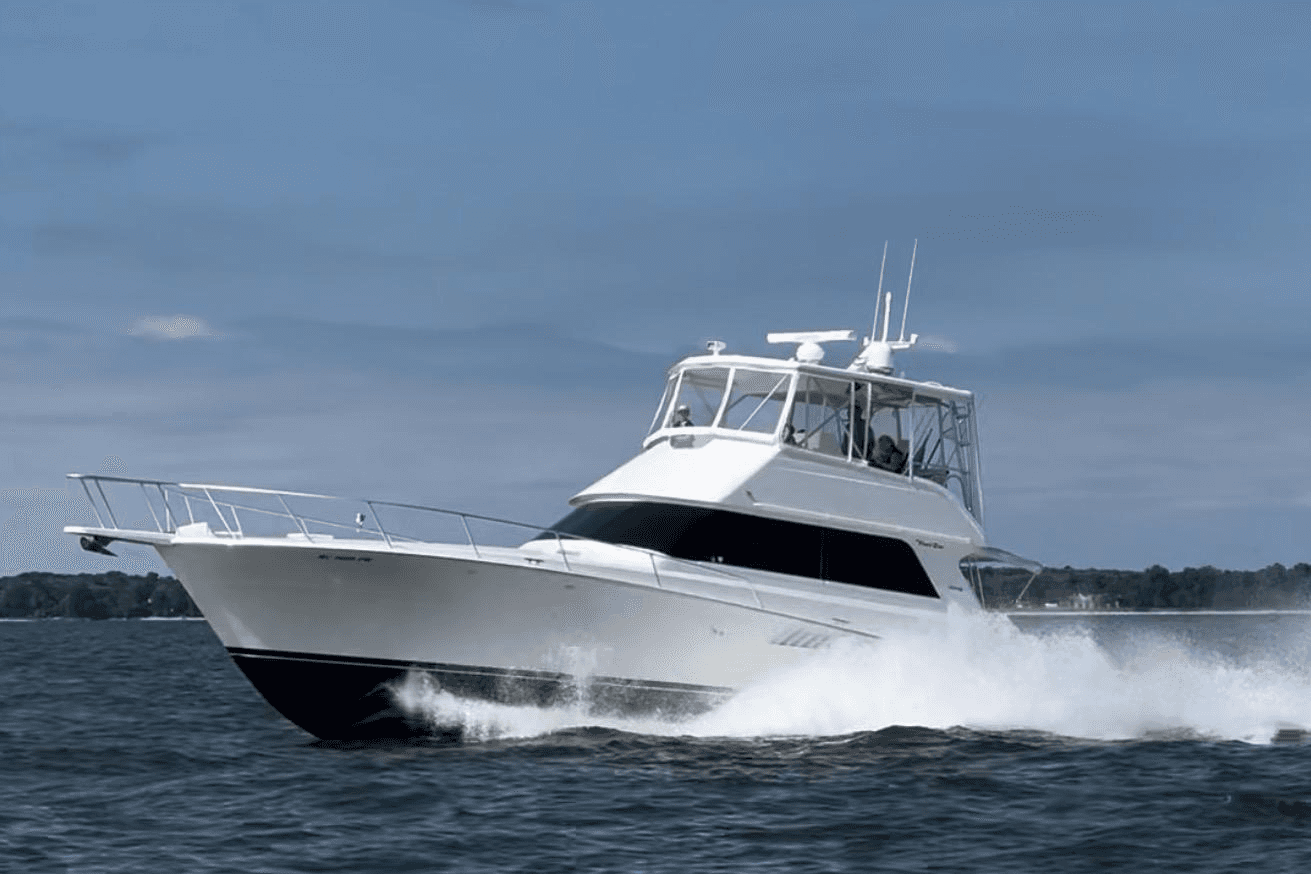
Owner-Assisted Delivery
Delivering a Sea Ray 340 Sundancer from Jefferson Beach to Ford Yacht Club
Craig's first day on his new Sea Ray was the day we brought her home: launch at Jefferson Beach, down the Detroit River, and three clean dockings at Ford Yacht Club.

Vessel
2004 Sea Ray 340 Sundancer · twin sterndrives
Where
Jefferson Beach Marina (Lake St. Clair) → Detroit River → Ford Yacht Club, Grosse Ile
Conditions
Light southwest breeze, spring debris in the river from recent flooding, two freighter wake crossings
The Run
Craig bought a 2004 Sea Ray 340 Sundancer at Jefferson Beach Marina and needed it delivered to his home well at Ford Yacht Club, down on Grosse Ile. This was a first-day-on-his-boat run. The right shape for it was an owner-assisted delivery: I take responsibility for the passage, Craig runs the boat as much as he is ready to run, and by the end of the day he has real hours at the helm on the boat he just bought.
Route was Lake St. Clair down through the Detroit River to FYC. Not long as deliveries go, but early April on the Detroit River comes with its own considerations. Recent flooding meant debris in the water. Freighter traffic never stops. And this was launch day for the boat, so we had a full spring launch sequence to work through before we untied.
On the Water
We started at FYC at 0800, drove up in Craig’s car, and arrived at JBM at 0915. Parking for the week was pre-arranged with the marina office.
The boat was inside the building. Full pre-launch inspection. Anodes were new on shafts, trim tabs, and transom. Cutlass bearings tight, zero shaft play. Propellers no damage, jam nuts firm. Through-hulls all plastic, no defects. Bottom paint needed touch-up in the lift-strap areas and along the lower aft hull sides at the transom. Craig would address that later. Hull and topside looked great and wanted a proper cleaning and wax to keep them that way. One previously repaired area forward midship starboard side, otherwise nothing structural.
We spent 30 minutes in the JBM break room going through the boat’s maintenance records and walking each leg of the trip on the chart. Waypoints, hazards, safe harbors, heading, and distance. That is where a delivery becomes teachable rather than just a ride.
Launch was pushed from 1000 to 1130. The recommissioning tech arrived at 1230. I showed Craig how to open the engine hatch with a portable power pack. Batteries reconnected and confirmed low. Generator up, systems check running, AC lines bled, batteries on the way back. The tech found a leak at the raw water inlet hose clamp at the engine. Tightened the clamp, problem solved. Both rudder posts weeping from dry packing after lay-up, expected to swell and seal in the next 24 hours. Craig would monitor. Fluids all checked and good.
Out of the well, down the fairway, a couple of demonstrations, and Craig took the helm in the JBM harbor to start feeling out the boat’s handling. At 1445 we pointed her south for FYC.
Breeze was out of the southwest with a light chop. Debris in the water from the flooding, so we kept eyes up. The boat ran best at 3,000 to 3,400 rpm with a preference for the top of that range. Speed 27 to 29 mph depending on how we trimmed her with the tabs. Engine temps well under 175, oil pressures good, voltage held. We worked basic tab operation for the day’s conditions and talked through crossing wakes for oncoming vessels and vessels overtaking from behind. Two freighters passed us head-on and Craig got to feel the wake pattern change with each one. Reminders throughout to keep an eye behind the boat, especially before any course change. He had that dialed in by the time we got to FYC.
Arrival back at FYC around 1615 in a light breeze. Craig took the boat into the west basin and worked harbor maneuvers and dockings. Focus was on managing momentum and rotating the boat in wind. All bow-in approaches to a fixed finger dock. Three successful docking attempts in a row from different approaches, so we secured her and shut down.
Post-cruise engine room check showed the rudder-post leaks slowing down. Bilge had more water than when we left JBM, likely a mix of remaining rudder-post weep and residual from the earlier service work on the waste tank. Pumped it out. Craig would shop-vac the rest and monitor. One fuel filter outboard of the port engine had come loose from its stringer bracket and needed re-securing. Shore power connected, full voltage on the panel. Day ended at 1800.
Trip Notes:
Launch, recommissioning, and pre-cruise inspection completed at JBM
Raw water hose clamp leak caught and repaired before departure
Route walked leg by leg on the chart before departure
Craig ran roughly 90 percent of the trip and completed three successful dockings at FYC
Rudder-post weep monitored post-arrival, expected to seal within 24 hours
Delivered
Boat delivered, engine room stable, owner aboard for the whole passage and on the helm for most of it. There is still work to do together, and we already have a plan. Docking work with a spring line. Approaching and departing a wall with the wind for and against. Stern-in approaches, which may be the right home configuration since the dock is a hair shorter than the boat. Single-engine handling. VHF operation, position calls, and anchoring. All of it comes in the coaching sessions that followed.
For anyone weighing an owner-assisted delivery, this is what it looks like. You keep responsibility on a licensed captain, and you spend the day at the helm of your own boat. The first day of the season is the right day to do it. Let’s talk about your route.