Vessel Delivery
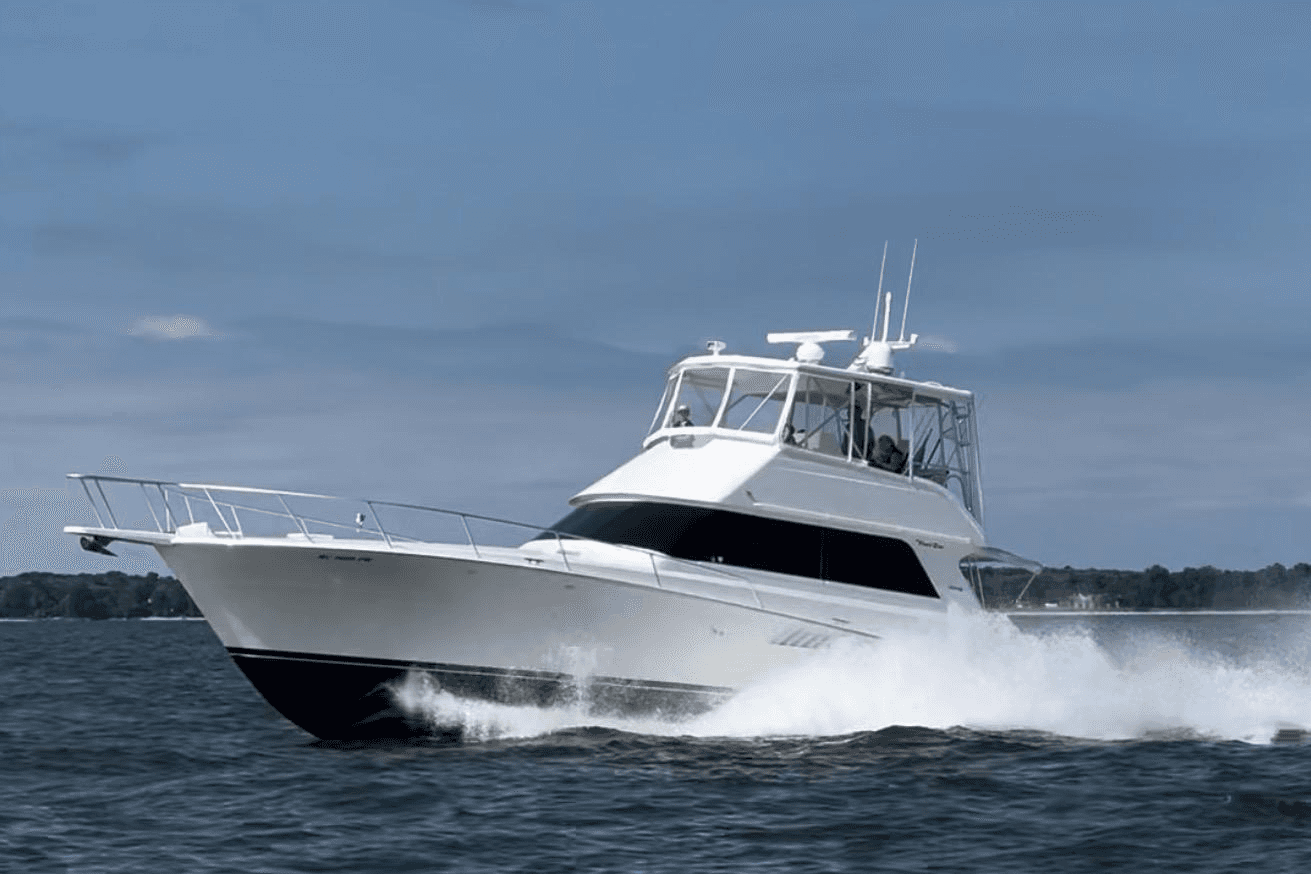
Delivering a 50' Viking from Mac-Ray Harbor to Windsor
Mac-Ray Harbor to Windsor with a border in the middle: one bad gauge caught with an infrared sensor, one storm cell waited out, and a 50-footer handed over in good order.
Vessel
1996 50' Viking · twin diesels
Where
Mac-Ray Harbor (Lake St. Clair) → Windsor, Ontario
Conditions
15–20 mph headwind, one storm cell passed through
The Run
A 1996 50’ Viking, Mac-Ray Harbor on Lake St. Clair across to Windsor. It’s not a long run, but there’s an international border in the middle of it, which means clearing Canadian customs on arrival on top of the delivery itself. The kind of trip an owner is smart to hand to someone who’s made the crossing before rather than sort out the paperwork and the weather on the fly.
On the Water
Up at 0500, at Mac-Ray by 0810. Every delivery starts the same way: secure every hatch, drawer, and door so nothing moves underway, then a full engine room inspection, fluids, leaks, loose connections, anything out of place. All good. There were spare props on the salon floor, so I moved them to the cockpit and padded them with towels and a blanket for transit, confirmed the safety gear, and we were set.
We left Mac-Ray at 0858 and idled out until we reached twelve feet of water before bringing the throttles up, which is the discipline coming out of a shallow harbor. On that idle-out I caught the only fault of the whole trip. The port temperature gauge was reading low, so I confirmed it against an infrared sensor in the engine room. Both engines were actually running right at 178 degrees, right where they belong, while the port dash gauge said otherwise. That’s why you don’t trust a single gauge blindly. The instrument was wrong, the engine was fine, and knowing which is which is the job.
At 0945 we hit deep water and came up to 1800 rpm, straight into a 15-to-20 mph headwind and still making 28.5. The Viking ran beautifully. Around 1000 a storm moved in, so I throttled down and let it pass west to east instead of pushing through it. By 1022 it had cleared and we were back to cruise. That’s the part of delivery work that doesn’t make the brochure: you don’t fight weather you can wait out in twenty minutes.
Two miles out from Windsor I throttled back again, on purpose, to pull the heat off the turbo bearings before arrival, since a hard-run diesel wants a cool-down before shutdown. We arrived at 1050 and cleared customs.
Trip Notes:
Pre-departure: full vessel walk-through and engine room inspection
Secured loose gear (spare props padded for transit), confirmed safety equipment
Diagnosed a faulty port temp gauge against an infrared sensor underway
Held for a passing storm rather than running through it
Cooled the turbos before arrival, then cleared Canadian customs at Windsor
Delivered
Mac-Ray to Windsor, one bad gauge correctly diagnosed, one storm correctly waited out, a 50-footer brought across the border and handed over in good order. A Metro Car had me back at Mac-Ray by noon. The most eventful thing that happened was a storm cell we sat out for twenty minutes, which is exactly what a good delivery should be able to say.
If you’ve got a boat that needs to get from one place to another, across the lake, down the river, or across the border, that’s the work. A quick call sorts out the route, the timing, and what your insurer will want to see.


