How I Plan a Multi-Day Trip on the Great Lakes
A good trip is mostly decided before you leave the dock. Here's how I plan the daily legs, the ports, and the weather days for a multi-day Great Lakes run.

A good trip is mostly decided before you leave the dock. People assume the hard part is the running, the long days at the wheel, the open-water crossings. The running is the easy part. The part that makes or breaks a multi-day Great Lakes trip is the planning you do at the kitchen table with a chart, a calendar, and an honest look at how far you actually want to push in a day.
I plan every delivery the same way, and I tell owners to plan their own trips the same way too. It comes down to four things: how far you go each day, where you stop, what the weather is doing, and what happens when the plan has to change. Get those right and the trip runs itself.
Start with the days, not the miles
Most people plan a trip by drawing a line from A to B and dividing by their cruising speed. That gives you a number of hours. It does not give you a trip.
The honest question is not how many miles you can cover. It is how many hours you want to be at the wheel before you are tired, hungry, and making worse decisions than you were at nine in the morning. For most owners running a 30 to 50 foot boat at displacement or low planing speeds, that is somewhere between five and seven hours of actual running. Past that, the day stops being fun and starts being a grind, and a grinding captain is a captain who clips a piling coming into an unfamiliar marina at the end of a long day.
So I work backward. Pick a comfortable running window. Multiply by your real cruising speed, not your brochure speed. That is your daily reach. Then I look at the chart and find a port that lands inside that reach with margin to spare. The margin matters. Weather slows you down, a head sea slows you down, and a late start slows you down. A plan with no slack is a plan that turns into a night entry.
Build the trip around real ports of call
Once you know your daily reach, the trip becomes a connect-the-dots problem. Each dot is a port you can actually get into, with the depth your boat needs and the services you want at the end of a day.
A few things I check on every stop before I commit to it:
Before you pencil in a port:
Controlling depth at the harbor entrance and at the slip you'll take
Transient slip availability and whether they take reservations
Fuel and pump-out on site, or close enough to matter
The harbor entrance itself: is it a straight shot or a tricky dogleg you don't want to run for the first time in the dark
An honest read on how protected the harbor is if the wind comes up overnight
On the Great Lakes you have good options and you have gaps. Lower Lake Huron and the Detroit River corridor are thick with harbors. Once you're north into Lake Huron proper, or making a longer run across open water, the gaps between safe harbors get wider, and that is exactly where the daily-reach math earns its keep. You do not want to discover that the next harbor is two hours past your comfortable running window when you're already three hours in.
I keep a running list of ports for every region I work, and I build each trip off that list. If you're planning your own run, start that list now and add to it every season. The trip you plan next year is easier because of the notes you took this year.
Let the weather pick your days
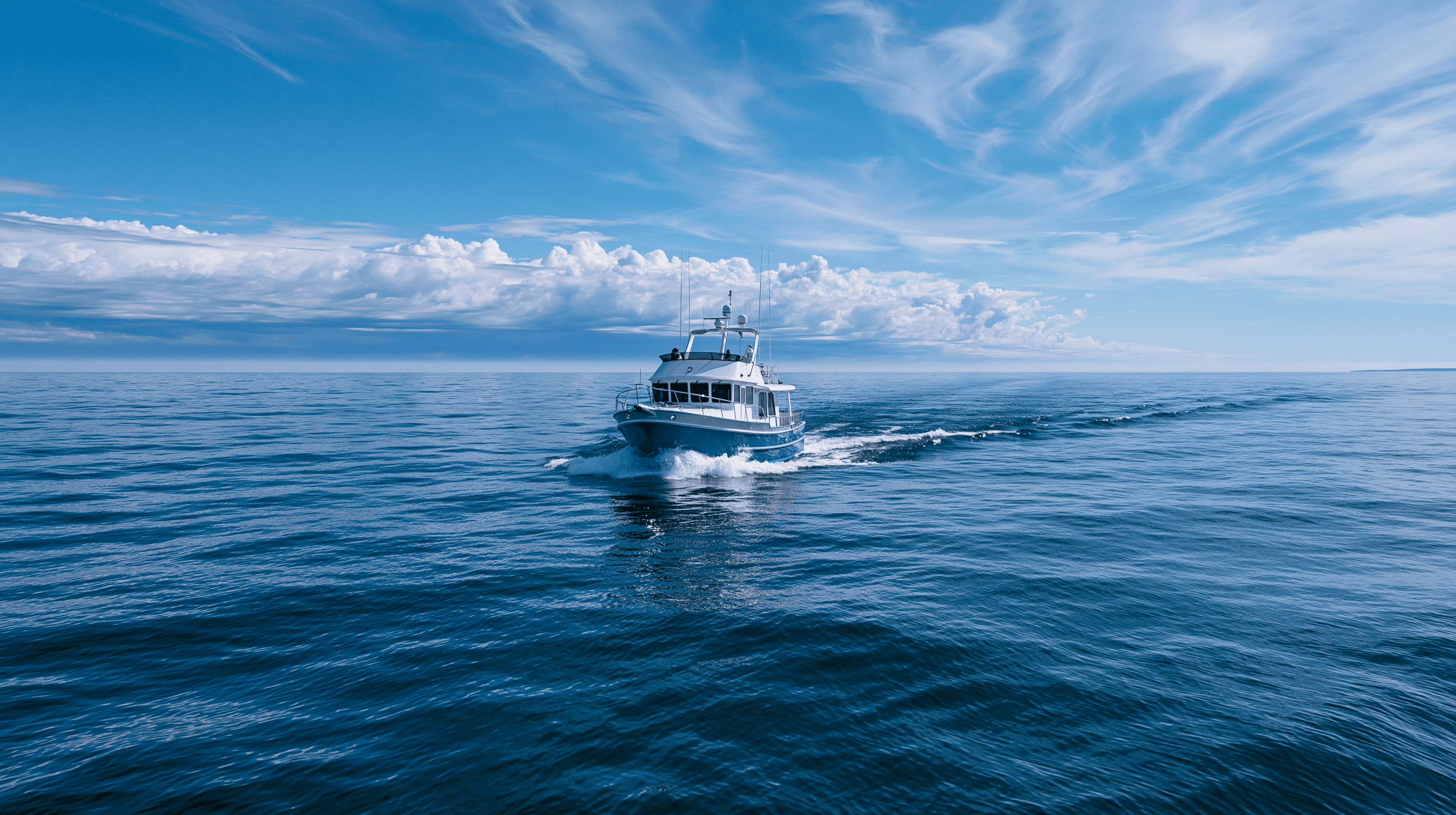
Here is where a lot of trips go sideways. People plan the calendar first and then try to force the weather to cooperate. The lakes do not cooperate. Lake Erie in particular can go from glass to a steep, short chop in an afternoon, because it's shallow and the waves stack up fast. Lake Huron has more water under it but more open fetch, and a north wind down the length of it builds a sea that will make a long day miserable.
The fix is to plan the route and the ports, then leave the exact days loose. I look at the marine forecast the night before and the morning of, every single day, and I let the weather tell me whether today is a running day or a sit-and-wait day. NOAA publishes Great Lakes marine forecasts through the NOAA marine forecast service, and that, plus a good weather app, is what I'm checking before I ever untie a line.
This is the single biggest difference between a trip that's enjoyable and one that's an ordeal. The boat owner who absolutely has to be in the next port by Friday because that's the plan is the one who ends up crossing in conditions he had no business crossing in. Build the slack in. A multi-day trip should have at least one weather day baked into it, sometimes two on a longer run. If you don't use them, you arrive early and relaxed. If you need them, you have them.
Plan B is part of the plan
No trip survives contact with the actual conditions exactly as drawn. The good trips are the ones where the changes were anticipated.
For every leg, I have a fallback. If the destination harbor is two hours past where the weather wants to let me run, where's the closer port I can duck into? If the wind clocks around and the harbor I picked is suddenly a lee shore, what's the protected alternative? You can't plan for everything, but you can plan for the obvious stuff, and the obvious stuff is most of what goes wrong.
A few things worth having sorted before you leave:
Have these handled before departure:
TowBoatUS or Sea Tow membership, current and on the boat
A short list of marinas and contacts along the route you can call
Reservations where you need them, with a note on cancellation policies so a weather day doesn't cost you
A float plan left with someone ashore, updated if the route changes
That float plan is not bureaucracy. It's the thing that gets help moving in the right direction if you don't show up when you said you would. I wrote up the how and why of filing a float plan separately; for a multi-day trip it matters more, not less, because you're covering more water and more days.
Keep the log as you go
The last piece isn't about this trip. It's about the next one. I keep a log on every run, and the trip-planning notes are some of the most useful entries in it: how long a leg actually took versus what I planned, which harbor entrance was trickier than expected, where the fuel was good and where it wasn't, what the weather did. Next year's plan writes itself off this year's log. I put the case for keeping a ship's log in its own article, because it pays off in more places than just trip planning.
The plan is the easy hours
A well-planned multi-day trip feels almost boring while you're running it, and that's the point. The drama got handled at the kitchen table. You're not making a hard call about whether to cross because you already decided that the weather makes that call, not the calendar. You're not entering an unfamiliar harbor at dusk because your daily reach kept you honest about distance. You're not stuck without a slip because you called ahead.
If you're planning a bigger run for next season and want a second set of eyes on the route, the daily legs, or the ports, that's a good part of what Captain's Coaching covers, and it's the kind of thing a quick call sorts out fast. The first trip is always the one you most wish you'd planned with someone who'd run it before.