Woodcut print of a dock line made fast to a cleat, with a coiled line, a fender and open water beyond

Boating Lessons on Your Own Boat, in Florida Water

Private boating lessons on your own boat, at your own dock, anywhere in Florida. Whether she’s new, bigger than your last boat or fresh down from the Great Lakes, we learn her in the water she lives in: tide, current, inlets, lifts and all.

Or give me a call at (248) 497-5791. If I'm on the water, I'll call you back same day.

USCG Master 100 GRT

GREAT LAKES & INLAND WATERS

USCG Master 50 GRT

NEAR COASTAL

Commercial Towing Assistance

Endorsement

B.S. Mechanical Eng.

U of M Dearborn

Past Commodore

Ford Yacht Club · 2004–2006

USCG Master 100 GRT

GREAT LAKES & INLAND WATERS

USCG Master 50 GRT

NEAR COASTAL

Commercial Towing Assistance

Endorsement

B.S. Mechanical Eng.

U of M Dearborn

Past Commodore

Ford Yacht Club · 2004–2006

YOUR BOAT, YOUR DOCK

Lessons on the boat you actually own

There’s no classroom and no school boat. I come to your dock, and we work on the boat you’ll be running, in the water you’ll be running her in. It’s built for new owners, owners who’ve moved up to something bigger, and Great Lakes boaters whose boat just came south.

20 to 65 feet

Outboards and inboards

Pod drives and joysticks

Single or twin engines
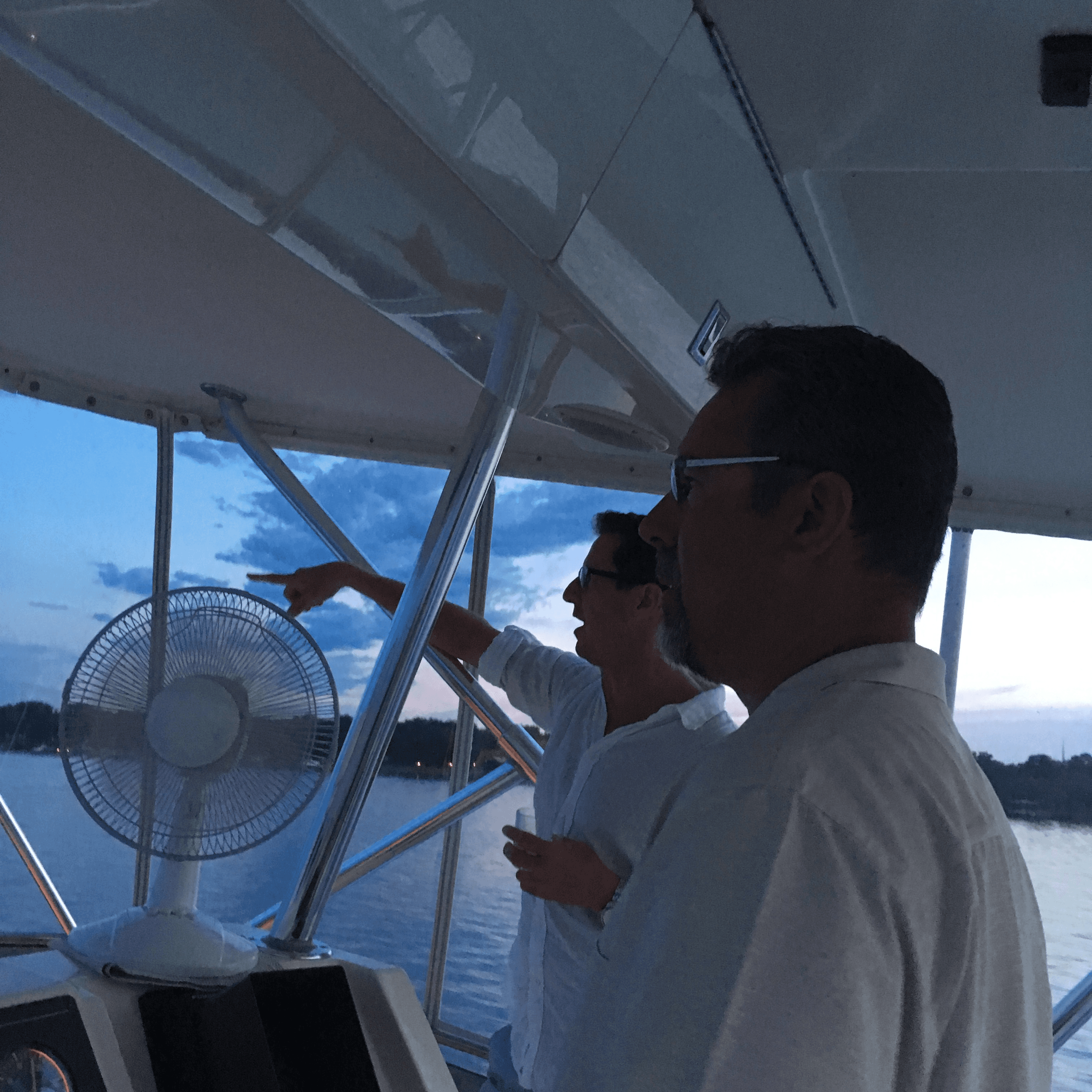
Captain Tom coaching at the helm, under the boat's hardtop

WHAT WE COVER

Five modules, with Florida built in

The same five modules I teach on the Great Lakes, with the Florida parts added to each one.

FLORIDA WATER

What Florida adds to every lesson

Florida puts a clock on everything. The tide changes how much water you have and how high the dock sits, and the current in the inlets and cuts turns around while you’re tied up. If you learned on the Great Lakes, your boat handling comes south with you. This is the part that has to be learned here.

Tide

How much water you have depends on the hour, and a fixed dock sits higher or lower with it. We check the tide before leaving, anchoring or going anywhere shallow, and tie up so the lines still fit when it turns.

Current and inlets

Tidal current floods, goes slack and ebbs, and in an inlet it can run hard either way. We time inlets from the current predictions, not the tide table, and stay inside when the wind and the current are fighting.

Docking in current

Reading the water moving past the pilings before you commit, and putting the bow into it when you can. It may be running the other way when you come home.

Lifts

Lining up on a boat lift with the current setting you sideways, and getting her on and off it without touching a piling.

Bridges

Knowing your air draft, reading the clearance gauge, calling the bridge on the radio and holding her in place while the span opens.

Manatee and no-wake zones

What idle speed and slow speed actually mean on your boat, and the zones whose speeds change with the season.

I go through the tide, the current, the bridges and the manatee zones in boating in Florida vs. the Great Lakes, sources included. For Florida’s boater ID card and who needs one, see FWC’s boating education FAQ.

HOW IT WORKS

How lessons work

01

The call

Tell me about the boat, where she’s kept and what you want to be comfortable doing. That decides where we start.

02

At your dock

We start with what you’ll do most: leaving your own slip and coming back to it, in whatever the wind and current are doing that day.

03

Again, until it’s habit

Docking is a skill, and skills come from repetition. We run each maneuver until you stop thinking about it, then add the next one.

04

On your own

When you’re ready, you take her out without me. If your insurer wants a captain’s sign-off first, I write the letter.

Pricing comes after that first call, once I know the boat and what you want to work on.

INSURER WANTS HOURS?

Make the lessons count with your insurer

If your policy calls for a check ride or time with a captain aboard before you run her alone, the lessons can be that time. Your underwriter approves me before we start, and when you’re ready, I write the sign-off letter.

BRING YOUR PARTNER

A first mate who knows the plan

Your partner is welcome at every lesson. If they’d like a program of their own, First Mate coaching covers the lines, the radio and what to do if the captain can’t run the boat. Most first mates finish the core material in two or three sessions.
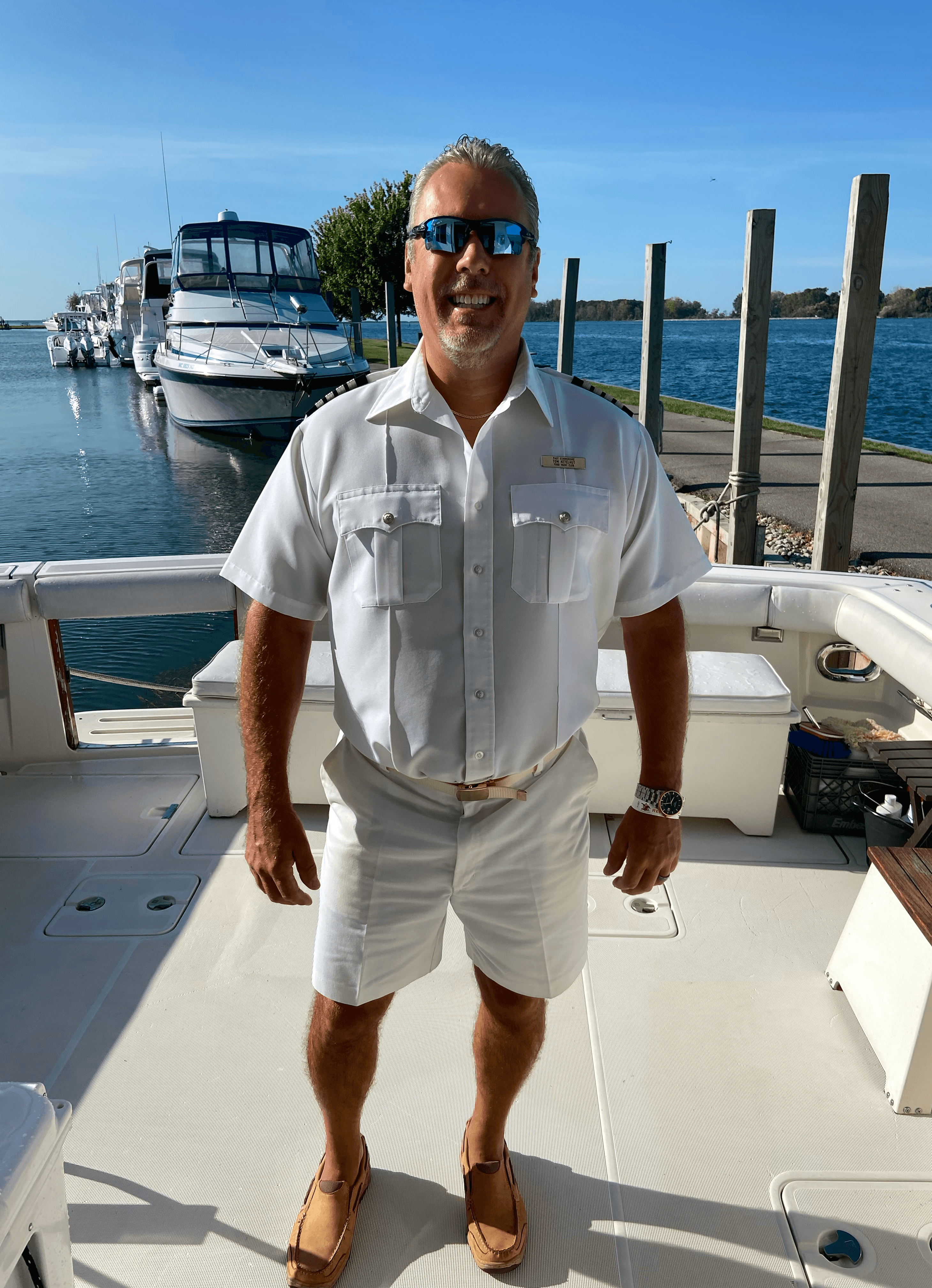
Tom on the deck of his boat Stuntman
Stuntman, Tom's yacht
Tom on the deck of his boat Stuntman
Stuntman, Tom's yacht
Tom on the deck of his boat Stuntman
Stuntman, Tom's yacht

WHO TEACHES

Who’s at the helm with you

Usually me. I’ve coached owners on everything from first-time pontoons to 60-foot sportfish, and I teach the same way in Florida as on the Great Lakes: on your boat, at your pace, until she feels like yours.

When I’m in Michigan, a licensed captain I’ve vetted and worked beside can take your lessons, working under Offshore Captain Services. You’ll know who’s coming ahead of time, and checking a captain’s license takes about two minutes.

Captain Tom Selfie

Tom Ketelhut

Owner, Offshore Captain Services

TESTIMONIALS

What they're saying

Tom has an outstanding curriculum to get brand new power boaters comfortable, knowledgable, competent and safety conscious with their new boat. He is very patient and thorough, and I can tell he loves what he does. I highly, highly recommend this captain to get you comfortable with your new boat!

Craig Kelly

"Along with a personality geared towards being driven for success, Tom is a unique individual who provides both hands-on leadership and the inspiration to accomplish anything in front of him."

Jason Schmitt

Director, Danis Construction

"Moving from an outboard to my first Sea Ray cruiser was a big jump, especially with no experience on Lake Erie. Captain Tom Ketelhut helped me bring the boat from Cleveland to Detroit and was a total pro. When the swells picked up, he stayed calm and walked me through I/O handling and navigation right in the middle of the chop. I couldn't have asked for a better mentor to get us home safely. I highly recommend him"

Paul Cooper

LEARN MORE

Frequently Asked Questions

Do you teach on my boat, at my dock?

Always. The point is to get comfortable on the boat you own, in the water you run, so I come to wherever she's kept: your dock, your marina or the dealer's.

What will we cover?

The five modules: docking and departure, running your boat, anchoring, trip planning and keeping a log. In Florida we add tide, current, inlets, lifts, bridges, and manatee and no-wake zones. If you only want one of those, we do that one.

How long is a session, and how many will I need?

It depends on where you're starting and what you want to work on. Some owners want two afternoons on docking and nothing else. Others finish all five modules in a handful of outings, or spread them over a season. We'll settle the pace on the first call.

How much do boating lessons cost?

They're quoted after we talk, because one afternoon on docking and all five modules on a twin-engine 50-footer are different jobs. I don't publish a rate sheet, and the first call is free.

Will lessons satisfy my insurer?

They can. If your policy calls for a check ride or hours with a captain, your underwriter approves me before we start, the lessons become that time, and I write the sign-off letter when you're ready. The details are on my insurance check rides page.

Do I need a Florida boater ID card?

If you were born on or after Jan. 1, 1988, Florida requires one to run a boat of 10 horsepower or more. You don't need it while I'm aboard teaching: FWC exempts an operator accompanied by a Coast Guard-licensed master who's responsible for the boat. To run her on your own, you'll need the card, with two exceptions: a new owner has 90 days after the purchase with the bill of sale aboard, and a nonresident can use a NASBLA-approved course from home plus a photo ID.

Can my partner learn too?

Yes, and I'd encourage it. Bring them to any lesson. If they'd like time of their own, First Mate coaching is built for the person beside the captain.

What kinds of boats do you teach on?

Boats from 20 to 65 feet: outboards and inboards, pod drives and joysticks, single engines and twins. Moving from a single engine to twins, or from outboards to pods, is a good reason to call.

Where in Florida do you teach?

Anywhere in the state: both coasts, the Keys, the Panhandle and the waterways in between. I come to wherever the boat is kept.

FROM THE HELM

More about Florida

All Florida Articles →

READY TO GET STARTED?

Ready to run her yourself?

Tell me about the boat and what you want to be comfortable doing. Pricing comes after the conversation. The conversation is free.

Or give me a call at (248) 497-5791. If I’m on the water, I’ll call you back same day.

READY TO GET STARTED?

Ready to run her yourself?

Tell me about the boat and what you want to be comfortable doing. Pricing comes after the conversation. The conversation is free.

Or give me a call at (248) 497-5791. If I’m on the water, I’ll call you back same day.

READY TO GET STARTED?

Ready to run her yourself?

Tell me about the boat and what you want to be comfortable doing. Pricing comes after the conversation. The conversation is free.

Or give me a call at (248) 497-5791. If I’m on the water, I’ll call you back same day.