Don’t Teach Your Partner to Dock the Boat
The worst docking instructor most First Mates ever get is the person they share a boat with. It’s not a skill problem. Here’s what to do about it.

Captain Tom Ketelhut

The worst docking instructor most First Mates will ever have is the person they share the boat with.
Not because that person can’t dock. Plenty of captains on Lake St. Clair can put a boat in a slip in a crosswind without touching a piling. The problem isn’t what the captain knows. It’s that the captain and the First Mate go home together, and the moment one starts teaching the other to dock, every correction lands as something other than a correction.
Why it goes wrong
A docking approach lasts about ninety seconds. In those ninety seconds, the captain is reading wind, current, the boat’s momentum, and the gap between the rub rail and the dock. Most of it is by feel, because they’ve done it a few hundred times. They couldn’t write the steps down if you asked.
Now they’re trying to narrate those steps to someone standing on the bow, in real time, while the boat is moving. What comes out is “no, the other one” and “not yet” and, eventually, something louder. The First Mate hears it as criticism. The captain hears the hesitation as not listening. Neither of them is wrong about what they heard, and neither of them is being fair.
I wrote a while back about how the captains who make docking look easy do the hard part before anyone’s watching. The same rule applies to teaching it. If the plan wasn’t agreed on at the dock, with the engines off, then the lesson isn’t a lesson. It’s a live performance with the relationship in the front row.
There’s also the plain fact that the captain can’t see what the First Mate sees. The helm is twelve feet back and four feet up. The bow is where the piling is getting closer. The First Mate has information the captain doesn’t, and no vocabulary yet to pass it back. So they say nothing, or say it too late, and the captain decides they froze.
They didn’t freeze. Nobody told them what to say or when.
What the First Mate is actually being asked to learn
Here’s what gets lost when the teaching happens on the fly: handling lines on a thirty-eight foot boat is a real job with a real sequence. It isn’t “grab that line.”
What a First Mate is responsible for on a docking approach
The order lines come off on departure, and the order they go on at arrival
Fender height and placement, which is different for a floating dock than a fixed one
Getting a spring line on first, because that’s the line that lets the captain stop worrying
Tying off to a cleat or a dock pole so it holds and so it comes off again
Telling the dock hands what to do instead of letting them decide
Calling distances and obstacles the captain can’t see from the helm
That’s a curriculum. It’s roughly the same one I run in First Mate Coaching, and it takes a morning to walk through properly. Nobody learns it from a partner shouting “spring line” from the helm, because they don’t yet know which line that is, why it goes on first, or what it’s for. The captain knows all three so well they’ve forgotten those things need explaining.
The part nobody wants to talk about
There’s a second reason the captain shouldn’t be the teacher, and it’s the reason most couples avoid the conversation entirely.
If the captain goes down at the helm, the First Mate is running the boat. Not “helping.” Running it. Getting on the radio, holding position or getting to a dock, and doing it with a person they care about lying on the deck. I’ve laid out what that looks like step by step, and it’s the part of the First Mate program that gets the quietest room.
You cannot be the instructor for the drill you’re the subject of. It doesn’t work emotionally, and it doesn’t work practically, because the drill is built around the assumption that you’re not available. Someone else has to walk your First Mate through it, and they have to run it with you watching from the cockpit and keeping your mouth shut. That last part is the hard one.
What changes when someone else runs the lesson
Three things, mostly.
The First Mate asks the questions they won’t ask their partner. “Which cleat?” “What happens if the wind is from the other side?” “Why do you keep saying stern?” Those are good questions. Sharing a boat with the captain, they’ve been swallowing them for two seasons because asking felt like admitting something.
There’s a sequence instead of a reaction. The lesson starts with the boat tied up and the plan on the dock. Who does what, in what order, with what signal. We’ve written up a working set of hand signals for exactly this. By the time the engines start, both people have heard the same plan from a third person, so nobody is guessing what the other one meant.
And the captain gets to sit in their own cockpit and hear the plan explained out loud. Most of them learn something. Not about docking. About how much they’d been leaving unsaid.
The First Mate program started this way at my own dock, with my own First Mate, working out who was responsible for what before the lines came off. It took longer than it should have because I was the one teaching. I’d like other people to skip that part.
What to do this week
You don’t need a captain to start.
Pick a calm morning. Before anyone touches a line, walk the dock together and agree on the departure: which line comes off first, who holds the last one, what the First Mate says when the bow is clear. Then go do it, slowly, and say nothing from the helm unless it’s the word you agreed on. Do the same thing on the way back in. If it goes badly, the debrief happens tied up, not underway.
Do that a few times and you’ll find out where the gaps are. Usually they’re in the sequence, not in anyone’s ability.
If you want the sequence taught properly, by someone who doesn’t go home with either of you, that’s what First Mate Coaching is for. It runs on your boat, in your slip, on your water, and the captain is welcome to come along as long as they bring a coffee and not an opinion. A quick call sorts out the rest.
WRITTEN BY
Captain Tom Ketelhut
USCG Master since 2009: 100 GT Great Lakes, 50 GT Near Coastal. Home port Grosse Ile, Michigan; deliveries and coaching from Lake Erie to Lake Huron, and in Florida.
WHERE TO NEXT
Keep going
More on From the Dock · next unread

Raft Off at Muscamoot Bay: The Biggest Day on Lake St. Clair, Run Right
Read Next →

A Spotlight on the Grosse Pointe Yacht Club: The Tower You Steer By
Read Next →

What Your Boat Snacks Say About You
Read Next →
Boat Guest Etiquette: A First-Timer's Guide to Getting Invited Back
Read Next →
Five Things Worth Getting Right Before Memorial Day Weekend
Read Next →
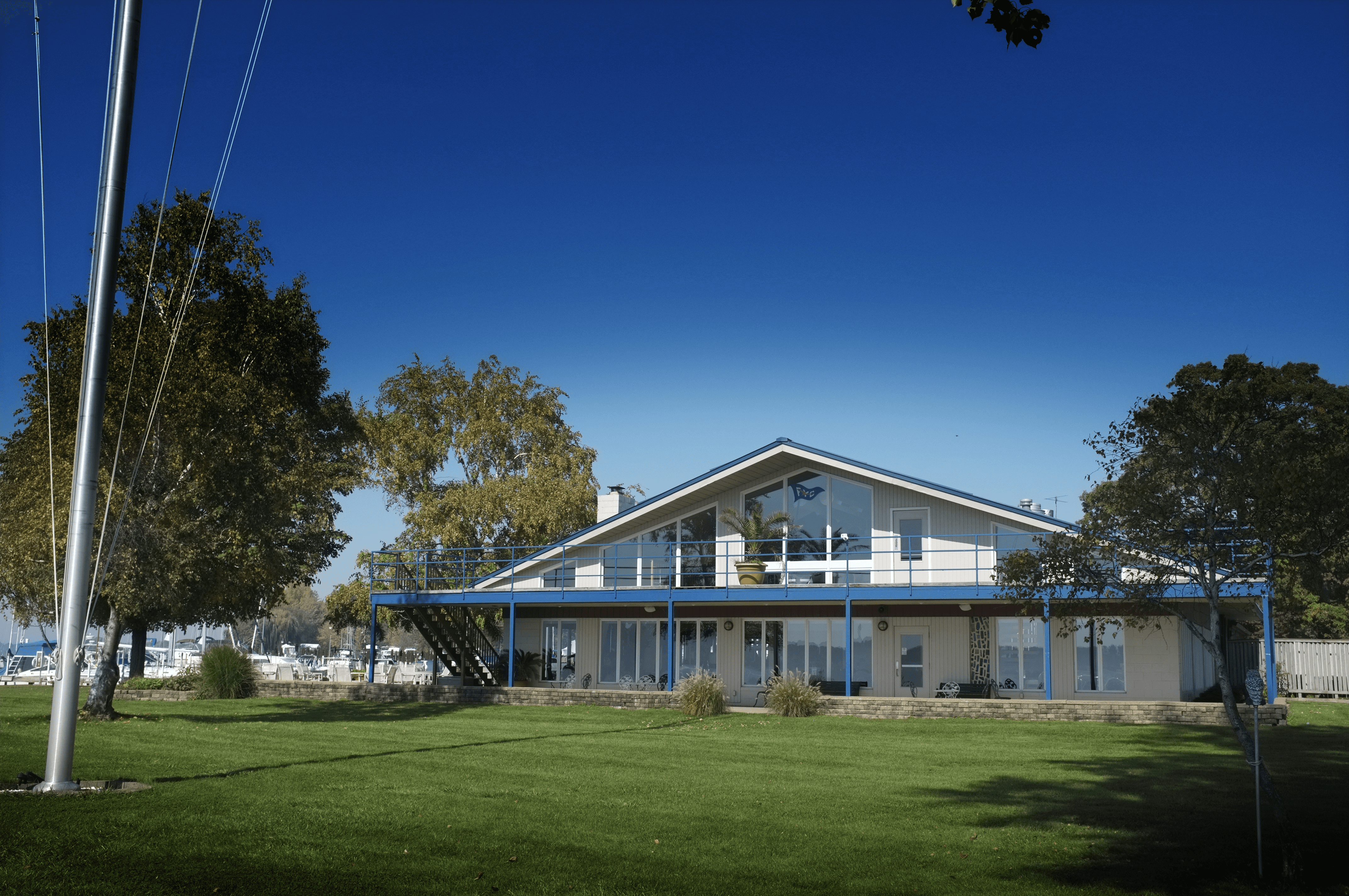
A Spotlight on the Ford Yacht Club: The Place That Taught Me What a Boating Community Is
Read Next →
THE SERVICE THAT HELPS
Hands-on training on your own boat for the person beside the captain.