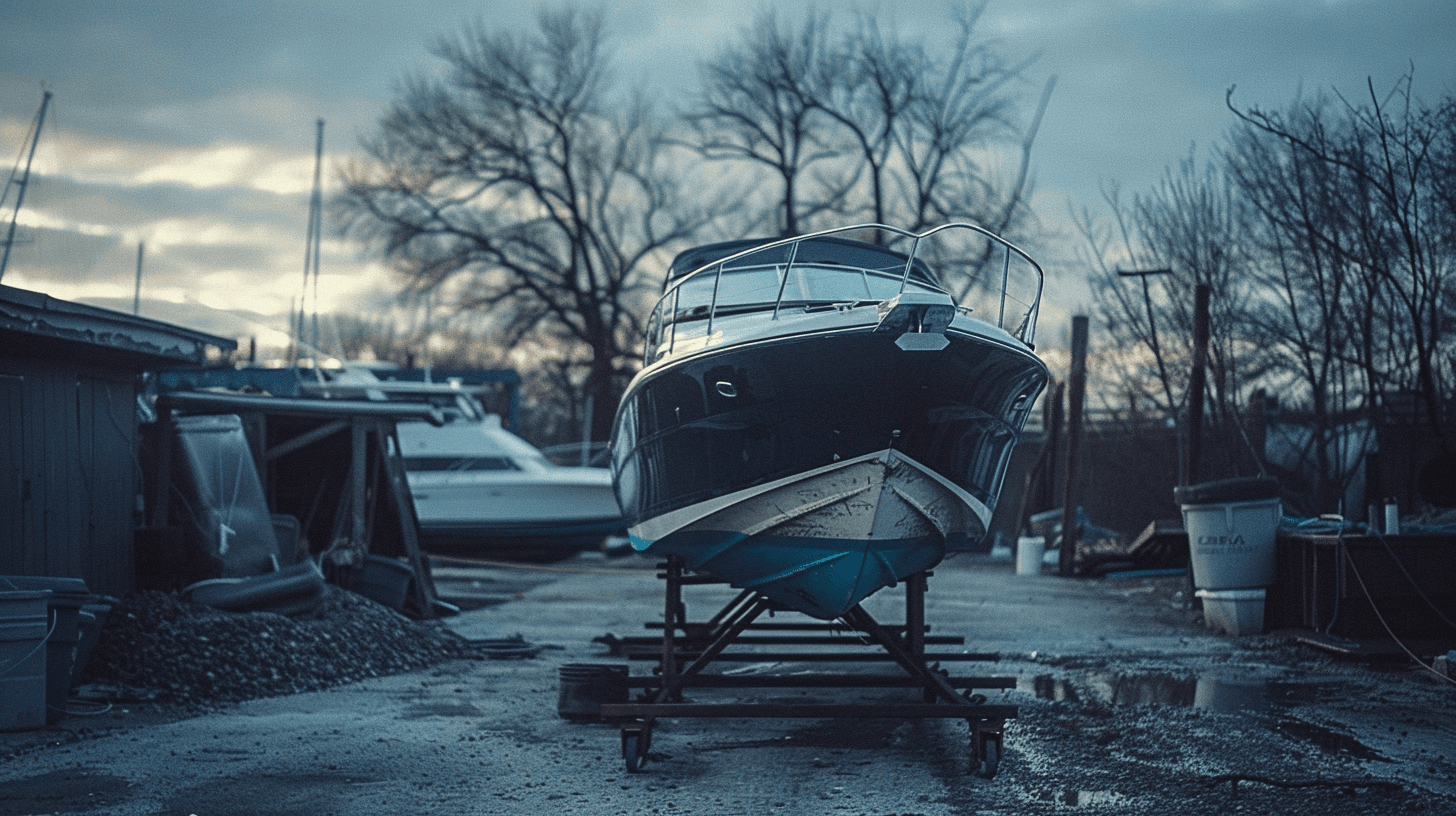
The Fall Haul-Out Checklist: What to Do Before the Lift, at the Lift, and on the Stands
Haul-out is the one day a year you see the whole boat. Most owners spend it watching the Travelift. Here's what to do with it instead.

Haul-out is the one day a year you get to see the whole boat. Most owners spend it watching the Travelift.
I understand why. It's a good show. But the fifteen minutes she hangs in the slings, dripping, with the engines still warm from the run over, is the best look you'll get at the running gear until next April. And the first week on the stands is the only time the spring punch list can be written from evidence instead of memory. That's what this checklist is built around. The winterizing itself, the antifreeze and the fogging oil and the fuel stabilizer, is in your owner's manual and your yard already knows how to do it. What follows is the part nobody hands you.
I've already made the case for booking the date in July. If you did, this is how to use the week you locked in. If you didn't, the same list applies, you just have less say about which week it is. And if getting the boat to the yard on the yard's schedule is the hard part, that's exactly what my spring launch and fall haul-out support is for. More on that at the end.
The last run
The last trip of the season is a working trip, whether it's an afternoon on Lake St. Clair or the run down the Detroit River to the yard. Treat it that way.
Burn down the fuel, but don't run her dry. Most yards and most engine manufacturers want the tanks full and stabilized for storage, so the goal is a low enough level that you're not paying to store three hundred gallons of summer gas, then a fill and a dose of stabilizer at the last fuel dock. Check your manual for what your engine maker wants. Diesel and gas have different opinions.
Run her at cruise for a while and watch the gauges. This is your last chance to see the engines under load before a mechanic sees them cold in April. Oil pressure, temperatures, voltage, transmission temp if you have it. Anything that reads differently than it did in June goes in the log with a number next to it.
Work every system one more time. Windlass up and down. Trim tabs full travel. Every head flushed. Freshwater at every tap. Generator under load for twenty minutes. Anchor light, nav lights, horn. You're not testing them for the trip. You're building the list of what doesn't work, while there's still time to get a tech aboard before the boat is wrapped.
Bring the notebook. I keep a running log on every boat I run, and the last day of the season is the single most valuable entry in it. Hours on each engine and the genset. Fuel added and the price. Anything that squeaked, leaked, or hesitated. You will not remember this in April. Nobody does.
The week before the lift
Confirm the date and the sequence with the yard. Who's pumping out the holding tank, and when. Whether they winterize in the slings, on the stands, or in the water the day before. Whether they want the boat at their dock the night before or on the wall the morning of. Every yard runs it differently and the ones that run it well appreciate an owner who asks.
Empty the lockers. Every cushion, every towel, every bottle of anything that can freeze or grow mold. Canned goods split. Sunscreen turns to soup. A locker that's empty in November is a locker that's clean in April.
Pull the safety gear and look at it now, not in spring. Flares with expiration dates. Fire extinguishers with gauges. Life jackets with mildew. Whatever's expired or shot, replace it over the winter when there's no rush. The spring launch checklist has the same inspection in it, which is the point: do it now and April is a confirmation, not a discovery.
Photograph the interior. Every cabin, every locker, the engine room, the helm. It takes five minutes. If something's different when you climb back aboard in spring, you'll know instead of wondering.
Pump out. Holding tank empty, and rinsed if the yard can do it. A holding tank left full over a Michigan winter is a spring problem you can smell from the parking lot.
Haul day
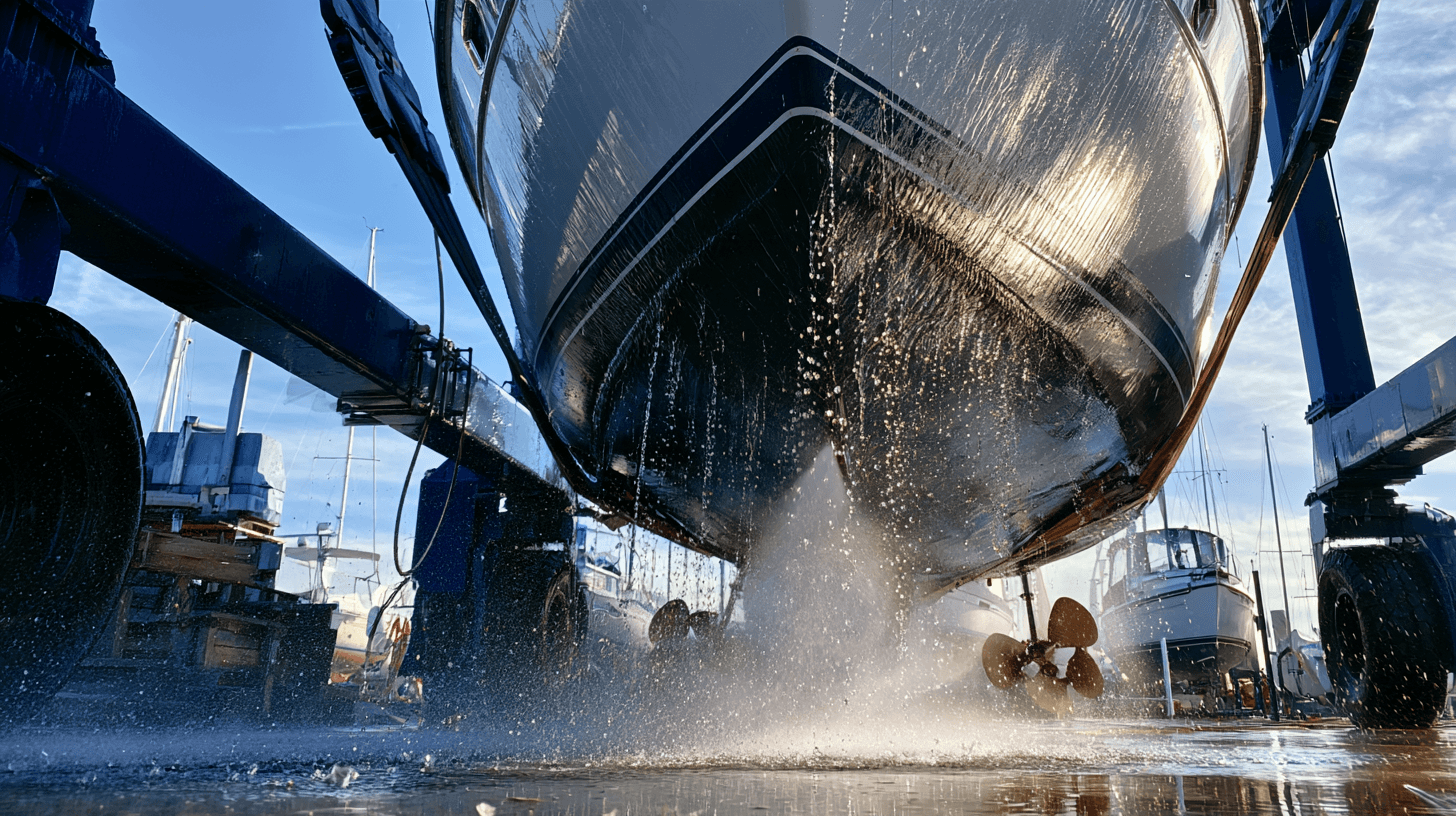
You're at the yard. The lift is on schedule. This is the part most owners get wrong by standing in the wrong place.
Stand where you can see the bottom. When she comes up in the slings and the pressure washer goes to work, get your phone out and look at what's normally underwater. Stay clear of the operator and out of the lift's path; the crew will tell you where they want you, and it's usually closer than you'd guess. This is the once-a-year view.
Five things to photograph while she's in the slings
1. Every propeller, both faces, close enough to see nicks and edge damage.
2. The shafts and struts, with a straight-on shot to show any bend or wear at the cutlass bearings.
3. Every zinc, before anyone touches them. Half-gone is normal. All gone means something's eating your running gear and you want to know why.
4. The trim tabs, rudders, and every through-hull, with the paint condition around them.
5. The waterline and any blistering, chalking, or bare spots in the bottom paint.
Date the photos in the log. Next fall you'll have a comparison set, and so will a surveyor the day you sell.
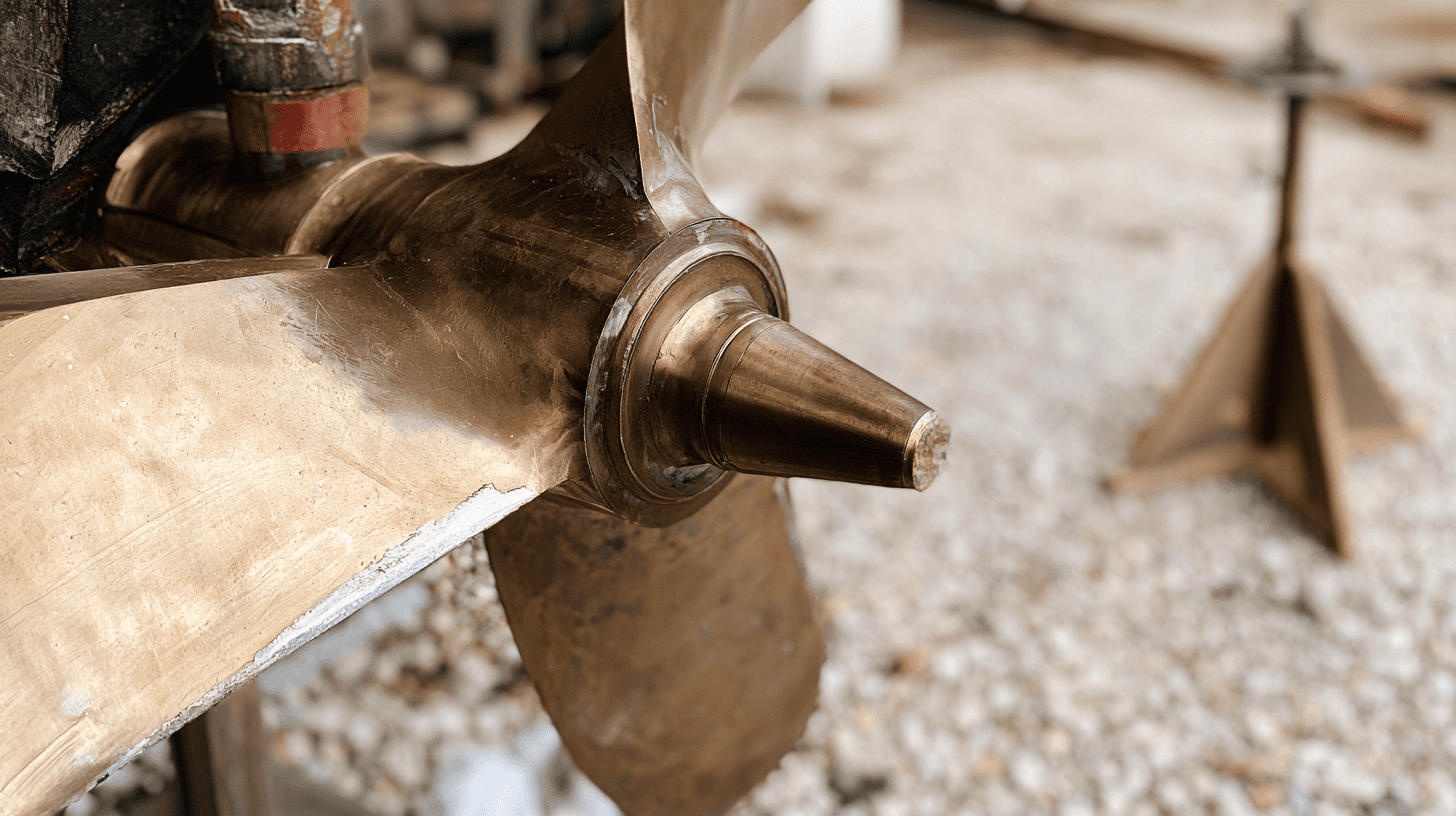
Look at the running gear with your hands, not just your eyes. Grab the prop and try to wiggle the shaft. Play at the cutlass bearing is a haul-out repair and you're at the haul-out. Run a finger along the leading edge of each blade. A prop that got tickled by a log in August tells you now.
Check the strainers and seacocks while they're accessible. With the boat out of the water, every seacock can be cycled without consequence. Anything stiff, seized, or gritty gets flagged for the yard.
Watch the drain. If your boat has garboard drain plugs, they come out on the stands so the bilge can't hold water and freeze. If the yard's moving her over the road to a storage lot, Michigan's Clean, Drain, Dry law requires drain plugs pulled and bilges drained before any watercraft is transported. Most yards handle it. Confirm it anyway.
The first week on the stands
The boat is blocked, winterized, and about to be wrapped. You have a short window before the shrink wrap goes on and the interior becomes inaccessible until spring. Use it.
Write the spring punch list now, from the photos. Bottom paint or not. Zincs, always. Any prop work. The seacock that was stiff. The bilge pump float switch that hesitated on the last run. Put a name next to each item: yard, mechanic, canvas shop, or you. This is the list that gets spring launch started in March instead of the week before splash.
Get the repair work scheduled before December. Prop shops, canvas shops, and diesel mechanics are quiet in January and slammed in April. The owner who drops a prop off in November gets it back polished and balanced with a note. The one who drops it off in April gets a date in May.
Batteries. Charged, terminals clean, and on a maintainer or pulled and stored warm, depending on what your yard allows and your manual recommends. A battery that read fine in October and sat discharged all winter is the number one reason I hear the starter click on splash day.
One last walk before the wrap. Bilge dry. Seacocks in the position your yard wants them. Nothing left aboard that shouldn't spend the winter there. Registration and documentation off the boat and in a file at home, since you'll need them for the spring renewal anyway.
The calendar behind all this
The reason this list has a sequence is that the weather does. The National Weather Service office in Detroit puts the average first 32-degree night across Southeast Michigan in October, with the hard freeze following later in the season. A raw-water cooling system still wet on the wrong night in late October is the expensive version of a haul-out, and it's your problem until the boat is winterized, not the yard's. Everything above is aimed at getting her out, drained, and documented while that risk still belongs to a calendar you control.
The other answer, of course, is not wintering here at all. Every fall I run boats south for owners who'd rather spend February aboard than under plastic, and I've written about what wintering your boat in Florida actually involves. If that's the plan, the last-run section above still applies. You're just doing it over several days instead of one.
Where I come in
A fair amount of my October is fall haul-out support: running the boat from her home dock to the yard on the yard's date, sometimes an hour or two away, with the owner aboard or with the owner meeting me at the lift. The boat arrives with warm engines, a log entry, and a set of photos from the slings, and the yard gets her on the schedule they set. That's usually the whole difference between a haul-out that goes smoothly and one that turns into three phone calls.
If the date's on the calendar and the logistics are the problem, get in touch. It's a quick call and there are still a few October slots left.