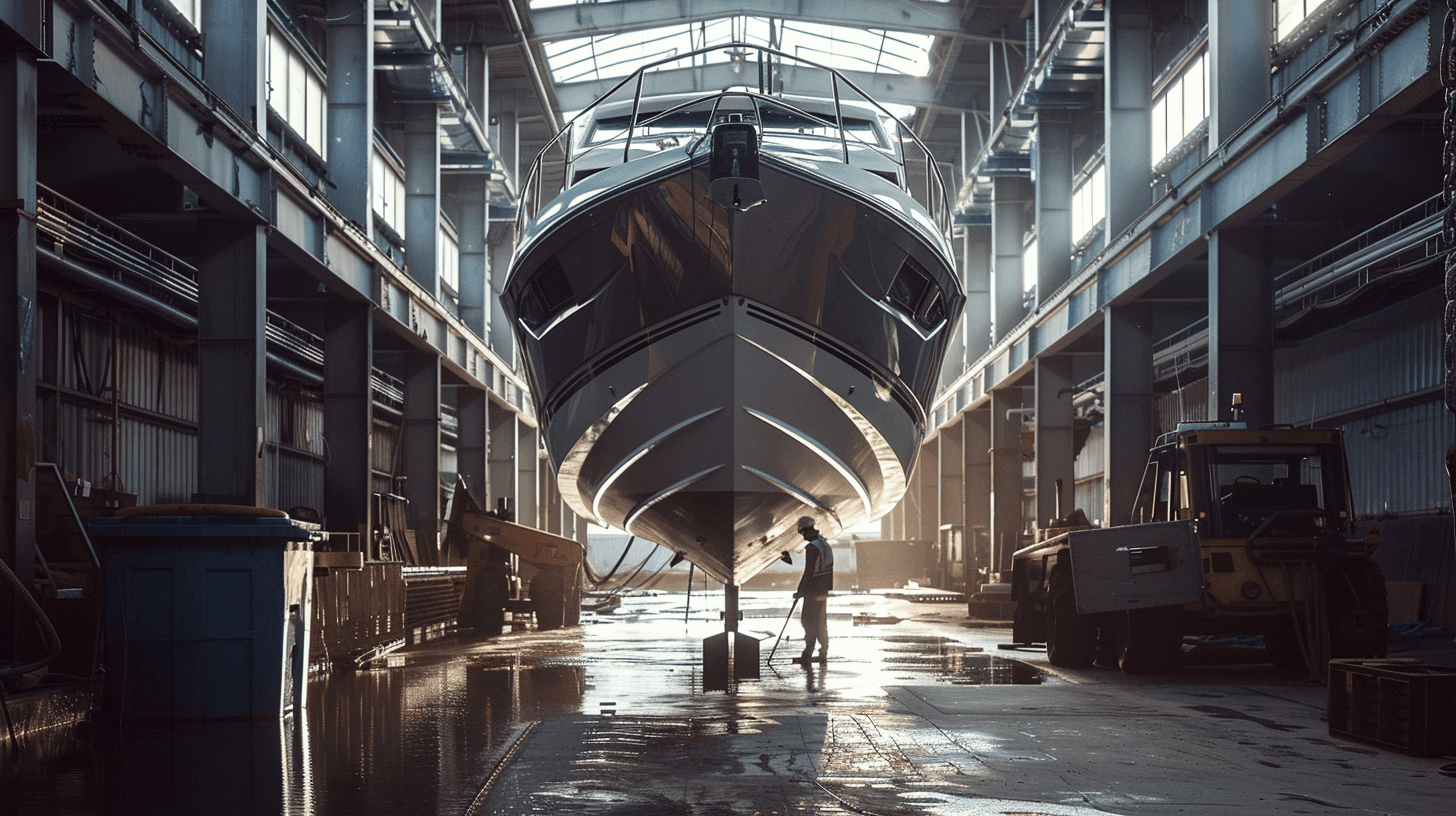
What to Check on a Sea Trial: The Hour Is Yours, Not the Surveyor's
Most buyers spend the sea trial watching the surveyor work. The hour is yours, and there's a better way to use it before you sign.

A buyer called me in June about a 42-foot sport cruiser he was looking at up in Harrison Township. He had the survey scheduled, the engine survey booked, and financing lined up. He'd done more homework than most. When I asked him what his plan was for the sea trial, he said the surveyor was handling it.
That's the answer nine buyers out of ten give, and it costs them the most useful hour of the entire purchase.
The surveyor is running his test. It's a good test, and you should absolutely have him aboard. But he's answering his own questions, and his questions are about the boat's condition. Yours are about whether you can own this boat and run it. Those overlap less than people expect.
What the surveyor is doing, and why it isn't your job
A pre-purchase surveyor takes the boat up to cruise, runs her through the gears, watches the gauges, and notes vibration and handling. I've written about what a marine survey actually covers and where its edges are, so I won't repeat it here. The short version: he's confirming the boat performs, and he's writing a report for you and for your insurance carrier.
He is not evaluating whether you can bring this boat into a tight fairway on a windy Saturday. Nobody on that boat is thinking about that except you, and most buyers don't think about it either until the boat is theirs.
So run two tests at once. Let the surveyor run his. Run yours alongside it.
Pick the day, or at least know what you're being handed
Sea trials around here happen on whatever calm morning the broker, the seller, and the surveyor can all make. That means you're likely to see the boat on the flattest water of the week.
A glass morning on Lake St. Clair will tell you that a boat is quiet and dry. It will not tell you what she does when the wind comes up and that shallow water kicks a short chop at you on the ride home. Same story on the lower Detroit River, where the current does half the work at the dock and you won't notice how little steerage she has at idle.
You can't always control the date. You can look at the NOAA marine forecast before you agree to one, and if the week offers a day with some wind in it, ask for that day. A little chop during the trial is worth more to you than a comfortable ride.
Start her cold
You get exactly one cold start on a boat you don't own, so don't spend it in the parking lot.
Ask ahead of time that the engines not be run before you arrive. Sellers warm boats up. It's a courtesy, and it's also the single easiest way to hide a hard-starting engine. Be on board, in the cockpit, when the key turns.
Watch what comes out of the exhaust and how long it takes to clear. Listen to how long she cranks. Watch the oil pressure come up. You don't need to diagnose any of it. You need to see it, and then tell your engine surveyor exactly what you saw, because he may not be standing there when it happens.
Spend the first fifteen minutes going nowhere

Here's the part almost every buyer skips, and it's the part I'd keep if I could only keep one.
Before the boat ever gets on plane, work her at idle. In the fairway, in open water off the seawall, anywhere with room. Put her in and out of gear and see how much way she carries when you pull the throttles back. Back her down and watch which way the stern walks and how hard it walks. Turn her in her own length. Hold her still against the wind for a full minute and count how many corrections it takes.
The stern drives the boat, not the bow, and every hull answers that a little differently. Twin screws behave one way, a single with a big rudder another, and a bow thruster changes the math entirely until the day it doesn't work. This is the knowledge that determines whether your first month of ownership is fun or humbling, and it's all available in fifteen minutes at idle speed. If close quarters is the part that worries you, docking is a learnable skill, but you want to know going in what you're signing up to learn.
Then run her up, once, on purpose
Now the throttle work. Bring her to cruise, hold it long enough for temperatures to settle, and then take her to wide-open throttle briefly with the boat loaded the way you'd normally run it.

You're looking for one thing: does she reach the engine's rated WOT range? Mercury is direct about why this matters. An over-pitched prop means the engine can't reach the bottom of its recommended range and ends up lugging, and running outside the recommended RPM range can cause severe engine damage and may void the warranty. A boat that won't hit its numbers isn't necessarily a bad boat. It's a conversation, and possibly a prop bill.
While you're at cruise, get your own numbers. RPM, speed, and fuel burn, written down. Not the listing's numbers, not the seller's recollection. Hers, on this day, with this load. Those two figures drive every trip you'll ever plan on this boat, and you can run them through the fuel cost calculator that evening to see what a season actually costs.
Then stop her hard from cruise. Then make a turn at cruise and see how she carries it. A boat that squats, wanders, or throws the stern in a turn is telling you something.
Ask for the helm
Say it early, before the lines come off: you'd like time at the wheel.
Most sellers and brokers will allow it, particularly if you have experience or a licensed captain aboard with you. Some won't, and that's their right. But a sea trial where you never touch the controls is a boat ride, and you can't learn a boat from the settee.
Before you step off the boat, write down:
cold-start behavior and how long the exhaust took to clear
idle RPM in and out of gear
which way the stern walks in reverse
cruise RPM, speed, and fuel burn
WOT RPM against the engine's rated range
anything that made a noise you couldn't place.
Do it on the boat. Half of it is gone by the drive home.
The question you're actually answering
There are two questions on the table during a sea trial. Is this boat sound? That one belongs to the surveyor and the engine guy, and it's worth every dollar you pay them.
The second one is yours alone: can I run this boat, in my water, on a day that isn't perfect? A step up in size is where that question gets sharp. Ten more feet changes windage, momentum, sight lines, and how much a mistake costs. If the honest answer is "probably, with some help," that's a fine answer. It's the answer most move-up buyers should give. It just needs to be answered before the wire clears, not after, because a carrier may want to see some training on the bigger boat anyway.
That buyer in June brought me along on his trial. We spent twenty minutes in the fairway before we ever left the marina, backing and pivoting and holding station while the surveyor did his own work below. He bought the boat. He also knew, before he signed, exactly what she was going to do to him in a crosswind, which is more than most owners can say about their own boats after a full season.
If you've got a boat under consideration and you'd rather not spend that hour guessing, bring me along: it's part of my sea trial and purchase help. And when the answer is "great boat, I just want to learn her properly," that's what Captain's Coaching is for. Either way, a quick call sorts out which one you need.