Keeping a Boat in Algonac: The Town That Built the Boats Now Guards the Delta
Chris-Craft’s hometown sits at the top of the delta with the North Channel out its front door. What keeping a boat in Algonac asks of you, and gives back.

Captain Tom Ketelhut
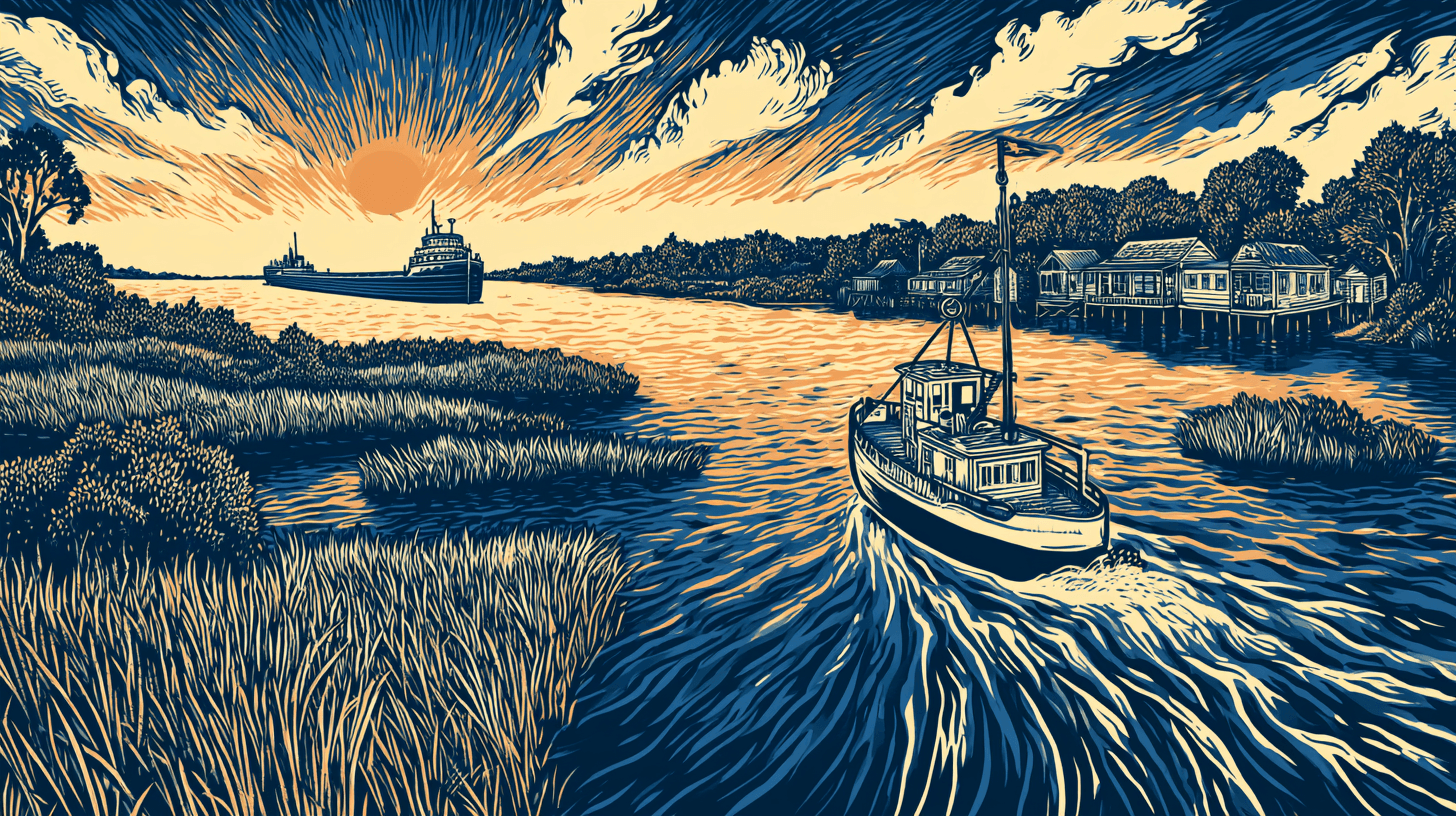
Algonac built the boats. Chris Smith started Chris-Craft here, Gar Wood ran his speed record on the river out front, and the town has never quite stopped being a place where boats are the point.
That history is nice. It’s not why you’d keep a boat in Algonac today. The reason is the water: the town sits at the exact spot where the St. Clair River stops being a river and starts fanning out into the St. Clair Flats, the largest delta in the Great Lakes system. From an Algonac slip you can be in the North Channel in two minutes, on Lake St. Clair in fifteen, or headed up a fast freighter river toward Port Huron. Few slips in Michigan put that much different water within reach.
Here’s how it works.
Where the boats live
The big name is Algonac Harbour Club, now run by Walstrom Marine. Their page describes it as one of the largest deep-water marinas on the Great Lakes, with more than 350 slips, seasonal and transient dockage, a fuel dock that runs seven days a week in season, a service center, storage, and the pools and restaurant that make it as much a summer destination as a place to park a boat. It sits on the North Channel with direct access to both the lake and the river. Waterway Guide lists a 60-foot maximum and eight feet at the dock, which is the practical ceiling for most of the cruisers that live here.
That’s the marina most people mean when they say “I keep the boat in Algonac.” There are smaller yards and slips scattered along the channel and across on Harsens Island, and the fair-weather choice for a lot of owners is a seasonal well at the Harbour Club and a haul-out arrangement with the service side. If your boat is over 60 feet or draws more than seven feet, call before you fall in love with the town.
For trailered boats, the state runs the North Channel DNR launch on Pointe Tremble Road, a hard-surface ramp with restrooms and a large lot. It’s the launch that opens the whole delta.
The water out front
Three bodies of water meet here, and each one asks something different.
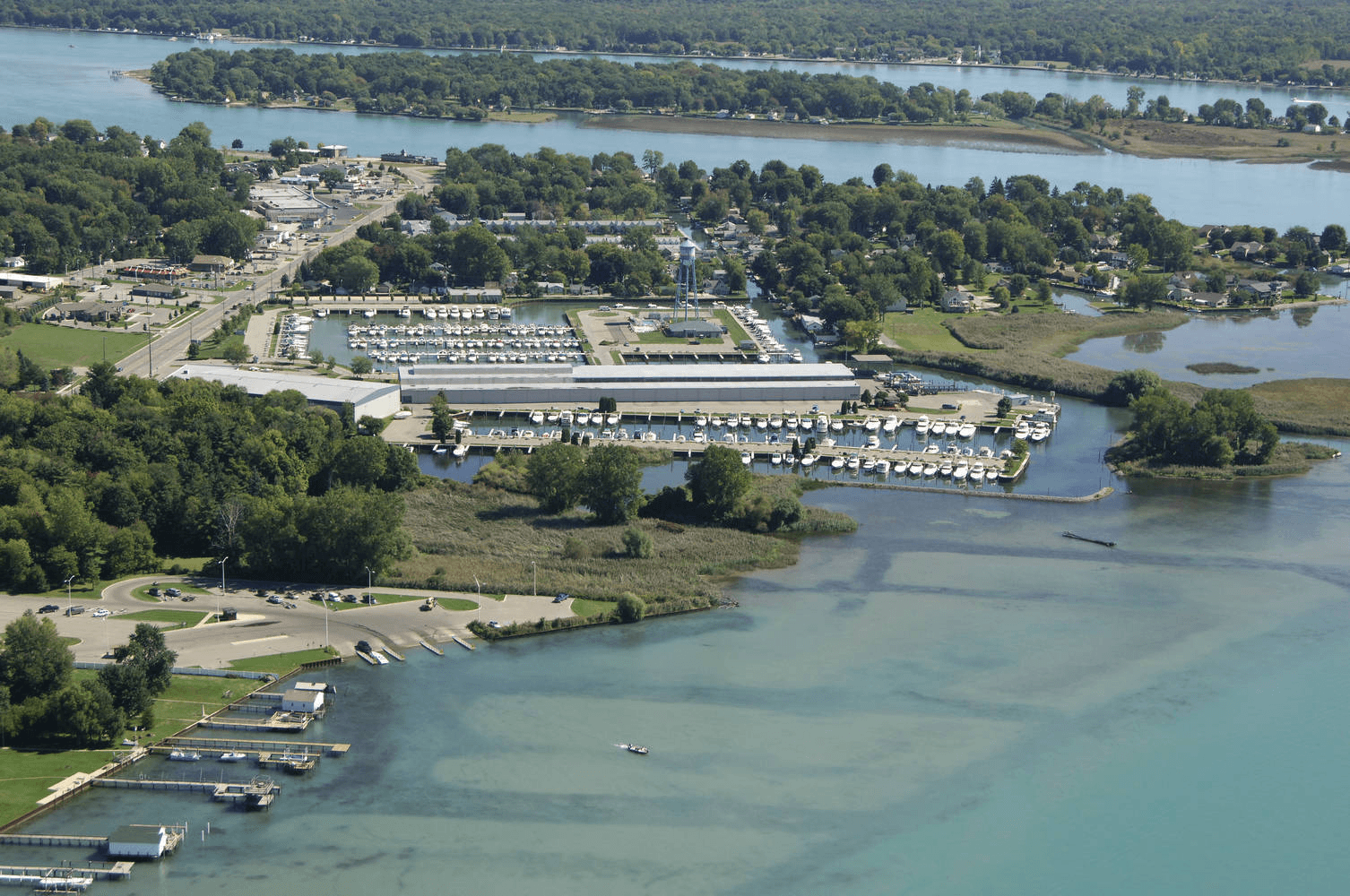
The North Channel is home water. It’s the northernmost of the three main channels through the delta, it runs past the marina, and it’s the route out to Anchor Bay. It’s also where two ferries cross. Champion’s Auto Ferry runs between Algonac and Harsens Island around the clock, continuously through the summer day, and it doesn’t wait for you. The Walpole-Algonac Ferry crosses the St. Clair River to Walpole Island, Ontario, which makes it an international border crossing with a boat in the middle of your channel. Neither one is hard to deal with. Both are hard to deal with if you’ve never seen a car ferry pull off a landing at an angle.
The delta is the part that rewards local knowledge. I’ve written about what the St. Clair River asks of boat owners and about Anchor Bay, and the short version is that once you’re off the marked channels, the water is either channel or marsh with not much in between. Depth changes fast, the cuts between islands shift, and the freighters run the shipping channel through the middle of it like it’s a highway, because it is. Treat the chart as the authority and your depth finder as the referee.
The river north of town is the fastest water in the chain. Algonac State Park, two miles up, has a half mile of river frontage that exists mostly so people can watch freighters go by, and the current that carries those ships carries you too. Running upriver toward Marine City and St. Clair is a slower trip than the chart suggests; running back down is faster than you’re expecting and your stopping distance is longer than you’d like. Know that before your first fall haul-out run.
What Algonac asks of a new owner
A working plan for ferry crossings: slow, predictable, and never inside their landing arc.
Chart discipline in the delta. Marked water only until you’ve learned the cuts with someone who knows them.
Respect for the shipping channel. Freighters can’t stop, can’t turn, and can’t see you.
Current awareness at the dock. A North Channel slip has flow past it every day of the season.
What the season looks like here
Spring comes with the sturgeon and walleye fishermen; the St. Clair River carries a state designation as the Sturgeon Angling Capital of Michigan, and it earns it in April and May. Summer is the delta at its best: the raft-ups in Muscamoot Bay, which I’ve written about separately, the cottage channels on Harsens Island, and evenings on the North Channel watching the ferry make its loop. The town’s riverfront park runs a full calendar of summer events and a Fourth of July fishing tournament that turns the boardwalk into a fair.
Fall is freighter season for the watchers and haul-out season for everybody else. The Harbour Club’s service side handles a lot of it, and like everywhere in this corner of the state, it’s booked early.
Before you buy here
Algonac is the kind of place people buy a boat for. The mistake is buying the boat first and the local knowledge second. A 40-foot cruiser is the right boat for this water, but it’s a different animal in the North Channel current with a ferry coming off the landing than it is on a calm afternoon in Anchor Bay. The delta doesn’t forgive the first-season mistakes the way the open lake does.
If you’re moving a boat here or moving up to one you’ll keep here, a couple of mornings running the channels with someone who knows them will save you a season of guessing. That’s the Captain’s Coaching work, and Algonac is one of my favorite places to do it. A quick call is the place to start.
NOW OFFERING OWNER-ASSISTED DELIVERY
Get your boat home, and learn her on the way.
Owner-assisted delivery combines an over-water boat delivery with on-water coaching from a USCG Master Captain. Hire the run, learn the boat, finish the trip knowing how she handles.
WRITTEN BY
Captain Tom Ketelhut
USCG Master since 2009: 100 GT Great Lakes, 50 GT Near Coastal. Home port Grosse Ile, Michigan; deliveries and coaching from Lake Erie to Lake Huron, and in Florida.
WHERE TO NEXT
Keep going
More from St. Clair River
More on Voyages · next unread
The Great Loop: A Great Lakes Captain's Reference Guide
Read Next →

Okeechobee Waterway Crossing: Lake Level, Locks and Bridges
Read Next →

Running the ICW North from Florida: Route and Timing
Read Next →

The Big Bend Crossing: Carrabelle to Tarpon Springs
Read Next →

Keeping a Boat in Wyandotte: The Working Waterfront at the Head of the Trenton Channel
Read Next →

Harbor-Hopping Lake Huron: Port Huron to the Straits
Read Next →
THE SERVICE THAT HELPS
Coaching, deliveries and First Mate training for Algonac boat owners.

