Keeping a Boat in Wyandotte: The Working Waterfront at the Head of the Trenton Channel
Downriver’s best working waterfront sits where the Trenton Channel begins. How the marinas, the launch, and the water in front of them actually work.

Captain Tom Ketelhut

On a Saturday in April the Wyandotte waterfront looks like a walleye tournament staging area, because that’s roughly what it is. Trailers stacked at the launch, transient slips full of boats that came for the spring run, and the Trenton Channel busy before the coffee’s finished.
By July it’s a different town. The fishermen thin out, the cruisers and the express boats are back in their slips, and Wyandotte settles into being what it is the rest of the season: the most practical place to keep a boat on the lower Detroit River. It’s my home stretch of water. Grosse Ile sits directly across the channel, and I’ve run past Wyandotte’s docks more times than I’ve run past anything else.
Here’s how it actually works.
Where the boats live
Wyandotte doesn’t have the residency-gated harbor system the Grosse Pointes run. It has commercial marinas that take seasonal and transient boats, which makes it easier to get into and a little less predictable year to year.
The one people know is Wyandotte Marina, at the foot of downtown. Their site lists seasonal wet slips and transient dockage for boats up to 70 feet, with seasonal availability split between a spring fishing season and the summer, and booking through Dockwa. That 70-foot figure makes it the largest-boat option in town. In practice it’s a mix: some serious cruisers, a lot of spring fishing boats that come in for a month and leave.
Motor City Marina sits on the same shoreline. The Waterway Guide listing shows it as a roughly 200-slip facility with fixed docks, a 60-foot maximum, and about five feet at the dock. The listing data is a few years old, so confirm current depth and slip sizes with the office before you commit a deep-draft boat.
Marina Club of Michigan is the third name you’ll hear, and it’s the yard: indoor and outdoor storage, which matters in a town where most owners haul for the winter rather than leave a boat in the river.
For trailered boats, Bishop Park has the city launch and a seasonal accessible kayak launch, and there’s a second city ramp listed as the Wyandotte Boat Launch. Between them and the marinas, you can get almost any boat in the water here without driving to Trenton or Gibraltar.
Before you take a Wyandotte slip
Confirm the dock type. Fixed docks on a river with spring high water and fall low water behave differently from floating ones; ask how the marina handles the swing.
Confirm depth at your specific slip, not the marina’s advertised approach depth.
Ask whether the seasonal contract is fishing-season, summer, or both. They’re sold differently here.
Ask about winter storage now. Haul-out capacity in Downriver fills up months before the leaves turn.
The water out front
This is the reason to keep a boat in Wyandotte, and it’s the part that surprises people who’ve only boated the lake.
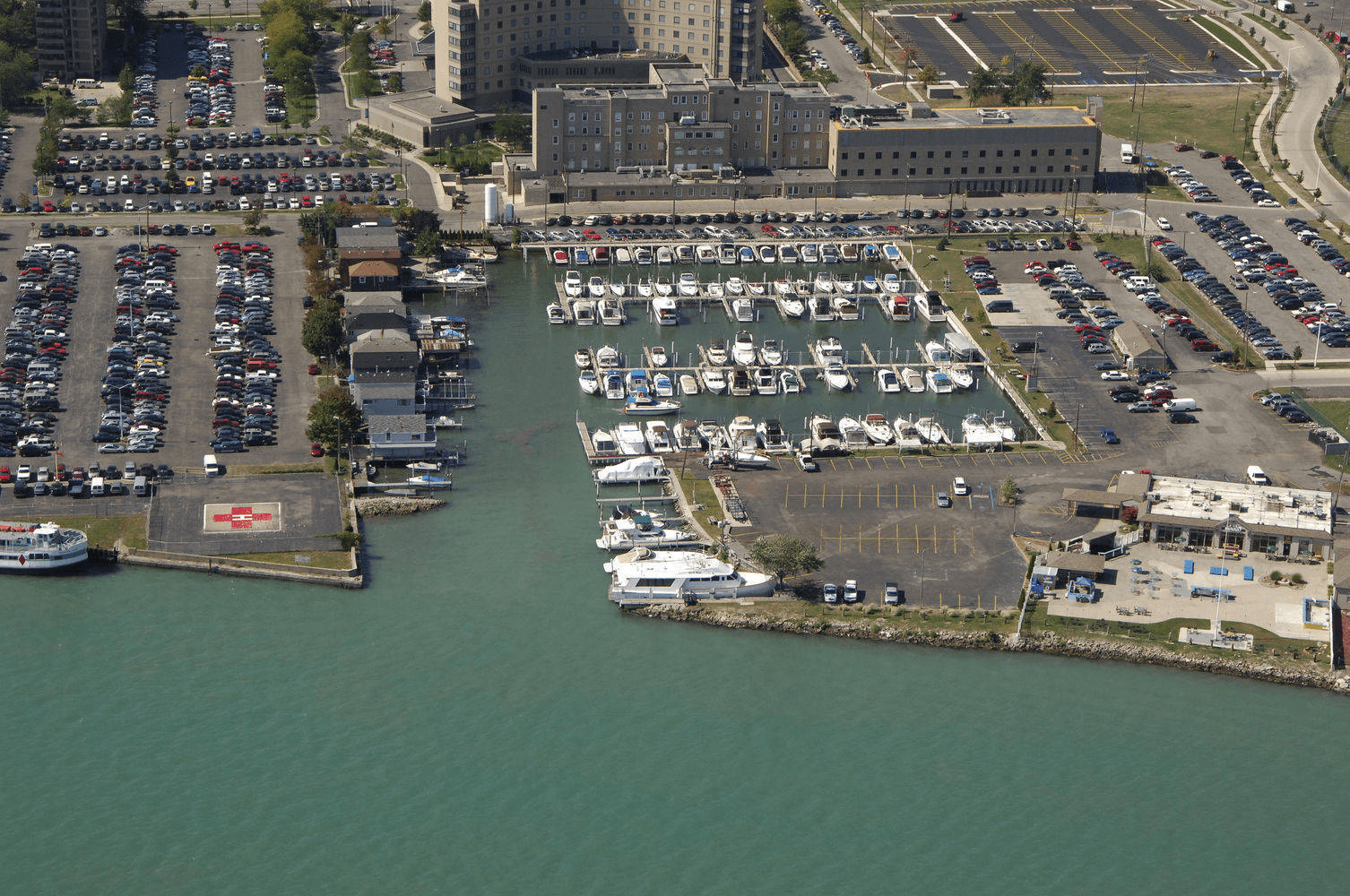
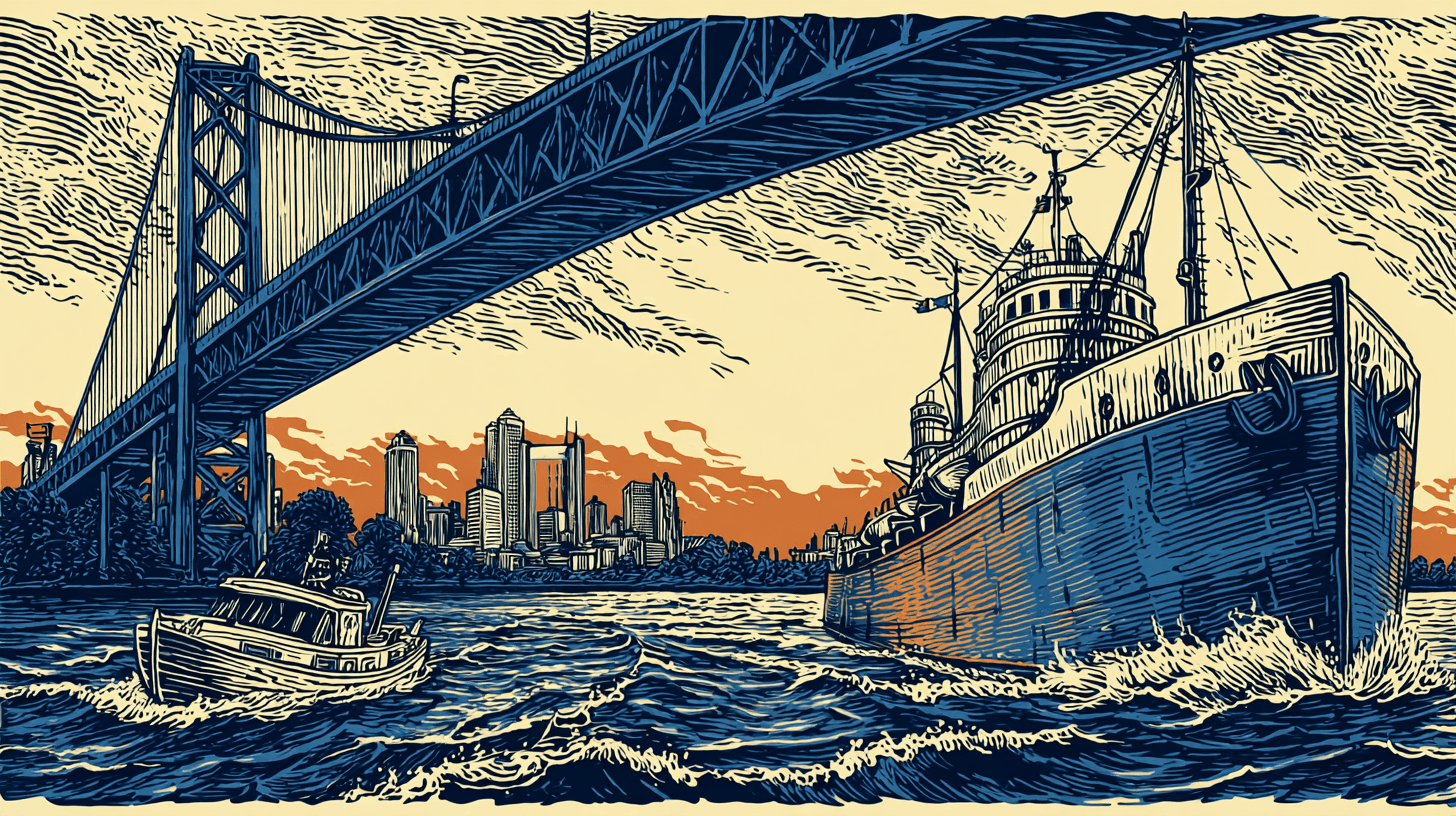
The city sits at the head of the Trenton Channel, the west-side branch of the lower Detroit River that runs between the mainland and Grosse Ile. I’ve written a whole piece on running the Trenton Channel, so I’ll keep it short here: the big freighters run the deep channels on the east side of the island, and over here it’s pleasure boats, fishermen, and a pair of swing bridges that will teach you patience. Out of a Wyandotte slip you’re in that channel within minutes, headed south past Riverview and Trenton toward Lake Erie, or north into the main river toward Detroit.
Two things about that water are worth knowing before your first season.
The current is real. The Detroit River runs about 28 miles from Lake St. Clair to Lake Erie, and it’s a river the whole way. Along the Wyandotte shore you’ll feel it at the dock, which means your departures and arrivals are current-affected every single time. Learn to use it instead of fighting it. Leaving a slip bow-out into a following current is a different maneuver than leaving into it, and a new-to-the-river owner usually finds that out the expensive way.
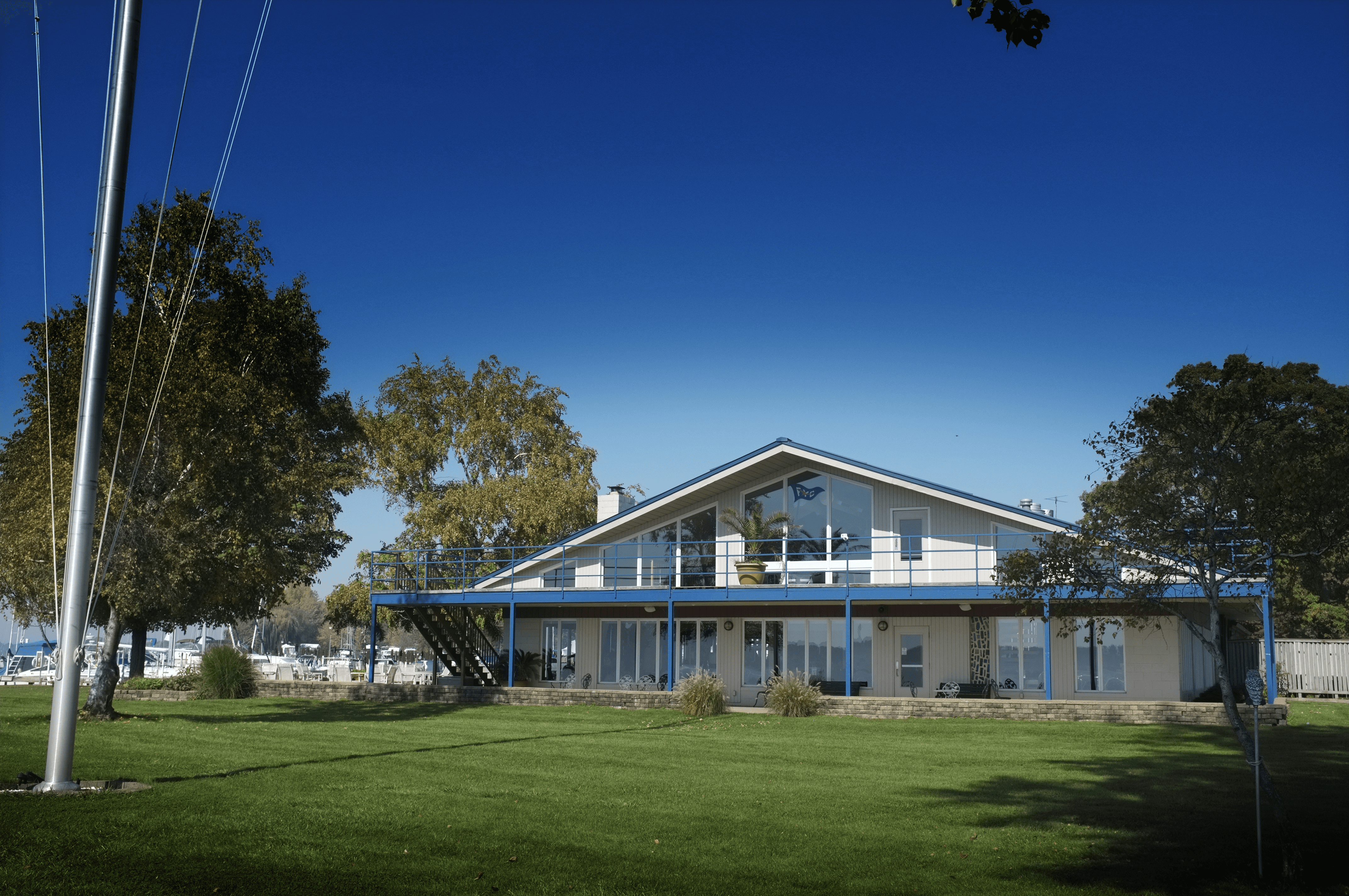
The rowing shells own the early mornings. Wyandotte Boat Club has been on this river since 1875 and hosts high school regattas in late April and early May. Shells are low, quiet, and hard to see from a flybridge. If you’re an early departer in the spring, know where they practice, slow down, and check what’s behind you before you spin the boat.
What the season looks like here
Spring comes early and busy. The fishing traffic is the story from ice-out into May, and your marina’s transient docks will be full of boats that aren’t yours. If you like a quiet marina, that’s not April in Wyandotte.
Summer is the reason you’re here. The channel is a protected run, the river is faster than the lake but calmer than the lake in a west wind, and you can be at Elizabeth Park or Lake Erie Metropark for lunch without ever leaving sheltered water. The Detroit River corridor is thick with fuel docks and marinas, which is worth a lot when something goes wrong.
Fall is haul-out, and in this town almost everybody hauls. That’s the one piece of Wyandotte boating that runs on the yard’s calendar instead of yours. If you want help with the last run of the year or the first one in April, that’s the seasonal support work I do most.
Before you buy the slip, or the boat
The mistake I see in Wyandotte is the same one I see everywhere Downriver, just with a river attached: someone buys a boat for the lake and then keeps it on a channel with current, fixed docks, and a bridge schedule. It’s a fine place for that boat. It’s just a place that asks more of the owner at the dock than the open water ever will.
If you’re deciding between a Wyandotte slip and one up on Lake St. Clair, or between two boats for this water, that’s a conversation I have with owners fairly often as part of a purchase. And if you already have the slip and the boat and the departures aren’t going the way you’d like, that’s the other thing I do. A quick call sorts out most of it.
WRITTEN BY
Captain Tom Ketelhut
USCG Master since 2009: 100 GT Great Lakes, 50 GT Near Coastal. Home port Grosse Ile, Michigan; deliveries and coaching from Lake Erie to Lake Huron, and in Florida.
WHERE TO NEXT
Keep going
More from Detroit River

More on Voyages · next unread
The Great Loop: A Great Lakes Captain's Reference Guide
Read Next →

Okeechobee Waterway Crossing: Lake Level, Locks and Bridges
Read Next →

Running the ICW North from Florida: Route and Timing
Read Next →

The Big Bend Crossing: Carrabelle to Tarpon Springs
Read Next →

Keeping a Boat in Algonac: The Town That Built the Boats Now Guards the Delta
Read Next →

Harbor-Hopping Lake Huron: Port Huron to the Straits
Read Next →
THE SERVICE THAT HELPS
Coaching, deliveries and First Mate training for Wyandotte boat owners.
