How to Shop a Boat Show Like a Captain
Every guide to shopping a boat show was written by someone selling boats. Here's the version from the guy who has to run them afterward.

Captain Tom Ketelhut

How to Shop a Boat Show Like a Captain
You can tell who’s going to buy a boat at the Metro Boat Show by about Thursday afternoon. It’s the couple standing in the cockpit of the third boat they’ve stepped on, not talking to the broker, talking to each other, and one of them has stopped looking at the boat and started looking at the water. I’ve watched that moment play out on those docks for years. Sometimes it ends well. Sometimes I meet the boat a month later, on a delivery or a coaching day, and the owner tells me what they wish they’d noticed while the broker was still standing there.
Every guide to shopping a boat show I’ve ever read was written by the people selling the boats. Set a budget, plot a course, make a deal. Fine advice. This is the other half: what to actually look at once you’re aboard, why a fall in-water show changes the math, and the three things that should happen between the handshake and the check.
Why a fall in-water show is different
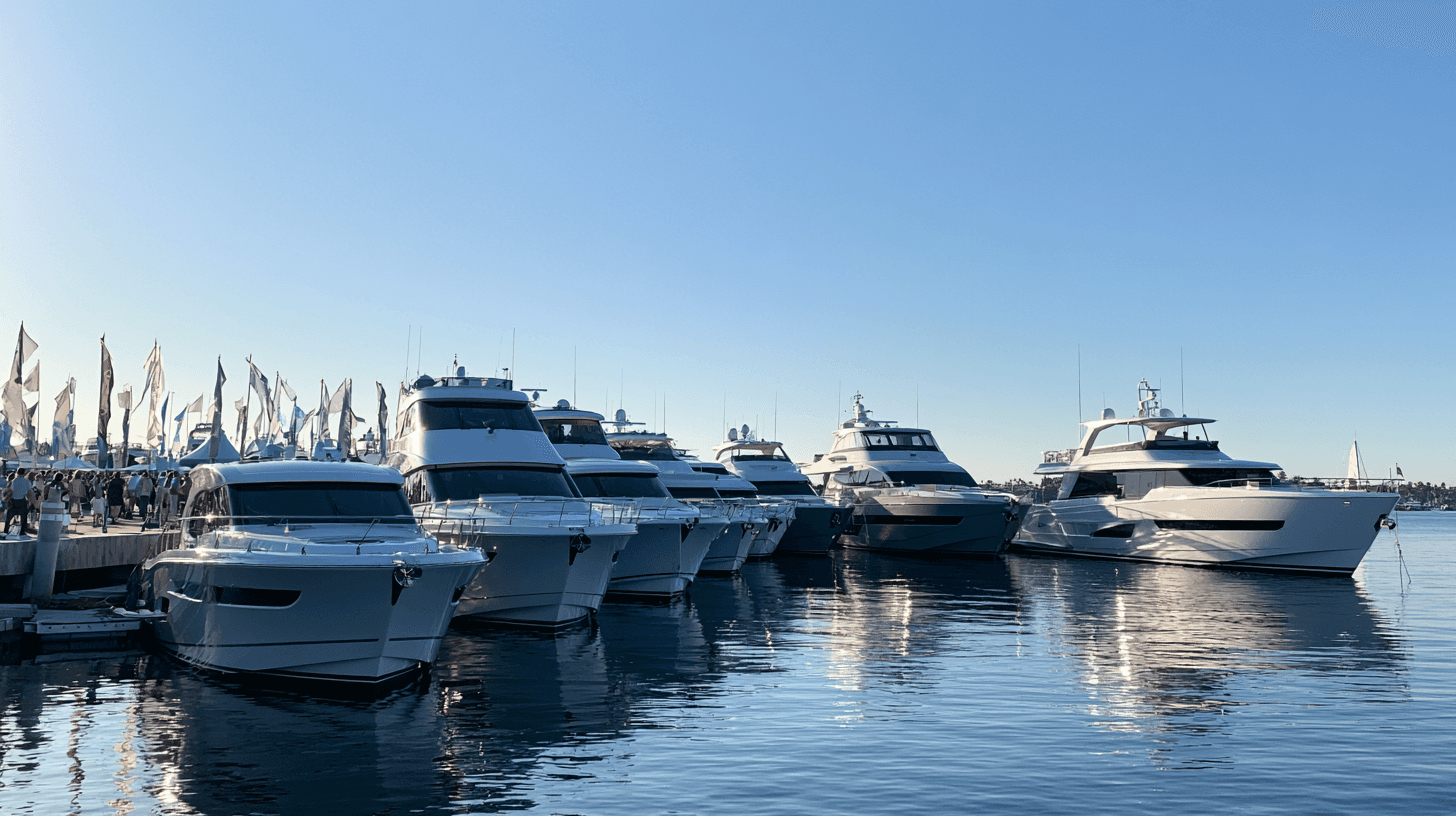
The Metro Boat Show runs September 17 through 20 at Lake St. Clair Metropark in Harrison Township, with boats in the water up to sixty feet alongside the ones on land, new and previously owned, and end-of-season deals from the brokers and dealers who’d rather not winter their inventory. Two of those details matter more than buyers realize.
The boats are in the water. That means you can see how a boat sits on her lines instead of guessing from a trailer or a cradle, and on a used boat it means a sea trial is a conversation away rather than a spring promise. Use that. A boat on land tells you what she looks like. A boat in the water tells you what she is.
It’s the end of the season. That cuts both ways. Sellers are motivated, which is real leverage. But it also means the boat you fall for on Saturday will be hauled and wrapped within weeks, and the next time you see her run is April. Whatever you don’t learn about her at the show, you won’t learn until spring. Fall buyers need to be more careful at the dock, not less.
The first five minutes aboard
When I step onto a boat I’m evaluating for an owner, I’m not looking at the upholstery. Here’s where my eyes go before anyone’s finished the sales pitch.
How she sits. Standing on the dock, look at her waterline. A boat sitting stern-heavy or listing at rest is telling you something about her loading, her tanks, or her history, and none of it is in the brochure.
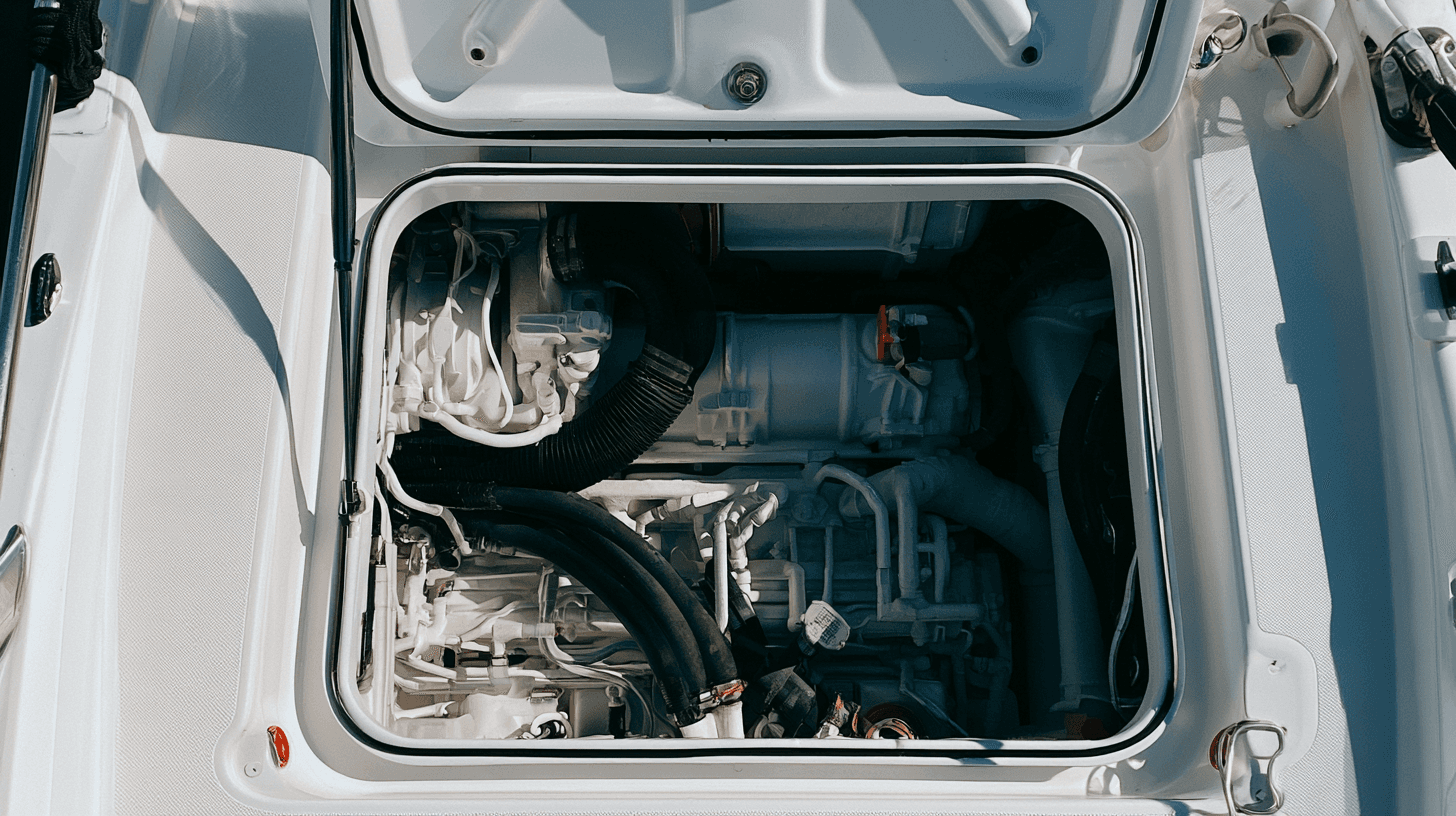
The engine room, and what it smells like. Ask to open the hatch. You’re looking for a clean, dry bilge and consistent care: fresh hose clamps next to old ones, or one pristine engine next to a neglected one, is a story about how the boat was maintained. Diesel or fuel smell where there shouldn’t be any ends the conversation for me.
The helm sightlines. Sit at the helm and look aft, then look at the bow. Can you see the swim platform corners? Can you see the water close to the bow? A boat you can’t see out of is a boat that’s hard to dock, and I’ve coached a lot of owners through exactly that problem after the sale. This is the single most common thing buyers skip and the single most common thing they call me about later.
The hardware. Cleats, rails, and chocks sized for real docking in real wind, not for a photo. Undersized cleats on a big boat mean the previous owner rarely tied her up anywhere difficult, or did and regretted it.
Systems access. Can you get to the strainers, the batteries, the pumps, the through-hulls without taking the boat apart? You’re going to be the one doing pre-cruise checks every trip. Make sure the boat lets you.
Three things worth saying at the dock.
"Can we open the engine hatch?" "Is the survey from the last sale available?" And on any used boat that's in the water: "When can we run her?"
The trap: good deal, bad judgment
End-of-season pricing is real. The discipline it demands is also real. The single best move a fall buyer can make is to separate two decisions that the show wants you to make at once: whether this is the boat, and whether this is the deal. Decide the first one aboard, slowly, with the hatch open. Decide the second one after you’ve walked the docks and slept on it. A deposit with a survey and sea trial contingency written in protects you on both counts, and any broker worth dealing with will write one without flinching.
And if you’re moving up to a bigger boat, be honest with yourself about the jump. The boat that’s a reach at the show is the boat that stays in the slip in July.
After the handshake
This is where the show ends and the actual buying starts. The pre-purchase questions I’d ask on any boat come first. Then a proper marine survey, which is not the seller’s old one. Then the sea trial, run like an evaluation, not a joyride. If you want a captain’s eyes on your shortlist before you sign anything, that’s exactly what my consulting work is for, and boat-show season is when I do most of it. Shopping a Florida show for a boat that will live up here? Getting a boat bought in Florida home runs on a different calendar.
The best boat at the show isn’t the prettiest one on the dock. It’s the one that still looks right after you’ve opened every hatch. Walk the Metropark docks with that in mind and you’ll do fine. Get in touch if you’d like company doing it.
WRITTEN BY
Captain Tom Ketelhut
USCG Master since 2009: 100 GT Great Lakes, 50 GT Near Coastal. Home port Grosse Ile, Michigan; deliveries and coaching from Lake Erie to Lake Huron, and in Florida.
WHERE TO NEXT
Keep going
More on Ownership · next unread

Boat Delivery Cost: The Day Rate and How to Count the Days
Read Next →

What It Costs to Hire a Boat Captain in Florida
Read Next →

Boat Hurricane Plan in Florida: What to Settle by June 1
Read Next →

Bought a Boat in Florida? How to Get It Home
Read Next →

Checking a Captain's License Before You Hand Over the Keys
Read Next →

The Fall Haul-Out Checklist: What to Do Before the Lift, at the Lift, and on the Stands
Read Next →
THE SERVICE THAT HELPS
A USCG Master runs the sea trial with you and helps you decide before you close.